Join us on a literary world trip!
Add this book to bookshelf
Grey
Write a new comment Default profile 50px
Grey
Subscribe to read the full book or read the first pages for free!
All characters reduced
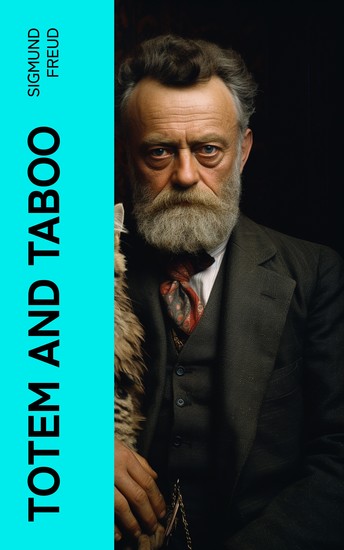
Totem and Taboo - Resemblances Between the Psychic Lives of Savages and Neurotics - cover

Totem and Taboo - Resemblances Between the Psychic Lives of Savages and Neurotics

Siegmund Freud

Translator A. A. Brill

Publisher: e-artnow

  • 0
  • 0
  • 0

Summary

"Totem and Taboo": is a 1913 book by the founder of psychoanalysis, Sigmund Freud, in which he applies his theory to the fields of archaeology, anthropology, and the study of religion. It consists of four essays inspired by the work of Wilhelm Wundt and Carl Jung: "The Horror of Incest," "Taboo and Emotional Ambivalence," "Animism, Magic and the Omnipotence of Thoughts," and "The Return of Totemism in Childhood."
Available since: 11/20/2023.
Print length: 308 pages.

Other books that might interest you

  • Arthashastra or The Playbook of Material Gain - Pragmatic and amoral tips on how to gain defend and expand power from India’s greatest philosopher - cover

    Arthashastra or The Playbook of...

    Chanakya

    • 0
    • 0
    • 0
    Truly radical "Machiavellianism", in the popular sense of that word, is classically expressed in Indian literature in the Arthashastra of Kautilya (written long before the birth of Christ, ostensibly in the time of Chandragupta): compared to it, Machiavelli's The Prince is harmless.— Max Weber, Politics as a Vocation (1919)Chanakya's treatise, written while turning a farmhand into the emperor of the largest empire India had ever seen, focuses on how to manage an empire, covering everything from domestic policy and personal rights to assassination and the dirtier arts of politics. This is not, as with Plato’s Republic, a work of theory. Chanakya’s guidance is entirely practical, and is based on both his education and his experience building an empire. It lacks the philosophical ponderings and moralizing of its equivalent Western works (such as The Prince, The Republic or Leviathan) and instead focuses on how one deals with the messiness of the world in practice.People will occasionally refer to Chanakya as an Indian Machiavelli, but this does some discredit to Chanakya. The Prince is a satire, and focused around exposing the tactics and inhumanity of Cesare Borgia. Arthashastra is a manual for every aspect of statecraft, and while it deals in the unethical it does so only because that is, after all is said and done, one of the options available to a ruler.If you're after a totally pragmatic analysis of leadership, stripped of moralising and focused on what works and how to deal with real-world issues, this is the book for you.
    Show book
  • God-like: a 500-Year History of Artificial Intelligence in Myths Machines Monsters - cover

    God-like: a 500-Year History of...

    Kester Brewin

    • 0
    • 0
    • 0
    In the year 1600, a monk is burned at the stake for claiming to have built a device that will allow him to know all things. 
    350 years later, having witnessed 'Trinity' - the first test of the atomic bomb - America's leading scientist outlines a memory machine that will help end war on earth. 
    25 years in the making, an ex-soldier finally unveils this 'machine for augmenting human intellect', dazzling as he stands 'Zeus-like, dealing lightning with both hands'. 
    In this profound and urgent new book, leading thinker on technology Kester Brewin shows how AI is both stunningly new and rooted in the most ancient human desires. Hailed by the UK government's own lead on AI as 'god-like', as we finally welcome this stunning technology amongst us - with Frankenstein and Faustus, from the ceiling of the Sistine Chapel to the underbelly of Silicon Valley - Brewin skillfully leads us through the myths, machines and monsters that have influenced the development of our greatest and most longed-for invention, and how we can learn to live alongside it.
    Show book
  • One Nation Under the Influence - America's Drug Habit and How We Can Overcome It - cover

    One Nation Under the Influence -...

    Kevin A. Sabet

    • 0
    • 0
    • 0
    We are in the midst of the worst drug crisis in American history. What are we going to do about it?Around 100,000 Americans died of a drug overdose last year—nearly double the number who died in Vietnam. More than 1,000,000 have perished since 2000, thanks largely to an explosion of fentanyl and other addictive opioids. But fentanyl, abundant methamphetamine, and other lethal drugs are not the only things that are killing us: our policy is. So far, America has lacked the will to do better. That must change, and this book tells us how.No one is immune, which is why Kevin Sabet has authored this remarkable book. Sabet, dubbed the "the quarterback of the new anti-drug movement" by Salon, has spent most of his life battling the destructive effects of drugs. In One Nation Under the Influence, he asks hard questions and provides clear answers, taking listeners from the streets of San Francisco and New York to the southern border, up to Canada, and across to Europe to show how we can chart a necessary way forward. The solutions are out there, if only we have the will to apply them.
    Show book
  • School of Spank - BDSM Lite - cover

    School of Spank - BDSM Lite

    Randy Manners

    • 0
    • 0
    • 0
    Sometimes, an unruly young man needs to be taken over the knee. 
      
    Strong-willed jock Brad has flunked again, and Professor Carter is no longer interested in his excuses. 
      
    It’s time for disciplinary action to be taken. 
      
    But what Brad needs isn’t tutoring sessions and extra assignments. No, what Brad needs is a good, hard spanking — followed up with some long, hard positive reinforcement. 
      
    Will Brad continue his streak of good behavior now, or will Professor Carter — maybe with the help of a hot hunk from the wrestling team — have to pin Brad down and give him a double-up lesson?
    Show book
  • What Is It Like to Be a Bat? - cover

    What Is It Like to Be a Bat?

    Thomas Nagel

    • 0
    • 0
    • 0
    "Consciousness is what makes the mind-body problem really intractable." So begins Thomas Nagel's classic 1974 essay "What is it Like to be a Bat?" Nagel's essay initiated the now widespread attention to consciousness as a central problem for philosophy, psychology, and neuroscience; it also influenced the recognition of the consciousness of nonhuman creatures as an important subject of study. Nagel argued that the essential subjectivity of conscious experience—what it is like for the creature undergoing it—means that reductionist theories of mind, which attempt to analyze it in physical terms, can never succeed. It follows that the physical sciences cannot provide a complete description of reality, and that the physical conception of objective reality must be transcended if science is going to comprehend the mind. 


    This edition reissues this classic and widely influential article on its fiftieth anniversary, along with a new preface discussing the origins and influence of the essay, as well as "Further Thoughts: The Psychophysical Nexus," a supplementary essay which describes Nagel's later thoughts about how to respond to the problem posed by "What Is It Like to Be a Bat?"
    Show book
  • Vardi da mull - cover

    Vardi da mull

    Jaswinder singh manochahal

    • 0
    • 0
    • 0
    The book "Vardi Da Mull", a collection of short stories written by Jaswinder Singh Manochahal, contains a total of 14 stories. These stories revolve around various social issues, depicting the everyday struggles of common people. The themes include police excesses, the plight of poor farmers, the growing corruption in political systems, the exploitation of laborers, the hardships faced by working women, the rising drug menace in society, the suffering of tenants in cities, fractured relationships, the sorrows of rural laborers, and the issue of unemployment
    Show book