Join us on a literary world trip!
Add this book to bookshelf
Grey
Write a new comment Default profile 50px
Grey
Subscribe to read the full book or read the first pages for free!
All characters reduced
Shirley - The Life of a Botanical Adventurer - cover

Shirley - The Life of a Botanical Adventurer

Shirley Sherwood

Publisher: Unicorn

  • 0
  • 0
  • 0

Summary

Shirley, The Life of a Botanical Adventurer is the remarkable story of Dr Shirley Sherwood, scientist, author, travel writer, gardener as well as mother and grandmother. Following the tragic death of her brilliant scientist husband, Michael Cross, in a freak air crash in 1964, she was left as a 30-year-old widow with two young boys aged four and three. For the next twelve years she worked as a key member of the Nobel Prize-winning team which developed Tagamet, the first block-buster drug (sales of over $1 billion a year). After her marriage to Jim Sherwood in 1977, she left science to concentrate full-time on the huge task of restoring the fabled Orient-Express train, probably the most luxurious and exotic form of travel ever devised. The Venice Simplon-Orient-Express, running between London and Venice, was relaunched in 1982, ninety-nine years after its first journey. Sherwood's history of the project sold more than 400,000 copies. The Orient-Express train was just the beginning. The Sherwoods went on to create the five-star Orient-Express Hotels company (now Belmond), which owned some of the finest hotels in the world, including the Cipriani in Venice, the Mount Nelson in Cape Town and the Copacabana Palace in Rio. They pioneered new train routes across the Alps, started the Eastern & Oriental Express running between Singapore and Bangkok- crossing over the Bridge on the River Kwai- opened up tourism in Myanmar with the first cruise ship to operate on the Irrawaddy, and took over the railways of Peru, which run all the way to Machu Picchu and Lake Titicaca. Her most lasting achievement, the one of which she is proudest, is the Shirley Sherwood Collection of contemporary botanical art, which she started in 1990 and now includes over 1,000 paintings and drawings representing the work of more than 300 contemporary botanical artists from 36 countries. She has mounted exhibitions in many prestigious locations including the Smithsonian Institute in Washington, the Ashmolean Museum, Oxford, Kirstenbosch in Cape Town and the Real Jardin Botanico, Madrid. The Shirley Sherwood Gallery in Kew Gardens is the first museum to be dedicated to modern botanical art and her books, which often accompanied her exhibitions, have been largely responsible for re-establishing botanical art in its rightful place as an important art form. These are just some of the many achievements in a long and rich life, vividly described in this book.
Available since: 07/02/2024.
Print length: 256 pages.


Other books that might interest you

  • The Answer to the Atheist's Handbook - cover

    The Answer to the Atheist's...

    Richard Wurmbrand

    • 0
    • 0
    • 0
    Richard Wurmbrand spent three years in solitary confinement during his 14-year imprisonment in Communist Romania. In The Answer to the Atheist's Handbook, conceived during his solitary confinement, Wurmbrand challenges the arguments for atheism as proposed by the Soviet Academy of Science's Atheist's Handbook. Throughout the Communist world, the teachings of the Atheist's Handbook held supreme authority. But Wurmbrand demonstrates that the atheistic worldview leaves more questions unanswered than it settles. Full of wisdom and grace, The Answer to the Atheist's Handbook explores insights from Scripture, literature, art, and philosophy that bear witness to the reality of God and His redemptive plan for humanity.
    Show book
  • Black Soldiers in the World Wars: The History of the Most Decorated African American Units in Both Conflicts - cover

    Black Soldiers in the World...

    Charles River Editors

    • 0
    • 0
    • 0
    The United States has no shortage of famous military units, from the Civil War’s Iron Brigade to the 101st Airborne, but one would be hard pressed to find one that had to go through as many hardships off the field as the Tuskegee Airmen, a group of African American fighter pilots who overcame Jim Crow at home and official segregation in the military to serve their country in the final years of World War II. In fact, it required a concerted effort by groups such as the National Association for the Advancement of Colored People (NAACP) and the extreme circumstances brought about by World War II that the military eventually decided to establish the “Tuskegee Experiment.” In time, the Tuskegee Airmen would be romanticized and mythologized to the extent that it was erroneously claimed that some escort squadrons didn’t lose a bomber to the enemy, which led Tuskegee airman Grant Williams to note in jest, “Back then, nobody realized the significance of what we were doing. Now, they seem to think we could walk on water."  
    Between 1942 and 1949, nearly 20,000 black men trained at Montford Point. They endured tar-paper barracks that baked in summer heat and leaked in coastal storms, learned to drill to the cadence of instructors who sometimes doubted their right to wear the uniform, and mastered skills that would carry them to the beaches and supply trails of Saipan, Iwo Jima, and Okinawa. Their story illuminated the paradox of wartime America, a republic that preached freedom abroad while policing hierarchies at home. 
    One of the most overlooked African American combat units is the Harlem Hellfighters, also known as the 369th Infantry Regiment of the U.S. Army. Initially raised as the 15th New York (Colored) National Guard and later federalized for World War I, the regiment was "loaned" to the French Army, where it compiled an extraordinary combat record, with a remarkable 191 days on the line and suffering about 1,400 casualties.
    Show book
  • Carlo Acutis - The First Millennial Saint - cover

    Carlo Acutis - The First...

    Nicola Gori

    • 0
    • 0
    • 0
    Carlo Acutis, born in 1991, fully embraced the gift of life. Known as a computer whiz, he liked to play soccer, video games, and the saxophone. He enjoyed watching his favorite dramas and making short films with his cast of cats and dogs. He had many friends and enjoyed spending time with them. 


    Yet Carlo was a little "different" at school, in the pizzerias, and on the soccer field. What set Carlo apart was his constant pursuit of holiness. He spent time teaching catechism classes and serving in soup kitchens. Carlo loved to attend daily Mass and frequent Eucharistic adoration. The Word of God and the Eucharist were the center of his life. Carlo's unwavering devotion to the Eucharist inspired him to tell the story of Eucharistic miracles through a website he created. He wanted to deepen his own knowledge of these phenomena, to strengthen his devotion to Jesus, and to invite others to grow in love for the Eucharist. The website caught the attention of people across the globe, introducing countless people to Eucharistic miracles. 


    Carlo died from a sudden illness in 2006. In less than a decade, his story spread across Italy and around the world. After Pope Francis declared him venerable in 2018, his beatification was celebrated in Assisi on October 10, 2020. The next step will be canonization, making him the first millennial saint.
    Show book
  • The Shaking Woman or A History of My Nerves - cover

    The Shaking Woman or A History...

    Siri Hustvedt

    • 0
    • 0
    • 0
    While speaking at a memorial event in 2006, Siri Hustvedt suffered a violent seizure from the neck down. Despite her flapping arms and shaking legs, she continued to speak clearly and was able to finish her speech. It was as if she had suddenly become two people: a calm orator and a shuddering wreck. Then the seizures happened again and again. The Shaking Woman tracks Hustvedt's search for a diagnosis, one that takes her inside the thought processes of several scientific disciplines, each one of which offers a distinct perspective on her paroxysms but no ready solution. In the process, she finds herself entangled in fundamental questions: What is the relationship between brain and mind? How do we remember? What is the self? 


    During her investigations, Hustvedt joins a discussion group in which neurologists, psychiatrists, psychoanalysts, and brain scientists trade ideas to develop a new field: neuropsychoanalysis. She volunteers as a writing teacher for psychiatric in-patients at the Payne Whitney clinic in New York City and unearths precedents in medical history that illuminate the origins of and shifts in our theories about the mind-body problem. Hustvedt synthesizes her experience and research into a compelling mystery: Who is the shaking woman? In the end, the story she tells becomes, in the words of George Makari, "a brilliant illumination for us all."
    Show book
  • Beating Chains - Falsely Accused Framed Imprisoned - cover

    Beating Chains - Falsely Accused...

    Rusty Labuschagne

    • 0
    • 0
    • 0
    ‘Few would’ve survived Rusty’s ordeal – an incredible story of hope and resilience’ - Stephen McGown, author of Six Years a Hostage 
    Rusty Labuschagne has been through a trauma few have experienced and disclosed. In 2003, the successful Zimbabwean businessman, who ran a safari outfit, flew his own aircraft and had a fishing resort on Lake Kariba, was framed by a poacher, the police, and the courts and wrongfully convicted of drowning a poacher. 
    He served ten years in Zimbabwe’s prisons, including the notorious Chikurubi Maximum Security Prison, where he suffered through food shortages, no running water, and people dying around him daily. 
    Rusty lost everything he had worked so hard for, but most of all, his freedom. His story is a testament to his extraordinary resilience in conditions most would find unbearable. 
    He shares the life lessons he learned – how to harness your inner strength, how to forgive, and how to show gratitude – as he found true freedom through sincerity and humility. 
    Rusty’s is an inspiring story of true grit in the face of great adversity, of a man who loses everything as he is broken by a corrupt political system, but who then rises to fight that system on his own terms. In doing so he rebuilds himself from the inside out.
    Show book
  • Rescuing the Newborn Brain - cover

    Rescuing the Newborn Brain

    Andrew Whitelaw

    • 0
    • 0
    • 0
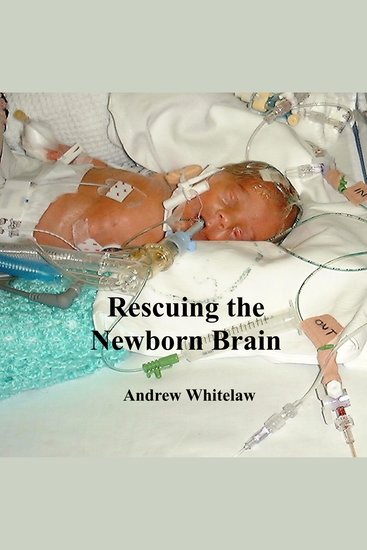
    Andrew Whitelaw is Emeritus Professor of Neonatal Medicine in the University of Bristol. At the age of seven he was shocked to meet a girl his own age who could not walk or talk because of severe cerebral palsy. He tells, from his own experience, how it became possible to investigate and image the brain of newborn babies, to understand the different ways that babies brains can be damaged and to develop treatments to prevent injury or help the brain to recover.  He describes how many dedicated colleagues persevered with research despite setbacks and failures. 
    Show book