Join us on a literary world trip!
Add this book to bookshelf
Grey
Write a new comment Default profile 50px
Grey
Subscribe to read the full book or read the first pages for free!
All characters reduced
POOR WHITE - Enriched edition - cover

POOR WHITE - Enriched edition

Sherwood Anderson

Publisher: Musaicum Books

  • 0
  • 0
  • 0

Summary

Sherwood Anderson's 'Poor White' is a poignant and insightful novel that delves into the lives of ordinary working-class Americans in the early 20th century. Set in a small town in the Midwest, the book explores themes of poverty, family dynamics, and the struggle for social mobility. Anderson's literary style is characterized by its raw, unembellished prose, which captures the stark realities of life for the poor whites of the era. The author's use of vivid imagery and subtle characterization adds depth and complexity to the narrative, making 'Poor White' a compelling read that resonates with readers today. Sherwood Anderson, a seminal figure in American literature, drew inspiration from his own experiences growing up in small-town America and working various blue-collar jobs. His firsthand knowledge of the struggles faced by the working class informs the authenticity and depth of 'Poor White'. I highly recommend 'Poor White' to readers interested in exploring the human condition, social inequality, and the impact of economic hardship on individuals and families.

In this enriched edition, we have carefully created added value for your reading experience:
- A succinct Introduction situates the work's timeless appeal and themes.
- The Synopsis outlines the central plot, highlighting key developments without spoiling critical twists.
- A detailed Historical Context immerses you in the era's events and influences that shaped the writing.
- A thorough Analysis dissects symbols, motifs, and character arcs to unearth underlying meanings.
- Reflection questions prompt you to engage personally with the work's messages, connecting them to modern life.
- Hand‐picked Memorable Quotes shine a spotlight on moments of literary brilliance.
- Interactive footnotes clarify unusual references, historical allusions, and archaic phrases for an effortless, more informed read.
Available since: 10/06/2017.
Print length: 220 pages.

Other books that might interest you

  • A Rare Recording of Mel Trotter - cover

    A Rare Recording of Mel Trotter

    Mel Trotter

    • 0
    • 0
    • 0
    This is a rare recording of Mel Trotter (1870-1940), a former alcoholic turned evangelist who was instrumental in the founding of 65 rescue missions. He was good friends, and often substituted for evangelists Billy Sunday and R. A. Torrey.
    Show book
  • Kiawah Island - A History - cover

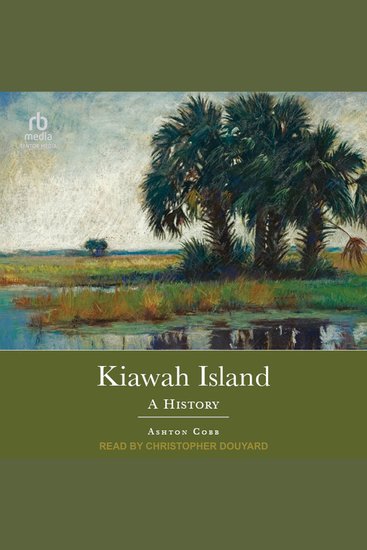
    Kiawah Island - A History

    Ashton Cobb

    • 0
    • 0
    • 0
    Hurricane Michael may have taken away some of the landmarks, but this book reveals the history of Florida's Mexico Beach, once known as the "Unforgettable Coast." 


    As French interests in the Americas dwindled, records indicate very little activity around Mexico Beach until rumors of buried riches and sunken ships brought treasure hunters to the coast. In the early 1900s, businessman Felix du Pont purchased the land known today as Mexico Beach. Resin to make turpentine was harvested from the native pine trees, and fishermen could not resist the migratory fish passing through the area's waters. By the 1930s, United States Highway 98 was completed, and visitors could finally reach the sugar-soft sand beaches of the "Unforgettable Coast." By 1941, Tyndall Field was constructed and became a training site for Air Force pilots. In 1946, a group of farsighted businessmen, led by Gordan Parker, W.T. McGowan, and J.W. Wainwright, purchased 1,850 acres along the beach for $65,000. Parker's son Charlie moved to the area in 1949 with his wife, Inky, and their family. He soon took over development responsibilities for the Mexico Beach Corporation and laid the groundwork for the beach town known and loved today. Charlie went on to become the city's first mayor and a lifelong advocate of the family-friendly community.
    Show book
  • Calligraphy and More - cover

    Calligraphy and More

    Tenzim Norzom

    • 0
    • 0
    • 0
    How this calligrapher nurtured her passion to start a business with clients like Google, Jimmy Choo, Michael Kors, Gucci, and others
    Show book
  • 52 Weeks to Fearless--What Creatives Need to Know About Money - cover

    52 Weeks to Fearless--What...

    Peggy Doviak

    • 0
    • 0
    • 0
    With a background in music, creative writing, and education, Peggy Doviak went into finance when a stockbroker exploited her mother. Now a CERTIFIED FINANCIAL PLANNERTM professional and bestselling author, she has spent more than twenty years helping others avoid what her mother experienced. 
    Peggy’s award-winning personal finance books offer bite-sized pieces of financial information and activities to help you apply what you’ve read. In 52 Weeks to Fearless, creatives are invited to Ask Peggy® questions about their money. Finances can be intimidating when your passion is in the arts. 
    Earning money as a creative presents challenges. How do you budget when your income is uneven? How do you pay your income taxes when you don’t have a traditional employer? How can you save for retirement without a 401(k)? If your creative endeavor is a business, how do you choose the structure? How do you handle payroll taxes? Most importantly, how do you convince the IRS that your creative endeavor is not a hobby? In 52 Weeks to Fearless, Peggy answers these questions and more!
    Show book
  • Carlist Wars The: The History and Legacy of the Spanish Civil Wars in the 19th Century - cover

    Carlist Wars The: The History...

    Editors Charles River

    • 0
    • 0
    • 0
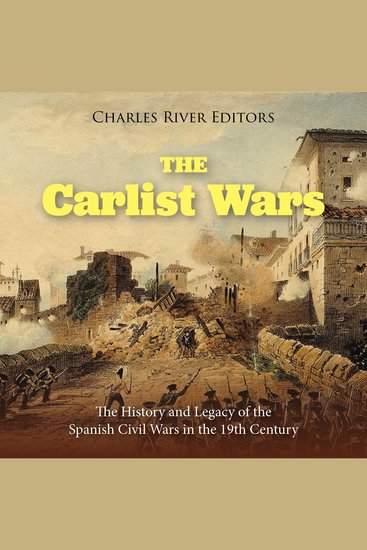
    Thinking of Spain as a modern nation state today distorts the complicated reality that the Iberian Peninsula faced in the past. Spain was a nation in progress, consisting of regions united under the Spanish crown, but with strong regional identities based on different historical and cultural experiences. The largest entities were the kingdoms of León and Castile, but Spain also included the kingdoms of Navarre, Andalusia, Granada, Jaén, Aragon, and Valencia. There were also the principalities of Asturias and Catalonia, the lordship of Vizcaya, and both Guipúzcoa and Alava were “exempted provinces.” Navarre, Aragon, and Catalonia had separate Cortes, which were versions of parliaments (Parker 18-19). This complex system of entities granted privilege to local power structures over the concept of a unified nation and made administration difficult, because there were few standards that applied to all of Spain. Many of the regions had special laws that respected and allowed traditional institutions, administrative patterns, and cultural patterns. These local and regional rights were called fueros and were fiercely defended against centralization. The fueros originated as rights agreed to when the regions joined the Spanish crown. Before becoming king, the king-designate had to swear to maintain and respect the fueros. This meant that the rights of the king were to a considerable extent limited. 
    Inevitably, liberals and centralizing monarchs alike tried to change the situation over the years, which produced political tensions. The Carlists promised to maintain the older system, which is why they were so firmly backed in the Basque regions by most of the peasants and nobility. The Carlist claimants were strong Catholics and were strongly supported by the Church, and thus by the more fervently Catholic portions of the population. 
    Show book
  • On the Commonwealth - cover

    On the Commonwealth

    Cicero

    • 0
    • 0
    • 0
    "On the Commonwealth" by Cicero is a profound political and philosophical treatise that explores the ideal form of government and the principles of a just society. In this insightful work, Cicero engages in a series of dialogues to examine different systems of governance, the nature of justice, and the role of individuals within a state. Through compelling conversations between prominent Roman statesmen, Cicero presents contrasting viewpoints on political theory, drawing on the teachings of Greek philosophers such as Plato and Aristotle. He explores the merits and flaws of various forms of government, including monarchy, aristocracy, and democracy, while considering the ideal balance of power and the responsibilities of both rulers and citizens. Read in English, unabridged.
    Show book