




PLAY SAMPLE

Professional Ventilation
Sherif Khaled
Narrator Sherif Khaled
Publisher: SHERIF KHALED
Summary
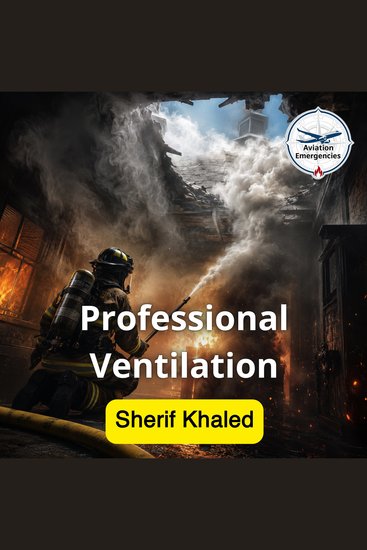
Professional ventilation is one of the most important tactical elements in managing fires in buildings, aircraft, and enclosed facilities. It does not treat smoke merely as a side effect of fire, but as a dangerous factor that threatens visibility, breathing, and the movement of firefighting and rescue teams. Professional ventilation depends on understanding the movement of air, smoke, and heat inside the incident scene, then using this understanding to create safe paths for smoke and hot gases to escape and to reduce heat buildup.
In firefighting operations, proper ventilation helps improve visibility inside the scene, lower temperatures, reduce the risk of smoke explosion or flashover, and give intervention teams a better chance to reach the source of the fire or rescue trapped victims. At the same time, however, it requires great accuracy, because random ventilation may increase fire intensity if oxygen enters the area in an uncontrolled way.
Therefore, professional ventilation is not simply opening a window or a door. It is a calculated tactical decision based on reading the fire, understanding smoke direction, identifying the location of victims, knowing the position of firefighting teams, and selecting the right point of attack. The more organized and well-planned the ventilation process is, the greater the commander’s ability to control the fire, protect lives, and reduce losses.
Duration: 18 minutes (00:18:23)
Publishing date: 2026-05-08; Unabridged; Copyright Year: — Copyright Statment: —




