Join us on a literary world trip!
Add this book to bookshelf
Grey
Write a new comment Default profile 50px
Grey
Subscribe to read the full book or read the first pages for free!
All characters reduced
The Haunted Baronet - cover

The Haunted Baronet

Sheridan Le Fanu

Publisher: Memorable Classics eBooks

  • 0
  • 0
  • 0

Summary

The Haunted Baronet by Sheridan Le Fanu is a novella published in 1871 in the Chronicles of Golden Friars, a collection of short stories set in the imaginary English village of Golden Friars.

Joseph Thomas Sheridan Le Fanu was an Irish writer of Gothic tales, mystery novels, and horror fiction. He was a leading ghost story writer of his time, central to the development of the genre in the Victorian era. M. R. James described Le Fanu as "absolutely in the first rank as a writer of ghost stories". Three of his best-known works are the locked-room mystery Uncle Silas, the lesbian vampire novella Carmilla, and the historical novel The House by the Churchyard.

Sheridan Le Fanu was born at 45 Lower Dominick Street, Dublin, into a literary family of Huguenot, Irish and English descent. He had an elder sister, Catherine Frances, and a younger brother, William Richard. His parents were Thomas Philip Le Fanu and Emma Lucretia Dobbin.

Both his grandmother Alicia Sheridan Le Fanu and his great-uncle Richard Brinsley Sheridan were playwrights (his niece Rhoda Broughton would become a successful novelist), and his mother was also a writer, producing a biography of Charles Orpen.
Available since: 06/02/2022.

Other books that might interest you

  • On Gods and Demons - A Thousand Li Short Story - cover

    On Gods and Demons - A Thousand...

    Tao Wong

    • 0
    • 0
    • 0
    What Do Gods & Demons Have in Common?  
    Perhaps nothing, perhaps a lot. A glimpse into a world where an immortal and a demon partake in meal while plotting moves that will shake the middle kingdom and share gossip of other, more contentious issues.  
    This is a 3,000 word short story set in the A Thousand Li universe featuring as yet to be seen characters in the universe. Does not need to be read to follow the main series.
    Show book
  • The Overtone - cover

    The Overtone

    D H Lawrence

    • 0
    • 0
    • 0
    'The Overtone' looks at a sterile marriage with no children and no spontaneous sexual feeling between the couple. Lawrence seems to lose interest in the story, although he introduces a younger woman, who walks away baffled at the end. His purpose seems to be to analyse the relationship between men and women in religious terms - Christianity for the women and the old Pan religion for the men. Lawrence produces some fine writing but the argument at the end of the story seems contrived.
    Show book
  • 3 Sad Stories - About Orphans - A trio of classic tales perfect for a commute walk or quiet night in - cover

    3 Sad Stories - About Orphans -...

    Anton Chekhov, Mary E. Mann,...

    • 0
    • 0
    • 0
    There is something about the number 3.    
     
    The Ancient Greeks believed 3 was the perfect number, and in China 3 has always been a lucky number, and they know a thing or two.   
     
    Most religions also have 3 this and 3 that and, of course, in these more modern times, three’s a crowd may be too many, except when it’s a ménage à trois.  It seems good things usually come in threes. 
     
    Whatever history and culture says WE think 3, a hat-trick of stories, is a great number to explore themes and literary avenues that classic authors were so adept at creating. 
     
    From their pens to your your ears.
    Show book
  • Vincente Blasco Ibanez - A Short Story Collection - One of Spains finest writers who's work has been made into countless Hollywood films we have an incredible anthology translated to English for your ears - cover

    Vincente Blasco Ibanez - A Short...

    Vincente Blasco Ibanez

    • 0
    • 0
    • 0
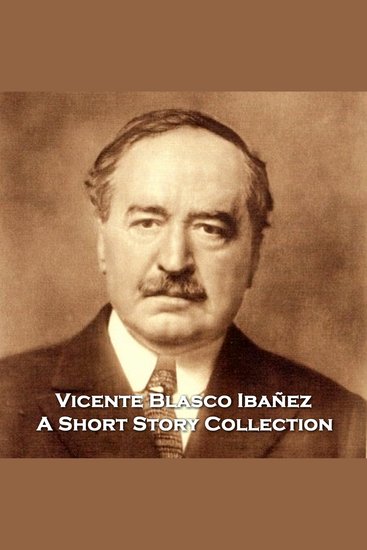
    Vicente Blasco Ibáñez was born in Valencia, Spain on 29th January 1867.  
     
    At university, he studied law and graduated in 1888 but never felt the urgency to practice - he was more interested in politics, journalism, literature and women.   
     
    Politically he was a militant Republican partisan and, in his youth, founded a newspaper, El Pueblo (The People). The newspaper was taken to court many times and he made many enemies. In one incident he was shot and almost killed. In 1896, Ibáñez was arrested and sentenced to a few months in prison. 
     
    Despite this colourful background he found time to write novels. His first published work was ‘La Araña Negra’ (The Black Spider) in 1892, a work that he later repudiated although at the time it was a useful vehicle for him to express his anti-clerical views. 
     
    In 1894, he published ‘Arroz y Tartana’ (Airs and Graces), about a late 19th Century widow in Valencia trying to keep up appearances in order to marry her daughters well.   
     
    Ibáñez’s next sequence of books studied rural life in the farmlands of Valencia and failed to gain much of an audience.   
     
    His writing now took on a new direction with its now familiar sensational and melodramatic themes in 1908 with ‘Sangre y Arena’ (Blood and Sand), which follows the career of Juan Gallardo from his poor beginnings as a child in Seville, to his rise to becoming a famous matador in Madrid 
     
    However, his greatest success was ‘Los Cuatro Jinetes del Apocalipsis (The Four Horsemen of the Apocalypse) in 1916, which tells a tangled tale of the French and German sons-in-law of an Argentinian land-owner who find themselves fighting on opposite sides in the First World War.  It was a literary and commercial sensation and became the best-selling book of 1919.  It also propelled Rudolph Valentino to stardom in the 1921 film. 
     
    Ironically his fame in the English-speaking world has come not as a novelist but as the stories behind some of Hollywood’s greatest silent movies. 
     
    Vicente Blasco Ibáñez died in Menton, France on January 28th, 1928, the day before his 61st birthday. 
     
    01 - Vicente Blasco Ibanez - A Short Story Collection - An Introduction 
    02 - Compassion by Vicente Blasco Ibanez 
    03 - Luxury by Vicente Blasco Ibanez 
    04 - Rabies by Vicente Blasco Ibanez 
    05 - The Last Lion by Vicente Blasco Ibanez 
    06 - The Windfall by Vicente Blasco Ibanez<
    Show book
  • Inspiration An - From their pens to your ears genius in every story - cover

    Inspiration An - From their pens...

    George Gissing

    • 0
    • 0
    • 0
    George Robert Gissing was born on November 22nd, 1857 in Wakefield, Yorkshire.  
    He was educated at Back Lane School in Wakefield. Gissing loved school. He was enthusiastic with a thirst for learning and always diligent.  By the age of ten he was reading Dickens, a lifelong hero. 
    In 1872 Gissing won a scholarship to Owens College. Whilst there Gissing worked hard but remained solitary. Unfortunately, he had run short of funds and stole from his fellow students. He was arrested, prosecuted, found guilty, expelled and sentenced to a month's hard labour in 1876. 
    On release he decided to start over.  In September 1876 he travelled to the United States. Here he wrote short stories for the Chicago Tribune and other newspapers. On his return home he was ready for novels. 
    Gissing self-published his first novel but it failed to sell.  His second was acquired but never published. His writing career was static.  Something had to change.  And it did. 
    By 1884 The Unclassed was published.  Now everything he wrote was published. Both Isabel Claren-don and Demos appeared in 1886. He mined the lives of the working class as diligently as any capitalist. 
    In 1889 Gissing used the proceeds from the sale of The Nether World to go to Italy. This trip formed the basis for his 1890 work The Emancipated. 
    Gissing's works began to command higher payments. New Grub Street (1891) brought a fee of £250.  
    Short stories followed and in 1895, three novellas were published; Eve's Ransom, The Paying Guest and Sleeping Fires. Gissing was careful to keep up with the changing attitudes of his audience.  
    Unfortunately, he was also diagnosed as suffering from emphysema. The last years of his life were spent as a semi-invalid in France but he continued to write. 1899; The Crown of Life. Our Friend the Charlatan appeared in 1901, followed two years later by The Private Papers of Henry Ryecroft. 
    George Robert Gissing died aged 46 on December 28th, 1903 after catching a chill on a winter walk.
    Show book
  • Interview with a #Vanlifer - cover

    Interview with a #Vanlifer

    M.K. Williams

    • 0
    • 0
    • 0
    The one question no one is asking in the current climate crisis is, "how does this affect the vampire population?" 
    Scoring an exclusive interview with Peter and Ursula, the now internet-famous influencers and #vanlifers, our narrator details their evening in Yosemite National Park with a pair of vampires. 
    In this satirical short story, we will learn about Peter and Ursula’s experience as vampires, their unique risks as the climate continues to change, and how they plan to use their celebrity to influence public policy and help the climate insecure. This story presents itself as an interview where the reader will go through the well-documented challenges of vampires among us and new issues arising from climate chaos. 
    A continuation of the fictional evolution of vampires, following in the footsteps of Anne Rice’s Interview with a Vampire, this story shows a different class of vampires. Socially conscious environmentalists with an eye for photography and a growing online brand, these influencers are looking to bring the vampire community into the light.
    Show book