Join us on a literary world trip!
Add this book to bookshelf
Grey
Write a new comment Default profile 50px
Grey
Subscribe to read the full book or read the first pages for free!
All characters reduced
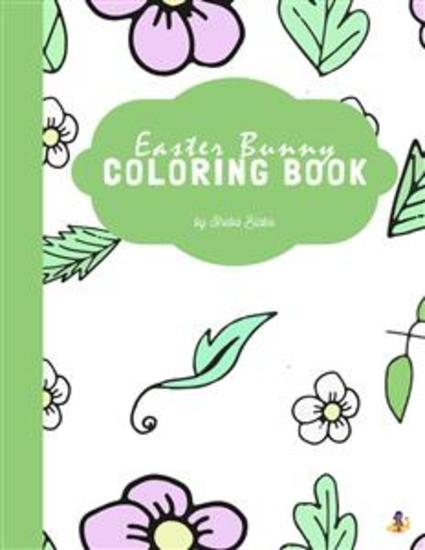
Easter Bunny Coloring Book for Kids Ages 3+ (Printable Version) - cover

Easter Bunny Coloring Book for Kids Ages 3+ (Printable Version)

Sheba Blake

Publisher: Sheba Blake Publishing Corp.

  • 0
  • 0
  • 0

Summary

Cute Easter Bunny Coloring Book for Boys and Girls!

Help your little ones celebrate Easter with a coloring book that is perfect for little hands. Easy to color designs help to build fine-motor skills and hand-eye coordination.

Why You'll Love This Book:

• Contains 20 pictures.
• Pictures are single-page, to avoid bleed-through.
• Age appropriate for pre-school and elementary age kids 3 years - and up.
• Printable version for printing at home.
• A nice sized format (8.5"x11") to print.

So if your child loves Easter and spring, then order your copy today!
Available since: 03/06/2022.

Other books that might interest you

  • Conquering Depression: A Guide to Recovery - A Group Discussion - cover

    Conquering Depression: A Guide...

    Vines Graener

    • 0
    • 0
    • 0
    Welcome to Conquering Depression: A Guide to Recovery. This audiobook is designed for anyone facing the challenges of depression or seeking to understand it more deeply. Inside, you’ll find practical steps, helpful insights, and encouragement to guide you on the path to healing. Whether you're just beginning your journey or are already taking steps toward recovery, remember that you are not alone, and that with time and effort, change is possible. Let’s begin this journey together, one step at a time.
    Show book
  • Ancient World’s Most Mysterious Religious Cults The: The History of the Cult of the Apis Bull the Eleusinian Mysteries and the Mysteries of Mithras - cover

    Ancient World’s Most Mysterious...

    Charles River Editors

    • 0
    • 0
    • 0
    To the ancient Egyptians, the gods and goddesses were all around them and could be seen daily in nature. Nearly every animal found in ancient Egypt, both domestic and wild, were associated with a god or goddess, which can be seen in Egyptian art where deities are often depicted with human bodies and animal heads. Or sometimes the deities are portrayed as complete animals. Since deities were associated with certain animals, all animals of a specific species were given divine and protected status. The reverence that ancient Egyptians had for certain animals evolved during the long duration of Pharaonic history until by the Late Period animals of specific species were mummified by the thousands as offerings for their associated deities.  
    Ancient Greece and its mythology has fascinated people for thousands of years, and few elements have intrigued people quite like the Eleusinian Mysteries, which the Greeks believed transformed the initiates and gave them knowledge that eased both the living of life on earth and allayed fears of death, allowing an acceptance of their ultimate fate. The influence of the Eleusinian Mysteries was also far reaching; for example, the Telesterion is reminiscent of the labyrinthine, symbolic structures that can be found all over pre-historic Europe, ranging from those in Ireland to Malta and Crete to the Shetlands. The larger precinct of Eleusis, combining as it did caves, terraces and buildings carved into the rock again, all echo that ancient past.  
    	The cult of Mithras was not a creation of the Romans, although they would eventually add their own rituals and mysteries to the ancient religion. In fact, the Mithraic religion was an Indo-Persian creation, a theology which managed to travel from India and back into the Hellenic and Roman world by way of Alexander the Great’s conquest of the Persian Empire. Eventually, the cult of Mithras would spread across the ancient world.
    Show book
  • Shut Up and Sell Your First Book - 48 Ways to Market Your Way to Success - cover

    Shut Up and Sell Your First Book...

    Natasa Denman

    • 0
    • 0
    • 0
    ·        Have you written a book and are keen to get it in as many hands as possible? 
    ·        Do you want to know how to avoid ending up with a garage full of books? 
    ·        Have you tried a few strategies that you read online without success? 
    As a self-published author, if you want to people to notice and buy your book you need to have a plan. In Shut Up and Sell Your First Book international book mentor Natasa Denman shares her easy-to-follow blueprint for book sales success. Following on from Shut Up and Write Your First Book and Ultimate 48 Hour Author, this trilogy is essential reading for first-time authors. 
    Natasa has written, sold, and profited from all 12 of her own books - and she has helped over 500 clients from all around the world to do the same thing. She knows a thing or two about the book industry and in this book she unpacks 48 unique ways that you can market and sell copies of your book, with most involving little or no cost to do so.  
    Utilising resources that are readily available to us all, Natasa shares her intimate knowledge of the buying habits of book purchasers as well as guiding you through ways to increase your online presence to maximise your reach. 
    While getting your book in bookstores is many people's idea of success, when it comes to monetising your book, this isn't an option for most self-published authors. But, as Natasa explains, there are lots of other ways you can sell your book and make a profit, and in this book you'll find out how. 
    So, if you are ready to SELL YOUR FIRST BOOK, it's time to Shut-Up and get to it!
    Show book
  • The English Civil Wars - 1640-1660 - cover

    The English Civil Wars - 1640-1660

    Blair Worden

    • 0
    • 0
    • 0
    A brilliant appraisal of the Civil War and its long-term consequences, by an acclaimed historian. 


    The political upheaval of the mid-seventeenth century has no parallel in English history. Other events have changed the occupancy and the powers of the throne, but the conflict of 1640-60 was more dramatic: the monarchy and the House of Lords were abolished, to be replaced by a republic and military rule. 


    In this wonderfully listenable account, Blair Worden explores the events of this period and their origins—the war between King and Parliament, the execution of Charles I, Cromwell's rule and the Restoration—while aiming to reveal something more elusive: the motivations of contemporaries on both sides and the concerns of later generations.
    Show book
  • Summary of Edward Bernays’s Propaganda - cover

    Summary of Edward Bernays’s...

    Falcon Press

    • 0
    • 0
    • 0
    Buy now to get the main key ideas from Edward Bernays’s Propaganda 
      
    People talk about “propaganda” all the time. Although the word seems to have negative connotations, whether it is good or bad depends entirely on the cause behind it and the correctness of the information it carries. 
    In Propaganda (1928), Edward Bernays explores the structure of systems that control the public mind and public opinion, and examines how propaganda affects all political and social practices. He explains how people are controlled by hidden governments that try to achieve public acceptance of certain concepts. Bernays also attempts to establish the role of intelligent propaganda in society.
    Show book
  • The Mahabharata - cover

    The Mahabharata

    Veda Vyas

    • 0
    • 0
    • 0
    Krishna Dvaipayana, also known as and Veda Vyasa "the one who classified the Vedas"), is a rishi (sage). He is best known as the author of the Mahabharata, one of the two most important epics of Hinduism. He is also credited as the traditional compiler of the Vedas, as well as the writer of other important works including the Puranas. As per the Mahabharata, Vyasa is the son of rishi Parashara and a fisherwoman named Kali (Satyavati), who later marries king Shantanu of Kuru. Throughout the epic, Vyasa appears occasionally helping the Kuru kingdom. His spiritual career includes compiling many texts and spreading the knowledge through his disciples. The festival of Guru Purnima is dedicated to him. It is also known as Vyasa Purnima, the day believed to be both of his birth and when he divided the Vedas. Vyasa is considered one of the seven Chiranjivis (long-lived, or immortals), who are still in existence according to Hindu tradition.
    Show book