Rejoignez-nous pour un voyage dans le monde des livres!
Ajouter ce livre à l'électronique
Grey
Ecrivez un nouveau commentaire Default profile 50px
Grey
Abonnez-vous pour lire le livre complet ou lisez les premières pages gratuitement!
All characters reduced
Aunt Jane's Nieces in the Red Cross - cover

Aunt Jane's Nieces in the Red Cross

Sheba Blake, Edith Van Dyne

Maison d'édition: Sheba Blake Publishing

  • 0
  • 0
  • 0

Synopsis

The "Aunt Jane's Nieces" series was a wildly popular juvenile fiction collection written by L. Frank Baum, the author of The Wonderful Wizard of Oz, using the feminine pen name "Edith Van Dyne." This book, the last in the series, has the girls tending to wounded soldiers in the early battles of World War I.
Disponible depuis: 10/01/2022.
D'autres livres qui pourraient vous intéresser

  • The Odyssey - cover

    The Odyssey

    Homer

    • 0
    • 0
    • 0
    The Odyssey is an epic poem attributed to the ancient Greek poet Homer, detailing the adventurous journey of Odysseus, the king of Ithaca, as he strives to return home after the Trojan War. 
    The narrative begins in medias res, twenty years after Odysseus left for Troy and ten years after the war ended. He finds himself trapped on the island of Ogygia, held captive by the nymph Calypso, who is in love with him. Meanwhile, back in Ithaca, his wife Penelope and son Telemachus are besieged by a group of suitors who believe Odysseus to be dead and are vying for Penelope's hand in marriage.
    Voir livre
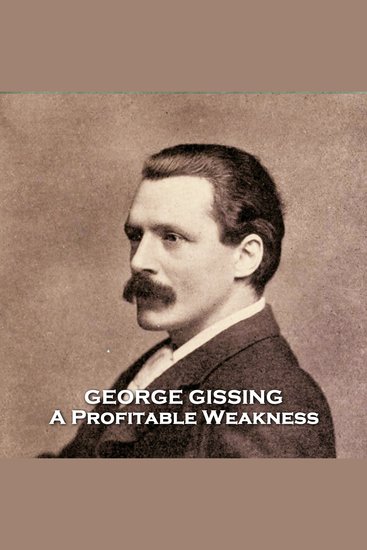
  • A Profitable Weakness - From their pens to your ears genius in every story - cover

    A Profitable Weakness - From...

    George Gissing

    • 0
    • 0
    • 0
    George Robert Gissing was born on November 22nd, 1857 in Wakefield, Yorkshire.  
    He was educated at Back Lane School in Wakefield. Gissing loved school. He was enthusiastic with a thirst for learning and always diligent.  By the age of ten he was reading Dickens, a lifelong hero. 
    In 1872 Gissing won a scholarship to Owens College. Whilst there Gissing worked hard but remained solitary. Unfortunately, he had run short of funds and stole from his fellow students. He was arrested, prosecuted, found guilty, expelled and sentenced to a month's hard labour in 1876. 
    On release he decided to start over.  In September 1876 he travelled to the United States. Here he wrote short stories for the Chicago Tribune and other newspapers. On his return home he was ready for novels. 
    Gissing self-published his first novel but it failed to sell.  His second was acquired but never published. His writing career was static.  Something had to change.  And it did. 
    By 1884 The Unclassed was published.  Now everything he wrote was published. Both Isabel Clarendon and Demos appeared in 1886. He mined the lives of the working class as diligently as any capitalist. 
    In 1889 Gissing used the proceeds from the sale of The Nether World to go to Italy. This trip formed the basis for his 1890 work The Emancipated. 
    Gissing's works began to command higher payments. New Grub Street (1891) brought a fee of £250.  
    Short stories followed and in 1895, three novellas were published; Eve's Ransom, The Paying Guest and Sleeping Fires. Gissing was careful to keep up with the changing attitudes of his audience.  
    Unfortunately, he was also diagnosed as suffering from emphysema. The last years of his life were spent as a semi-invalid in France but he continued to write. 1899; The Crown of Life. Our Friend the Charlatan appeared in 1901, followed two years later by The Private Papers of Henry Ryecroft. 
    George Robert Gissing died aged 46 on December 28th, 1903 after catching a chill on a winter walk.
    Voir livre
  • Hinds' Feet on High Places - cover

    Hinds' Feet on High Places

    Hannah Hurnard

    • 0
    • 0
    • 0
    Much-Afraid had been in the service of the Chief Shepherd, whose great flocks were pastured down in the Valley of Humiliation. She lived with her friends and fellow workers Mercy and Peace in a tranquil little white cottage in the village of Much-Trembling. She loved her work and desired intensely to please the Chief Shepherd, but happy as she was in most ways, she was conscious of several things which hindered her in her work and caused her much secret distress and shame. Join Much-Afraid and her two companions Sorrow and Suffering as they journey towards a more full understanding of living a full Christian life. A true Christian Classic that has delighted millions of readers.
    Voir livre
  • The Brothers Karamazov - cover

    The Brothers Karamazov

    Anonyme

    • 0
    • 0
    • 0
    The Brothers Karamazov, also translated as The Karamazov Brothers, is the last novel by Russian author Fyodor Dostoevsky. Dostoevsky spent nearly two years writing The Brothers Karamazov, which was published as a serial in The Russian Messenger from January 1879 to November 1880. Dostoevsky died less than four months after its publication. It has been acclaimed as one of the supreme achievements in world literature.
    
    Set in 19th-century Russia, The Brothers Karamazov is a passionate philosophical novel that discusses questions of God, free will, and morality. It has also been described as a theological drama dealing with problems of faith, doubt, and reason in the context of a modernizing Russia, with a plot that revolves around the subject of patricide. Dostoevsky composed much of the novel in Staraya Russa, which inspired the main setting.
    Voir livre
  • Andaz-e-Bayaan - Beloved Urdu classics brought to life by the inimitable Zia Mohyeddin - cover

    Andaz-e-Bayaan - Beloved Urdu...

    Ismat Chughtai, Munshi...

    • 0
    • 0
    • 0
    This audio compilation has been made with love for anyone wanting to immerse themselves in the world of Urdu stories but may find it difficult to read the script. 
    Featured authors include legends like Ismat Chughtai of the ‘Taraqqii Pasand Tehreek’ (Progressive Writer’s Movement), one of the first Muslim women to write boldly about subjects such as sexuality in the 1940’s; Munshi Premchand, a Hindu writer born in 1880, who was a pioneering figure in both Hindi and Urdu short fiction and wrote on topics such as caste, which were marked by sociopolitical and religious sensitivities; Sa’adat Hassan Manto, who belonged to both Bombay & Lahore and wrote about the partition that resulted in the nations of India and Pakistan, known for stories that showed a mirror to society regardless of the discomfort caused by stark reflections; Rajinder Singh Bedi, a versatile short fiction, novel, and film writer who also amplified the social issues of rurality as they dovetailed with national and metropolitan life; Ghulam Abbas, a novelist and short fiction writer interested in bringing to light the many ironies of modernity; Noon Meem (“NM”) Rashid, a groundbreaking modernist poet who wrote primarily in free verse, exploring contrasting relationships such as those between language & meaning and self & society; Asad Muhammad Khan, whose short fiction weaves his rich life experiences into commentaries on topics such as family life and class relations; and Intizar Hussain, who was arguably the most significant Urdu literary prose writer of the contemporary era, painting epics of migration and nostalgia on an intergenerational canvas. 
    Our narrator, Mr. Zia Mohyeddin, perhaps more than any other single figure in modern times, has shaped an appreciation for Urdu literature by making it accessible in masterfully emotive and lucid audio performances to generations of listeners who may have otherwise remained deprived of such learning and aesthetic pleasure.
    Voir livre
  • Hop-Frog - cover

    Hop-Frog

    Edgar Allan Poe

    • 0
    • 0
    • 0
    Hop-Frog is a short story by American writer Edgar Allan Poe, first published in 1849. The title character is a dwarf taken from his homeland who becomes the jester of a king particularly fond of practical jokes. Taking revenge on the king and his cabinet for striking his friend and fellow dwarf Trippetta, he dresses them as orangutans for a masquerade. In front of the king's guests, Hop-Frog murders them all by setting their costumes on fire before escaping with Trippetta. It has been suggested that Poe wrote the story as a form of literary revenge against a woman named Elizabeth F. Ellet and several others.
    Voir livre