Join us on a literary world trip!
Add this book to bookshelf
Grey
Write a new comment Default profile 50px
Grey
Subscribe to read the full book or read the first pages for free!
All characters reduced
An Essay on Criticism - cover

An Essay on Criticism

Sheba Blake, Alexander Pope

Publisher: Sheba Blake Publishing

  • 0
  • 0
  • 0

Summary

Despite its somewhat dry title, this text is not a musty prose dissection of literary criticism. Instead, the piece takes the shape of a long poem in which Pope, at the very peak of his powers, takes merciless aim at many of the best-known writers of his day. The epitome of the subtle but lethal wit Alexander Pope has come to be celebrated for, "An Essay on Criticism" is a fun and enlightening read for Brit-lit fans.
Available since: 11/30/2021.
Print length: 22 pages.

Other books that might interest you

  • The Call of Cthulhu - cover

    The Call of Cthulhu

    Howard Phillips Lovecraft

    • 0
    • 0
    • 0
    The Call of Cthulhu is a short story by American writer H. P. Lovecraft. Written in the summer of 1926, it was first published in the pulp magazine Weird Tales in February 1928.
    The story's narrator, Francis Wayland Thurston, recounts his discovery of various notes left behind by his great uncle, George Gammell Angell, a prominent professor of Semitic languages at Brown University in Providence, Rhode Island, who died during the winter of 1926, suspecting eldritch goings-on after being bumped into by a "nautical-looking negro".
    Show book
  • The Wisdom of Father Brown - cover

    The Wisdom of Father Brown

    G.K. Chesterton

    • 0
    • 0
    • 0
    The Father Brown stories sit in relation to other detective literature much as the diminutive and seemingly unworldly Priest himself often sits; quietly, thoughtfully and often to be overlooked. However, when he at lasts speaks it is with such understanding of human knowledge that the self-styled sophisticates that surround him are dumbfounded.C.K Chesterton is not concerned with the procedural minutiae of the detective’s work, nor with leaving a trail of red herrings with which to keep us guessing. Father Brown reaches his conclusions through staring into the human psyche, indeed, at times, into the human soul.
    Show book
  • Buckwheat - cover

    Buckwheat

    H. C. Andersen

    • 0
    • 0
    • 0
    Short story by H. Ch. Andersen about what happens in the fields.
    Show book
  • The Outsider - cover

    The Outsider

    Albert Camus

    • 0
    • 0
    • 0
    The Outsider, is a 1942 novella written by French author Albert Camus. The first of Camus's novels to be published, the story follows Meursault, an indifferent settler in French Algeria, who, weeks after his mother's funeral, kills an unnamed Arab man in Algiers. The story is divided into two parts, presenting Meursault's first-person narrative before and after the killing.
    Show book
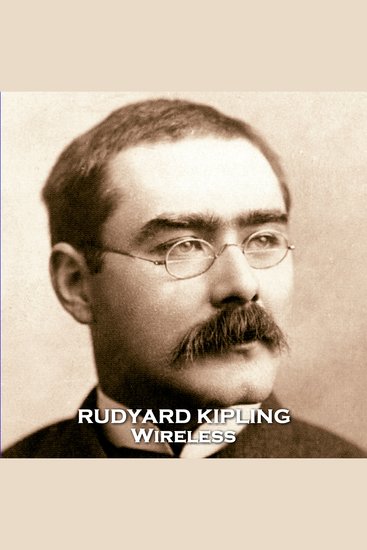
  • Wireless - A rare Kipling venture into sci fi about a technological leap - cover

    Wireless - A rare Kipling...

    Rudyard Kipling

    • 0
    • 0
    • 0
    Joseph Rudyard Kipling was born in Mumbai, India on 30th December 1865.   
     
    As was the custom in those days, he and his sister were sent back to England when he was 5.  The ill-treatment and cruelty by the Portsmouth couple they boarded with Kipling said contributed to the onset of his literary life.  
     
    At 16 he returned to India to work on a local paper where he was soon contributing and writing.  It also exposed him to the issues of identity and national allegiance which pervade much of his work.  
     
    In 1886, his ‘Departmental Ditties’, collection of verse appeared in print followed by 39 short stories for his newspaper over only 8 months.  These were then published as ‘Plain Tales from the Hills’, shortly after his 22nd birthday.  
     
    He continued his prolific pace of writing before being dismissed in a dispute and, taking his pay-off and the profits from the sale of some publishing rights, decided to return to London, travelling via Rangoon, Hong Kong, Japan and the United States, all the while writing articles, and arriving at Liverpool in October 1889. 
     
    Over the next two years he saw further works published as books and in magazines, as well as a nervous breakdown for which he was prescribed a sea voyage, to South Africa, Australia, New Zealand and India.  
     
    Happier times came with marriage to Caroline Starr Balestier in January 1892.  The honeymoon began in Vermont and ended in Yokahama where they heard their bank had failed.  They returned to Vermont and settled.  Caroline was now pregnant and he was planning the ‘Jungle Books’.  
     
    A failed arbitration between the US and England resulted in an argument between Caroline’s brother and Kipling, and then his arrest.  At the hearing he was mortified by the exposure of his private life and after settling the matter they returned to England and life in Torquay.  ‘Kim’ was published in 1902, and ‘Just So Stories for Little Children’, a year later.  
     
    In 1907 he was awarded the Nobel Prize for Literature with the citation “in consideration of the power of observation, originality of imagination, virility of ideas and remarkable talent for narration which characterise the creations of this world-famous author”.   
     
    When the Great War erupted, he scorned those who refused conscription.  His son enlisted and was killed at the Battle of Loos in September 1915, at 18, an exploding shell had ripped his face apart.  This death inspired Kipling’s writing thereafter, but the tragedy broke his life and by 1930 his prolific pen had almost ceased. 
     
    Rudyard Kipling died on 18th January 1936 from a perforated duodenal ulcer.  He was 70.  His ashes are buried at Poets’ Corner in Westminster Abbey.
    Show book

  • The Age Of Innocence - cover

    The Age Of Innocence

    Edith Wharton

    • 0
    • 0
    • 0
    The Age of Innocence is a 1920 novel by American author Edith Wharton. It was her twelfth novel and was initially serialized in 1920 in four parts, in the magazine Pictorial Review. Later that year, it was released as a book by D. Appleton & Company. It won the 1921 Pulitzer Prize for Fiction, making Wharton the first woman to win the prize. 
     
    Though the committee had initially agreed to give the award to Sinclair Lewis for Main Street, the judges, in rejecting his book on political grounds, "established Wharton as the American 'First Lady of Letters'". The story is set in the 1870s, in upper-class, "Gilded Age" New York City. Wharton wrote the book in her 50s, after she was already established as a major author in high demand by publishers.
    Show book