Join us on a literary world trip!
Add this book to bookshelf
Grey
Write a new comment Default profile 50px
Grey
Subscribe to read the full book or read the first pages for free!
All characters reduced
Ending Human Trafficking - A Handbook of Strategies for the Church Today - cover

Ending Human Trafficking - A Handbook of Strategies for the Church Today

Shayne Moore, Sandra Morgan, Kimberly McOwen Yim

Publisher: IVP Academic

  • 0
  • 0
  • 0

Summary

Author Sandra Morgan awarded Wilberforce Award
Human trafficking is one of the most pressing social justice issues of our time, and in recent years there has been renewed interest among Christians, as many have been stirred up to take their part in the ongoing battle.
This is a wonderful thing—and yet misinformed and misguided efforts can do more harm than good. Ending Human Trafficking is a handbook designed to educate churches and parachurch organizations for truly effective work.
In collaboration with The Global Center for Women and Justice at Vanguard University, Ending Human Trafficking is an accessible and compelling resource for Christian leaders, written by seasoned leaders in the struggle against modern slavery. Grounded in a theological response to the issue and filled with stories, up-to-date data, and practical tools and tips, it promises to be an invaluable resource for years to come.
Available since: 04/05/2022.
Print length: 224 pages.
Other books that might interest you

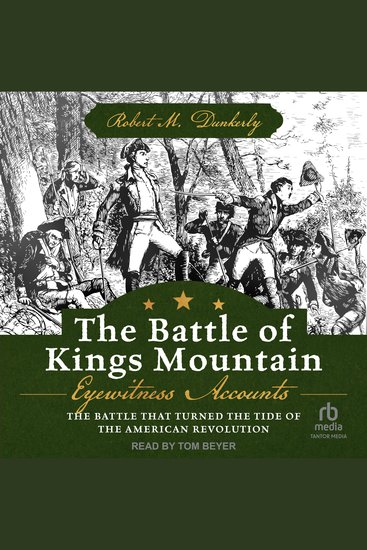
  • The Battle of Kings Mountain - Eyewitness Accounts: The Battle That Turned The Tide of the American Revolution - cover

    The Battle of Kings Mountain -...

    Robert M. Dunkerly

    • 0
    • 0
    • 0
    A pivotal moment in American history, as told by our forefathers 


    On October 7, 1780, American Patriot and Loyalist soldiers battled each other at Kings Mountain, near the border of North and South Carolina. With over one hundred eyewitness accounts, this collection of participant statements from men of both sides includes letters and statements in their original form—the soldiers' own words—unedited and unabridged. Rife with previously unpublished details of this historic turning point in the American Revolution, described as the war's "largest all-American fight," these accounts expose the dramatic happenings of the battle, including new perspectives on the debate over Patriot Colonel William Campbell's bravery during the fight. Robert M. Dunkerley's work is an invaluable resource to historians studying the flow of combat, genealogists tracing their ancestors, and anyone interested in Kings Mountain and the Southern Campaign.
    Show book
  • Tan Kah Kee: Entrepeneur Par Excellence - cover

    Tan Kah Kee: Entrepeneur Par...

    JDC Amane

    • 0
    • 0
    • 0
    In 1890, a teenage Tan Kah Kee left his hometown in Jimei, Fujian, embarking on a journey towards Singapore to join his father’s business. He single-handedly cleared his father’s debts and built thriving rubber and pineapple businesses. He lived through the harsh realities of the Great Depression and two gruelling world wars, barely escaping Japanese capture during World War Two. Despite battling numerous setbacks, he remained a charitable and compassionate man. 
     
    Illustrated by JDC Amane (creator of Lim Bo Seng and Stamford Raffles), Tan Kah Kee: Entrepreneur Par Excellence reveals the illustrious story of the “Rubber King.” Learn about his challenges, triumphs, and unwavering commitment to education and philanthropy. Be inspired by the indomitable spirit of Tan Kah Kee, a visionary leader who shaped the landscape of Singaporean education.
    Show book
  • Reagan-Mondale Debate 2 - cover

    Reagan-Mondale Debate 2

    Ronald Reagan, Walter Mondale

    • 0
    • 0
    • 0
    The second of two debates between President Ronald Reagan and former Vice President Walter F. Mondale was held in Kansas City, Missouri on October 21, 1984. Edwin Newman was the debate moderator. Georgie Anne Geyer, Marvin Kalb, Morton Kondracke, and Henry Trewhitt were the four panelists who asked questions. 
    This second debate was on defense and foreign policy. Questions focused on the following topics: Central America, the Soviet Union, regions vital to U.S. interests, Eastern Europe, use of military force, Nicaragua, Lebanon, the president’s age, strategic missiles, the president’s leadership, illegal immigration, Armageddon, the Strategic Defense Initiative, nuclear freeze, support for U.S. allies, nuclear weapons, and closing statements. Reagan won a landslide victory in 1984 winning every state except Minnesota and the District of Columbia. 
    To see both a text version and a video version of this debate, search online for “Ronald Reagan major speeches”. Audio recording courtesy of the Ronald Reagan Presidential Library. 
    aspenleafmedia.com
    Show book
  • Takka Takka Bom Bom - An Intrepid War Correspondent's 50 Year Odyssey - cover

    Takka Takka Bom Bom - An...

    Al J. Venter

    • 0
    • 0
    • 0
    The world’s oldest still-active war correspondent shares the real stories behind half a century of headlines from the front lines.
    
    The world’s oldest still-active war correspondent, Al J. Venter, has reported from the front lines for well over half a century, witnessing the horrors humanity visits upon itself in twenty-five conflict zones across Africa, the Middle East, and Central Asia.
    
    In this memoir, Venter masterfully recounts his experiences, sharing the real stories behind the headlines and the sharp lessons he learned that enabled him to survive his countless exploits, ranging from exposing a major KGB operative in Rhodesia entirely by accident, and accompanying an Israeli force led by Ariel Sharon into Beirut, to gun-running into the United States.
    Show book
  • Jesus and the Abolitionists - How Anarchist Christianity Empowers the People - cover

    Jesus and the Abolitionists -...

    Terry J. Stokes

    • 0
    • 0
    • 0
    Isn't anarchy just chaos? How could it possibly relate to Christianity? 
    Countless people, including (and sometimes especially) those from religious backgrounds, are exploring radical ideas. The pandemic, the Black liberation movement, climate disaster--all these concerns are leading us to ask, "Does our system actually work? Is capitalism ethical? Is this the only way to build a society?" 
    Questions like these led author and pastor Terry Stokes to the political philosophy of anarchy. Now, we all have a scary picture in our minds about anarchy: that it calls for chaos, violence, and disorder. But anarchy actually calls for the end of rulership, not violence in the streets. Anarchy seeks to empower small communities of people to take care of their own needs at the local level, thereby making the state obsolete. It's all about constructing societies in which people are placed above profit and systems are built on ethics of justice and equality. To Stokes, that sounded a whole lot like the building blocks of Christian faith. 
    In Jesus and the Abolitionists, Stokes introduces readers to the ancient practice of anarchy and how it intersects with Christian beliefs and values. We see how beliefs about God, humanity, divine-human interaction, the Bible, and more can be illuminated and faithfully reformulated through an anarchist lens. This view, which Stokes calls anarchist Christianity, seeks to abolish tyrannical systems that do not recognize the changing values of our times and that disempower the people. Stokes's vision of an anarchist Christian future charts a caring theology and practice of living, one based in our voluntary cooperation, the goodness of all people, and faith in God. We can build an ethical world--one built on structures of care--and anarchy might just be the unlikely key.
    Show book
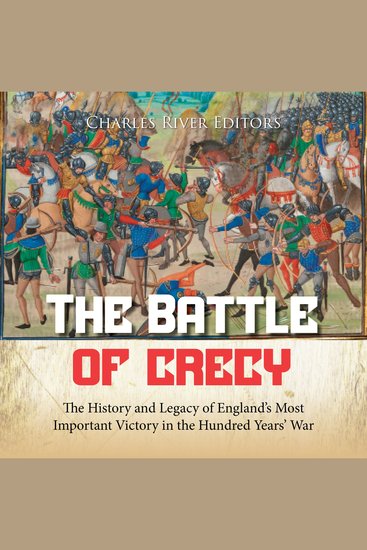
  • Battle of Crécy The: The History and Legacy of England’s Most Important Victory in the Hundred Years’ War - cover

    Battle of Crécy The: The History...

    Editors Charles River

    • 0
    • 0
    • 0
    Although it ended over 550 years ago, the Hundred Years’ War still looms large in the historical consciousness of England and France, even if the name of the famous war is a misnomer. The war was more of a series of separate conflicts between the English and French monarchies, interspersed with periods of peace, and its reputation remains an odd one, in part because its origins were based on royal claims that dated back centuries. Furthermore, the English and French remained adversaries for nearly 400 years after it ended. 
    That said, the war was transformative in many respects, and the impact it had on the geopolitical situation of Europe cannot be overstated. While some might think of the war as being a continuation of the feudal tradition of knights and peasants, the Hundred Years’ War revolutionized European warfare, and it truly helped to usher in the concept of nationalism on the continent. In England, it is remembered as a period of grandeur and success, even though the English lost the war and huge swathes of territory with it, while the French remember it as a strategic victory that ensured the continued independence of France and the denial of English hegemony. The legacy of the war has lived on ever since, helping determine how England became politically severed from the continent, how the knightly chivalric tradition slid into irrelevance, and how battlefield dominance can still leave a nation a loser in war. 
    Indeed, nothing characterized that dominance quite like the campaign that culminated with the Battle of Crécy, where the English used their diverse forces to maximum effect to defeat the French, a victory that allowed the English to eventually take and hold Calais. For about two centuries, Calais would remain the last foothold England retained on the continent, and the famous Tudor King Henry VIII conducted one of the last campaigns of his life in an effort to maintain it. 
    Show book