Join us on a literary world trip!
Add this book to bookshelf
Grey
Write a new comment Default profile 50px
Grey
Subscribe to read the full book or read the first pages for free!
All characters reduced
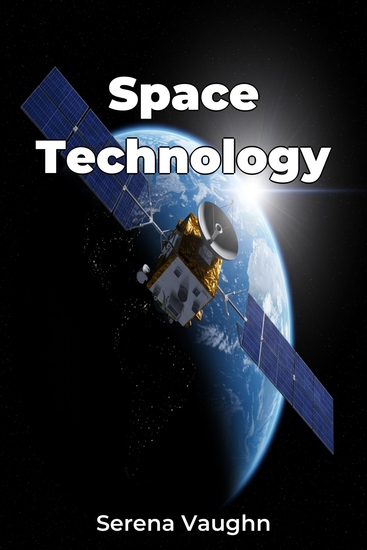
Space Technology - cover

Space Technology

Serena Vaughn

Translator A AI

Publisher: Publifye

  • 0
  • 0
  • 0

Summary

Space Technology explores the complex technologies that enable us to venture beyond Earth. It focuses on advanced computing, satellite systems, and robotic explorers, illuminating how these elements intertwine to facilitate space missions. The book highlights how initial engineering challenges were overcome with innovative solutions. For example, early communication satellites faced signal degradation issues, which led to the development of more robust and efficient transmission technologies.

 
The book progresses systematically, first introducing fundamental principles before diving into specific areas. It examines the role of computers in spacecraft navigation and life support, the diverse applications of satellite technology from communication to Earth observation, and the achievements of robotic missions on other planets.

 
The book emphasizes the importance of continued investment in these technologies to expand our knowledge of space. It also connects space technology to other fields, such as materials science and environmental science, demonstrating its broad impact.
Available since: 03/05/2025.
Print length: 99 pages.


Other books that might interest you

  • Crypto & Web3 Simplified - A Beginner’s Roadmap to the Future of Money and the Internet - cover

    Crypto & Web3 Simplified - A...

    Nura Uba

    • 0
    • 0
    • 0
    Crypto & Web3 Simplified: A Beginner’s Roadmap to the Future of Money and the Internet 
    Are you curious about cryptocurrency, blockchain, and Web3 but feel overwhelmed by the complexity, jargon, and endless hype? You’re not alone. For many beginners, the world of digital assets feels like a maze of confusing terminology, scams, and uncertainty. 
    This book is your clear and practical guide to understanding and confidently stepping into the future of money and the internet. Written in simple, beginner-friendly language, Crypto & Web3 Simplified takes you from zero knowledge to a solid foundation, showing you not just the what, but the why and how. 
    Inside, you’ll discover:The fundamentals of blockchain, crypto, and Web3 explained without technical overload.How to avoid scams, hacks, and costly mistakes as a beginner.Where to start if you want to buy, use, or invest in cryptocurrency.The real-world value behind the buzzwords NFTs, DeFi, smart contracts, and more.A step-by-step roadmap to build confidence, minimize risks, and embrace opportunities. 
    Whether you’re a complete beginner or someone who has dabbled in crypto but still feels unsure, this book will give you clarity, confidence, and a practical path forward. 
    The future of money and the internet is unfolding right now. Don’t be left behind let this Audiobook be your roadmap to navigating Web3 with knowledge and confidence.
    Show book
  • Getting Started With ChatGPT - cover

    Getting Started With ChatGPT

    Neural Quill

    • 0
    • 0
    • 0
    The future is here - Artificial Intelligence has arrived, available to anyone from almost anywhere. The first book of the series will guide the user through how to use AI via ChatGPT using a variety of interactive examples. You'll learn tips and tricks for getting the most out of ChatGPT's interface and personalizing it for your use. Listen in for an adventure into the practical realm of applied artificial intelligence.
    Show book
  • Guided Meditation for Anxiety and Stress - cover

    Guided Meditation for Anxiety...

    Meditative Hearts

    • 0
    • 0
    • 0
    Are you constantly battling against the weight of anxiety and stress? Do you find it challenging to escape the never-ending cycle of worry and tension? What if there was a gentle yet powerful tool that could offer relief and guide you toward a state of inner peace and calm?  
    Introducing "Guided Meditation for Anxiety and Stress" – your beacon of hope in the storm of modern life. This transformative audiobook serves as your sanctuary, providing solace and support as you navigate through the challenges of everyday living.  
    Picture a soothing voice gently leading you through meditation exercises crafted to dissolve anxiety and melt away stress. With each mindful breath, you release the burdens that weigh heavily on your shoulders, allowing a sense of tranquility and serenity to wash over you.  
    Say goodbye to the overwhelming grip of anxiety and stress and hello to a life filled with renewed energy and emotional balance. Whether you're grappling with deadlines, relationship issues, or the pressures of daily existence, this audiobook offers you the tools to find your center and reclaim your peace of mind.  
    Join the countless individuals who have already experienced the transformative power of guided meditation for anxiety and stress. Embrace a life of serenity, resilience, and inner strength starting today. Your journey to a calmer, more centered existence awaits.
    Show book
  • Deep Learning - Understanding the Fundamentals of Deep Neural Networks - cover

    Deep Learning - Understanding...

    Et Tu Code

    • 0
    • 0
    • 0
    This comprehensive audiobook provides an introduction to the fundamentals of deep learning, a subset of machine learning that involves the use of artificial neural networks to model and solve complex problems. The book covers the key concepts, techniques, and applications of deep learning, including the basics of neural networks and backpropagation, CNNs, RNNs, generative models, and ethical considerations. 
    With a focus on practical applications, the book explores the use of deep learning in various fields such as computer vision, natural language processing, and robotics. It also discusses future trends in deep learning, including advancements in hardware, software, and algorithms. 
    Each chapter is designed to build upon previous ones, making it easy for readers to follow along and gain a deeper understanding of the subject matter. The book includes summaries, examples, and exercises to help reinforce key concepts and apply them to real-world scenarios.
    Show book
  • The Way of the Gardener - Lost in the Weeds along the Camino de Santiago - cover

    The Way of the Gardener - Lost...

    Lyndon Penner

    • 0
    • 0
    • 0
    Reverence takes on a new meaning in this original memoir of an avid gardener walking the Camino de Santiago.
    		 
    The Camino de Santiago has been a journey for pilgrims for more than 1,000 years, testing—to varying degrees—their spirit, faith, and physical endurance. Lyndon Penner’s attention lies elsewhere. A renowned gardener and lover of literature, he revels in the plants, trees, and flowers that tell the history of the people and ecology of northern Spain.
    		 
    Brimming with wry observations—of nature, himself, and other pilgrims on the road—The Way of the Gardener reveals the beauty and the darkness of the human condition while underscoring the deeply fascinating nature of nature itself. This textured work makes for perfect armchair—or garden—reading.
    Show book
  • The Ethics of Artificial Intelligence - New Frontiers - cover

    The Ethics of Artificial...

    Craig Dames

    • 0
    • 0
    • 0
    Artificial Intelligence (AI) is a transformative technology that has evolved from theoretical concepts into practical applications in various sectors. At its core, AI refers to the simulation of human intelligence in machines, enabling them to perform tasks such as learning, reasoning, and problem-solving. These machines are programmed to analyze data, recognize patterns, and make decisions with little or no human intervention. While AI is often associated with futuristic visions of robots and autonomous systems, it is already an integral part of our daily lives, from voice assistants like Siri to recommendation algorithms used by platforms like Netflix and Amazon. 
    The history of AI dates back to ancient times, with early concepts of artificial beings found in mythology and philosophical musings. However, the field of AI as we know it began to take shape in the mid-20th century, with the work of pioneers such as Alan Turing, who proposed the idea of a machine that could simulate any human intelligence. In 1956, the term "Artificial Intelligence" was coined at the Dartmouth Conference, marking the formal beginning of AI research. Since then, AI has gone through cycles of optimism, disappointment, and resurgence, fueled by advances in computer science, mathematics, and data availability. 
    Today, AI is classified into different categories, with two primary types being narrow AI and general AI. Narrow AI refers to systems designed to handle specific tasks, such as facial recognition, language translation, or playing chess. These systems excel in their designated tasks but are limited in their ability to perform functions outside of their programming. In contrast, general AI, still a theoretical concept, refers to machines that possess the capability to understand and reason across a wide range of tasks, much like humans. While narrow AI is already commonplace, general AI remains a subject of intense research and debate within the scientific community.
    Show book