Join us on a literary world trip!
Add this book to bookshelf
Grey
Write a new comment Default profile 50px
Grey
Subscribe to read the full book or read the first pages for free!
All characters reduced
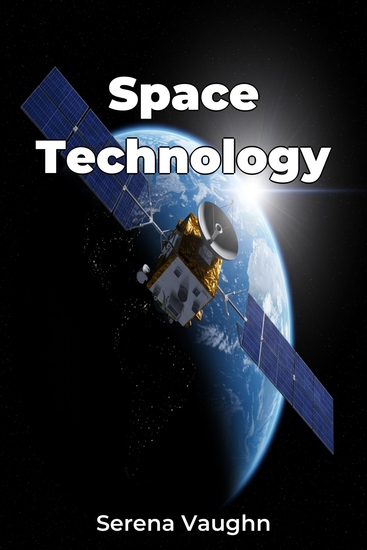
Space Technology - cover

Space Technology

Serena Vaughn

Translator A AI

Publisher: Publifye

  • 0
  • 0
  • 0

Summary

Space Technology explores the complex technologies that enable us to venture beyond Earth. It focuses on advanced computing, satellite systems, and robotic explorers, illuminating how these elements intertwine to facilitate space missions. The book highlights how initial engineering challenges were overcome with innovative solutions. For example, early communication satellites faced signal degradation issues, which led to the development of more robust and efficient transmission technologies.

 
The book progresses systematically, first introducing fundamental principles before diving into specific areas. It examines the role of computers in spacecraft navigation and life support, the diverse applications of satellite technology from communication to Earth observation, and the achievements of robotic missions on other planets.

 
The book emphasizes the importance of continued investment in these technologies to expand our knowledge of space. It also connects space technology to other fields, such as materials science and environmental science, demonstrating its broad impact.
Available since: 03/05/2025.
Print length: 99 pages.

Other books that might interest you

  • The Ward - The Life and Loss of Toronto's First Immigrant Neighbourhood - cover

    The Ward - The Life and Loss of...

    John Lorinc, Michael McClelland,...

    • 0
    • 0
    • 0
    The story of the growth and destruction of Toronto's first 'priority neighbourhood.'
       
    From the 1840s until the Second World War, waves of newcomers who migrated to Toronto – Irish, Jewish, Italian, African American and Chinese, among others – landed in 'The Ward.' Crammed with rundown housing and immigrant-owned businesses, this area, bordered by College and Queen, University and Yonge streets, was home to bootleggers, Chinese bachelors, workers from the nearby Eaton';s garment factories and hard-working peddlers. But the City considered it a slum, and bulldozed the area in the late 1950s to make way for a new civic square.
       
    The Ward finally tells the diverse stories of this extraordinary and resilient neighbourhood through archival photos and contributions from a wide array of voices, including historians, politicians, architects, story-tellers, journalists and descendants of Ward residents. Their perspectives on playgrounds, tuberculosis, sex workers, newsies and even bathing bring The Ward to life and, in the process, raise important questions about how contemporary cities handle immigration, poverty and the geography of difference.
       
    ‘The Ward shines a light on one of Toronto's most historically significant and most forgotten neighbourhoods. Instead of a straight history, the book's editors opted to present the Ward through multiple short essays, each with its own unique point of view. The result is a fascinating and varied look at an area that once concurrently defined the city and acted as its biggest shame. As a result of the Ward's eventual razing, there are few artifacts left to teach newer generations about this important part of Toronto's history. This book helps correct that.’
       
    – 2016 Toronto Book Awards Jury Citation
       
    '[The Ward] should be of interest to Canadians anywhere, reminding us that we all came from some place else.'
       
    – Michael Enright, CBC Sunday Edition
       
    Contents & Contributors
       
    Introduction – John Lorinc
       
    Searching for the Old Ward – Shawn Micallef
       
    No Place Like Home – Howard Akler
       
    Beforethe Ward: Macauleytown – Stephen A. Otto
       
    My Grandmother the Bootlegger – Howard Moscoe
       
    Against All Odds: The Chinese Laundry – Arlene Chan
       
    VJ Day – Arlene Chan
       
    Merle Foster's Studio: 'A Spot Of Enchantment' – Terry Murray
       
    Missionary Work: The Fight for Jewish Souls – Ellen Scheinberg
       
    King of the Ward – Myer Siemiatycki
       
    Where the Rich Went for Vice – Michael Redhill
       
    A Fresh Start: Black Toronto in the 19th Century – Karolyn Smardz Frost
       
    Policing the Lord’s Day – Mariana Valverde
       
    'The Maniac Chinaman' – Edward Keenan
       
    Elsie's Story – Patte Roseban
       
    Lawren Harris's Ward Period – Jim Burant
       
    'Fool's Paradise': Hastings' Anti-Slum Crusade – John Lorinc
       
    Strange Brew: The Underground Economy of Blind Pigs – Ellen Scheinberg
       
    The Consulate, the Padroni and the Labourers – Andrea Addario
       
    Excerpt: The Italians in Toronto – Emily P. Weaver
       
    Arthur Goss: Documenting Hardship– Stephen Bulger
       
    Fresh Air: The Fight Against TB – Cathy Crowe
       
    The Stone Yard – Gaetan Heroux
       
    William James: Toronto's First Photojournalist – Vincenzo Pietropaolo
       
    The Avenue Not Taken – Michael McClelland
       
    Timothy Eaton’s Stern Fortifications – Michael Valpy
       
    Settling In: Central Neighbourhood House – Ratna Omidvar & Ranjit Bhaskar
       
    Toronto’s Girl with the Curls – Ellen Scheinberg
       
    Chinese Cafés: Survival and Danger – Ellen Scheinberg & Paul Yee
       
    Defiance and Divisions: The Great Eaton's Strike – Ruth A. Frager
       
    Elizabeth Street: What the City Directories Reveal – Denise Balkissoon
       
    Growing Up on Walton Street – Cynthia MacDougall
       
    Revitalizing George Street: The Ward's Lessons – Alina Chatterjee & Derek Ballantyne
       
    Taking Care of Business in the Ward &ndash Ellen Scheinberg
       
    'A Magnificent Dome': The Great University Avenue Synagogue – Jack Lipinsky
       
    Reading the Ward: The Inevitability of Loss – Kim Storey & James Brown
       
    Toronto’s First Little Italy – John Lorinc
       
    The Elizabeth Street Playground, Revisited – Bruce Kidd
       
    Divided Loyalties – Sandra Shaul
       
    Crowded by Any Measure – John Lorinc
       
    A Peddler and His Cart: TheWard’s Rag Trade – Deena Nathanson
       
    Toronto's Original Tenement: Wineberg Apartments – Richard Dennis
       
    Excerpt: Tom Thomson's Diary – Tom Thomson
       
    An Untimely Death – Brian Banks
       
    Paper Pushers – Ellen Scheinberg 
       
    The BMR's Wake-Up Call – Laurie Monsebraaten
       
    Excerpt: Report of the Medical Health Officer … – Charles J. Hastings
       
    Dr. Clarke's Clinic – Thelma Wheatley
       
    Slum-Free: The Suburban Ideal – Richard Harris
       
    The Glionna Clan and Toronto's First Little Italy – John E. Zucchi
       
    'The Hipp' – Michael Posner
       
    Before Yorkville– John Lorinc
       
    Sex Work and the Ward’s Bachelor Society – Elise Chenier
       
    Public Baths: Schvitzing on Centre Avenue – Ellen Scheinberg
       
    The Health Advocates: McKeown on Hastings – John Lorinc
       
    Remembering Toronto's First Chinatown – Kristyn Wong-Tam
       
    Tabula Rasa – Mark Kingwell
       
    Unrealized Renewal  – J. David Hulchanski
       
    A Short History of the 'Civic Square' Expropriation – John Lorinc
       
    Storytelling is Part of the Story – Tatum Taylor
       
    How We Think About What (Little) Survives – Patrick Cummins
       
    Institutional Memory – Scott James & Victor Russell
       
    Alternative Histories – MichaelMcClelland
    Show book
  • Welfare of Future Children The: Reproductive Ethics and Disability Screening - cover

    Welfare of Future Children The:...

    Rebecca Bennett

    • 0
    • 0
    • 0
    Narrated by Rebecca Bennett, this open access practical guide to reproductive ethics navigates the complex subject of the policy around IVF treatment and disability screening based on the concerns around the welfare of future children. It focuses on 3 questions in order to examine these often complex philosophical issues: 
    · Should we allow prospective parents using IVF to implant an embryo with a condition considered to be a disability? 
    · Is routine screening for Down syndrome in pregnancy ethically acceptable, even if there is evidence that individuals may feel pressure to accept this screening? 
    · Are we justified in attempting to evaluate the potential parenting ability of those trying to access fertility treatment (e.g. disabled people or individuals with past criminal convictions) and prevent access in some cases? 
    Rebecca Bennett walks the listener through different answers to these questions, exploring issues such as whether it is ever morally wrong to reproduce, whether we have a moral obligation to try and bring the ‘best’ children we can into existence and how we can assess the quality of future lives.There is, of course, no consensus about what the ‘right’ answers are to these questions, however answers are needed. 
    This area of policy and regulation is one that, Bennett argues, is heavily influenced by intuition, social norms and bias. The Welfare of Future Children invites us to question these norms and to come to a position on these issues that emphasises reason, transparency and accountability. 
    The ebook editions of this book are available open access under a CC BY-NC-ND 4.0 licence on bloomsburycollections.com. Open access was funded by the University of Manchester, UK.
    Show book
  • Tempestates Temporalis - The Occulted Model of Time and the Temporal Storms Threatening to Shatter Our Reality - cover

    Tempestates Temporalis - The...

    D.J. Rees

    • 0
    • 0
    • 0
    THE OCCULTED MODEL OF TIME AND THE TEMPORAL STORMS THREATENING OUR REALITY 
    Finally, a way out of Plato’s Cave. 
    Shattering the cavern walls with rigorous, groundbreaking physics, Tempestates Temporalis is the blueprint for a new era. As anomalous high strangeness becomes the new normal, theoretical physics must finally account for what it has long ignored: phenomenology, parapsychology, and ancient occult technologies. 
    In this provocative work, D.J. Rees introduces the Resonant Actuation of Fluid Time (RAFT)—a radical framework that replaces our static understanding of spacetime with a dynamic, fluid reality. Rees argues that our universe’s ground state is a Time-First Fluid Substrate known as the "Pleroma." This temporal ocean doesn't just surround us; it pummels against our consensus reality, shaping existence itself. 
    Why you must read Tempestates Temporalis: 
    A New Reality: Discover a model where time is a literal, flowing ocean. See how physical matter—previously viewed as "dead rocks"—emerges as stable, self-organizing vortex solitons within this vast, temporal fluid. 
    The Unification of the Impossible: Bridging the gap between mainstream science and the unexplained. Explore how fluid dynamics equations explain Dark Matter, the Hubble tension, UAP flight telemetry, remote viewing, and the Mandela Effect under one unifying theory. 
    The dam has broken. The Pleroma is rising. 
    Are you ready to stop observing the waves and start riding them? Whether you dive into the pages or immerse yourself in the audio journey, you are stepping onto the deck. Take the helm of the RAFT and perceive the universe for what it truly is: a continuous, breathing ocean of infinite potential.
    Show book
  • Aircraft Systems - cover

    Aircraft Systems

    Facundo Conforti

    • 0
    • 0
    • 0
    This audiobook is narrated by an AI Voice. Aircraft Systems have been an under explored subject in flight academies. The truth is, a pilot must be familiar with each of their aircraft's systems before commencing their initial flights. 
     
    	In this work, you will learn everything about the basic systems of the main light or small aircraft: landing gear, tires, flight controls, fuel, electricity, cables and control rods, control surfaces, and all the key systems that make up your aircraft’s equipment. 
     
    	Learning aircraft systems should take place during the initial flight hours for aviation students. This will provide them with the necessary tools to understand what is happening with the operation of each of these systems at all times. A particular skill that will maximize safety in flight operations. 
     
    	All of us, as human beings, need to understand how our body functions to identify deficiencies and stay healthy. As pilots, we need to understand how our aircraft systems work to identify malfunctions and manage emergencies efficiently and safely.
    Show book
  • Paleozoic Era The: The History of the Geologic and Evolutionary Changes that Began Over 500 Million Years Ago - cover

    Paleozoic Era The: The History...

    Editors Charles River

    • 0
    • 0
    • 0
    The current view of science is that Earth is around 4.6 billion years old, and the first 4 billion years of its development are known as the Precambrian period. For the first billion years or so, there was no life in Earth. Then the first single-celled life-forms, early bacteria and algae, began to emerge. It’s unclear where they came from or even if they originated on this planet at all, but this gradual development continued until around four billion years ago when suddenly (in geological terms) more complex forms of life began to emerge.  
    	Scientists call this time of an explosion of new forms of life the Paleozoic Era, and it stretched from around 541 to 250 million years ago. In the oceans and then on land, new creatures and plants began to appear in bewildering variety, and by the end of this period, life on Earth had diversified into a myriad of complex forms that filled virtually every habitat and niche available in the seas and on the planet’s only continent, Pangea. 
    	The Precambrian Period is divided into three eons: the Hadean, the Archaean, and the Proterozoic. One layer of carbon in rocks that date to the Archaean Eon, found on islands west of Greenland, seems to have fossilized tracks that may have been left by some form of organic life, but scientists simply are not certain. The oldest confirmed remains of life date from the same eon and were found in rocks in Western Australia, which were found to contain fossilized bacteria estimated to be 3.46 billion years old. It seems likely that there were thousands, perhaps even millions of forms of life in these early periods, and most seem to have been microscopic in size and very simple in developmental terms.
    Show book
  • Ultimate Cardano Smart Contracts - Unlock the Full Potential of the Cardano Blockchain by Developing Real-World Web 30 Projects Using Plutus Smart Contracts and App Development - cover

    Ultimate Cardano Smart Contracts...

    Lawrence Ley

    • 0
    • 0
    • 0
    Build Decentralized Applications Today for a Better Tomorrow
    Book DescriptionUnlock the full potential of the Cardano blockchain for building decentralized Web 3.0 apps with Ultimate Cardano Smart Contracts.
    This book takes you on a journey from the basics of blockchain evolution, cryptography, and Cardano's unique consensus algorithm, to the intricacies of transactions and smart contracts. You'll dive deep into Plutus, Cardano's native smart contract language, and master essential tools like the Transaction Builder and Validators. Learn how to mint your own tokens and utilize the best development tools available.
    Through a real-world ticketing application project, you'll design, implement, test, and deploy a decentralized application, ensuring robust security and scalability. Troubleshoot common issues and explore the vibrant Cardano ecosystem, filled with resources and communities to support your ongoing development journey.
    By the end of this book, you'll have the skills and confidence to create sophisticated smart contracts and contribute to the innovative world of Cardano.
    Table of Contents
    1. Blockchain Evolution
    2. Cryptography and Consensus Algorithms Overview
    3. Transactions
    4. Plutus
    5. Transaction Builder
    6. Validators
    7. Minting
    8. Tooling
    9. Ticket Application Design
    10. Ticket Application Implementation
    11. Testing, Security, and Scaling
    12. Troubleshooting
    13. Cardano Ecosystem
    14. Closing Remarks      
    Bibliography      
    Index
    Show book