Join us on a literary world trip!
Add this book to bookshelf
Grey
Write a new comment Default profile 50px
Grey
Subscribe to read the full book or read the first pages for free!
All characters reduced
The Collected Works of Selma Lagerlöf - cover

The Collected Works of Selma Lagerlöf

Selma Lagerlöf

Translator Velma Swanston Howard, William Frederick Harvey, Pauline Bancroft Flach, Arthur G. Charter

Publisher: DigiCat

  • 0
  • 0
  • 0

Summary

The Collected Works of Selma Lagerlöf presents a rich tapestry of narratives that weave together elements of realism, fantasy, and folklore, showcasing Lagerlöf's distinctive literary style that blends elegant prose with profound emotional depth. This compilation includes her most renowned works, such as 'The Wonderful Adventures of Nils' and 'Gösta Berling's Saga,' both of which exemplify her ability to illustrate the landscapes of Sweden while exploring universal themes of love, redemption, and the human condition. Lagerlöf's use of vivid imagery and symbolic motifs reflects her dedication to the natural world and personal transformation, positioning her within the broader context of late 19th and early 20th-century literature, where she emerges as a pivotal figure in Swedish literary history and a precursor to modernism. Selma Lagerlöf, the first female writer to win the Nobel Prize in Literature in 1909, was deeply influenced by her upbringing in a rural Swedish environment infused with folklore and mythology. Her experiences in a family with strong literary traditions, along with her tireless work as an advocate for women's education, propelled her to become a powerful voice for change through her writings. Lagerlöf's poignant storytelling not only reflects her personal struggles and triumphs but also her commitment to social issues, making her works resonate with a larger audience. This anthology is highly recommended for readers interested in exploring the intricate ways in which literature can bridge cultures and evoke empathy. Lagerlöf's stories offer a unique lens into the complexities of human experiences, making The Collected Works not just a celebration of her literary contributions, but an invitation to appreciate the transformative power of storytelling.
Available since: 11/13/2022.
Print length: 2234 pages.
Other books that might interest you

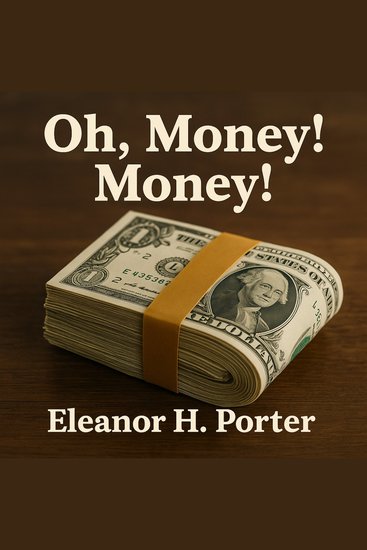
  • Oh Money! Money! - cover

    Oh Money! Money!

    Eleanor H. Porter

    • 0
    • 0
    • 0
    Oh, Money! Money! is a heartfelt and insightful tale about the challenges and transformations that wealth brings into ordinary lives. When unexpected fortune falls into the hands of people unprepared for its power, it tests their values, relationships, and sense of purpose. With humor, warmth, and sharp observations, the story explores how money can both unite and divide, offering lessons on integrity, generosity, and the true meaning of happiness. This audiobook invites listeners to reflect on their own relationship with success and abundance, encouraging them to seek balance between material comfort and emotional fulfillment. A timeless exploration of human nature, it delivers both entertainment and wisdom for those striving to live with clarity and purpose.
    Show book
  • The Magic Shop - cover

    The Magic Shop

    H. G. Wells

    • 0
    • 0
    • 0
    Out for a walk in London one day, Gip and his father happen upon a magic shop. At Gip's urging, the two go in — and things grow more and more curious by the minute. Counters, store fixtures, and mirrors seem to move around the room, and the shopkeeper is most mysterious of all. Gip is thrilled by all he sees, and his father is at first amused, but when things become stranger and sinister father is no longer sure where reality ends and illusion begins.
    Show book
  • Les Misérables: Volume 4: The Idyll in the Rue Plumet and the Epic in the Rue St Denis - Book 3: The House in the Rue Plumet (Unabridged) - cover

    Les Misérables: Volume 4: The...

    Victor Hugo

    • 0
    • 0
    • 0
    Victor-Marie Hugo (26 February 1802 - 22 May 1885) was a French poet, novelist, essayist, playwright, and dramatist of the Romantic movement. During a literary career that spanned more than sixty years, he wrote abundantly in an exceptional variety of genres: lyrics, satires, epics, philosophical poems, epigrams, novels, history, critical essays, political speeches, funeral orations, diaries, and letters public and private, as well as dramas in verse and prose.
    BOOK 3: THE HOUSE IN THE RUE PLUMET: About the middle of the last century, a chief justice in the Parliament of Paris having a mistress and concealing the fact, for at that period the grand seignors displayed their mistresses, and the bourgeois concealed them, had "a little house" built in the Faubourg Saint-Germain, in the deserted Rue Blomet, which is now called Rue Plumet, not far from the spot which was then designated as Combat des Animaux.
    Show book
  • The Last Man - cover

    The Last Man

    Mary Shelley

    • 0
    • 0
    • 0
    "The Last Man" is a novel written by Mary Shelley, the author best known for "Frankenstein." Published in 1826, "The Last Man" is a work of science fiction and is considered one of the earliest examples of post-apocalyptic literature. The novel is set in the late 21st century and narrated by a character named Lionel Verney. It tells the story of a devastating global pandemic that wipes out most of the world's population. Lionel, seemingly the last surviving human, recounts the events leading up to the downfall of civilization and his experiences as the titular last man.
    Show book
  • Grisha - cover

    Grisha

    Anton Pavlovich Chekhov

    • 0
    • 0
    • 0
    Short story about a little boy who learns how to perceive the world.
    Show book
  • Pygmalion - cover

    Pygmalion

    George Bernard Shaw

    • 0
    • 0
    • 0
    Pygmalion is a play by George Bernard Shaw, named after the Greek mythological figure. It premiered at the Hofburg Theatre in Vienna on 16 October 1913 and was first presented in German on stage to the public in 1913. Its English-language premiere took place at Her Majesty's Theatre in the West End in April 1914 and starred Herbert Beerbohm Tree as phonetics professor Henry Higgins and Mrs Patrick Campbell as Cockney flower girl Eliza Doolittle.
    In ancient Greek mythology, Pygmalion fell in love with one of his sculptures, which then came to life. The general idea of that myth was a popular subject for Victorian era British playwrights, including one of Shaw's influences, W. S. Gilbert, who wrote a successful play based on the story called Pygmalion and Galatea that was first presented in 1871. Shaw would also have been familiar with the musical Adonis and the burlesque version, Galatea, or Pygmalion Reversed. Shaw's play has been adapted numerous times, most notably as the 1938 film Pygmalion, the 1956 musical My Fair Lady and its 1964 film version.
    Shaw mentioned that the character of Professor Henry Higgins was inspired by several British professors of phonetics: Alexander Melville Bell, Alexander J. Ellis, Tito Pagliardini, but above all, the cantankerous Henry Sweet.
    Show book