Join us on a literary world trip!
Add this book to bookshelf
Grey
Write a new comment Default profile 50px
Grey
Subscribe to read the full book or read the first pages for free!
All characters reduced
Trench War Facts - cover

Trench War Facts

Sebastian Farnham

Translator A AI

Publisher: Publifye

  • 0
  • 0
  • 0

Summary

Trench War Facts offers a stark and detailed exploration into the brutal realities of trench warfare during World War I, primarily focusing on the Western Front. The book meticulously examines the physical and psychological conditions endured by soldiers, such as the constant threat of diseases like trench foot, alongside the evolution of military strategies and technological advancements designed to break the stalemate. Readers gain insights into the desperate measures employed by military leaders and the innovative tactics that emerged from this static yet devastating form of conflict.

 
The book progresses systematically, starting with the historical context that led to trench warfare and the initial failures of offensive operations. Subsequent chapters delve into the specifics of life and death within the trenches, utilizing primary source accounts to vividly illustrate the soldiers' experiences. The analysis extends to the evolution of military strategies, the impact of technological innovations like tanks and poison gas, and culminates with an assessment of trench warfare's long-term impact on military thinking and the collective memory of World War I. This approach highlights how trench warfare acted as a catalyst for significant military and technological innovation, challenging simplistic views of stagnation.
Available since: 02/20/2025.
Print length: 57 pages.


Other books that might interest you

  • Australia's History - a Comprehensive Guide on the history of Australia - cover

    Australia's History - a...

    History Retold

    • 0
    • 0
    • 0
    Welcome to a fascinating journey through the history of the land down under. This audiobook takes you on an immersive experience that is both informative and enchanting, giving you a glimpse into the captivating past of Australia. 
    Through the twists and turns of the country's history, you'll discover fascinating characters and captivating stories that are both unique and enthralling. It is sure to take you on a spellbinding adventure through time. 
    What sets this audiobook apart is its narrative style that transports you to another world, where you'll feel like you're right there, watching history unfold before your very eyes. The writing style is as enchanting as it is informative, making for an immersive experience like no other. 
    Through wars, natural disasters, economic booms and busts, the people of Australia have always found a way to endure and come out stronger on the other side. This audiobook celebrates the resilience and triumph of a nation that has weathered countless challenges. 
    In addition to its captivating stories and characters, the audiobook explores the magical and mystical factors that have made this nation's history so unique and captivating. From the harsh climate to the rugged landscapes, from the isolation of the continent to the complexities of multiculturalism, the audiobook provides a fascinating look at Australia's unique challenges. 
    In conclusion, this audiobook is a must-have for anyone who loves the magic of storytelling and is interested in the history of Australia. So why wait? Download this audiobook today, and let the magic begin!
    Show book
  • America’s Defeat - A Revolutionary War Won by the British - cover

    America’s Defeat - A...

    Marcus Draysun

    • 0
    • 0
    • 0
    The American colonies in the mid-18th century were a thriving part of the British Empire, but tensions had been brewing for decades. What began as minor grievances over trade and governance escalated into a full-scale rebellion. British policies, aimed at tightening control over the colonies, ignited widespread dissatisfaction, planting the seeds of revolution. 
    One of the earliest sources of discontent was the British system of taxation. The Sugar Act of 1764 and the Stamp Act of 1765 imposed direct levies on the colonies, enraging merchants, publishers, and legal professionals. The colonists, who had no direct representation in the British Parliament, saw these taxes as a blatant overreach. Their rallying cry—“No taxation without representation”—became a defining slogan of the growing resistance. The Stamp Act’s repeal in 1766 provided temporary relief, but the British government soon followed with new policies, including the Townshend Acts, which further strained relations. 
    The presence of British troops in colonial cities only exacerbated tensions. Stationed to enforce British laws and maintain order, soldiers were often viewed as an occupying force. Clashes between civilians and the military became frequent, culminating in the infamous Boston Massacre of 1770, where British troops fired into a crowd of unarmed colonists, killing five. This event, heavily publicized by Patriot leaders, fueled anti-British sentiment and strengthened calls for defiance.
    Show book
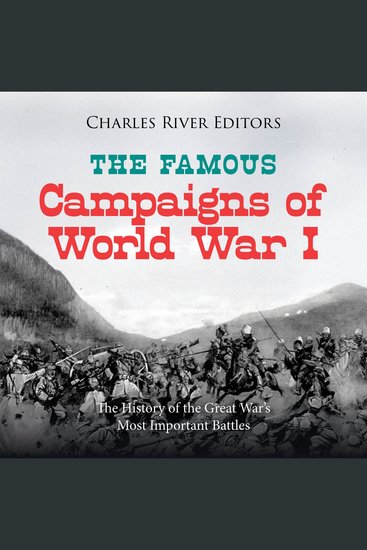
  • Famous Campaigns of World War I The: The History of the Great War’s Most Important Battles - cover

    Famous Campaigns of World War I...

    Charles River Editors

    • 0
    • 0
    • 0
    World War I, also known in its time as the “Great War” or the “War to End all Wars”, was an unprecedented holocaust in terms of its sheer scale. Fought by men who hailed from all corners of the globe, it saw millions of soldiers do battle in brutal assaults of attrition which dragged on for months with little to no respite. Tens of millions of artillery shells and untold hundreds of millions of rifle and machine gun bullets were fired in a conflict that demonstrated man’s capacity to kill each other on a heretofore unprecedented scale, and as always, such a war brought about technological innovation at a rate that made the boom of the Industrial Revolution seem stagnant.  
    	The enduring image of World War I is of men stuck in muddy trenches, and of vast armies deadlocked in a fight neither could win. It was a war of barbed wire, poison gas, and horrific losses as officers led their troops on mass charges across No Man’s Land and into a hail of bullets. While these impressions are all too true, they hide the fact that trench warfare was dynamic and constantly evolving throughout the war as all armies struggled to find a way to break through the opposing lines. 
    	Though World War I is almost synonymous with trench warfare, that method of combat was nothing new. There had been extensive use of trenches during the later stages of the American Civil War (1864-1865), and trench warfare was constant during the Second Boer War (1899-1902), the Russo-Japanese War (1904-1905), and the Balkan Wars (1912-1913). These conflicts showed that modern firepower combined with entrenched positions gave a decisive advantage to the defender, yet European observers failed to learn any lessons from these conflicts, and the scale of trench warfare in World War I far eclipsed anything seen before or since, especially on the Western Front.
    Show book
  • Israel: The Last Vestige of European Colonialism in the Middle East - cover

    Israel: The Last Vestige of...

    A.A. Castor

    • 0
    • 0
    • 0
    "Israel: The Last Vestige of European Colonialism in the Middle East" is an in-depth examination of the historical and ongoing impact of European colonialism on the formation and expansion of Israel. Through a critical lens, this book challenges the mainstream narratives that depict Israel as the rightful homeland of the Jewish people and instead explores its colonial roots and the displacement of the indigenous Palestinian population. 
      
    The book delves into the role of European powers, from the Zionist movement's inception in the late 19th century to the political maneuvers that facilitated the establishment of Israel in 1948. It uncovers how Western support, particularly from Britain and the United States, enabled the colonization of Palestine while ignoring the rights of the native population. It also analyzes the demographic changes brought about by waves of European Jewish immigration and presents genetic evidence highlighting the European ancestry of much of the modern Israeli population. 
      
    By exploring topics such as the marginalization of non-European Jewish communities, the ongoing occupation of Palestinian territories, and the influence of Western powers, this book aims to shed light on the historical injustices and colonial dynamics that continue to shape the Israeli-Palestinian conflict. Readers will be encouraged to question established narratives, understand the broader geopolitical implications, and consider the pathways to justice and accountability for the Palestinian people.
    Show book
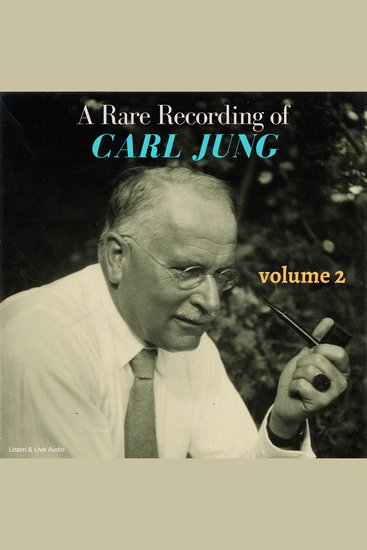
  • Rare Recording of Carl Jung A - Volume 2 - cover

    Rare Recording of Carl Jung A -...

    Carl Jung

    • 0
    • 0
    • 0
    Carl Gustav Jung (July 26, 1875 - June 6, 1961) was a Swiss psychiatrist and psychoanalyst who founded analytical psychology. Jung's work was influential in the fields of psychiatry, anthropology, archaeology, literature, philosophy, and religious studies. Working as a research scientist, Jung came to the attention of Sigmund Freud, and the two men conducted a lengthy correspondence for a while. However, while Jung worked on his Psychology of the Unconscious, tensions manifested between him and Freud because of various disagreements, including those concerning the nature of libido. While Jung did think libido was an important source for personal growth, unlike Freud, he did not believe that libido alone was responsible for the formation of the core personality.
    Show book
  • The Broken Mirror - Adapting in the Abyss of Simulation - cover

    The Broken Mirror - Adapting in...

    Halasius Bradford

    • 0
    • 0
    • 0
    In an age where connectivity has reached unprecedented heights, humanity paradoxically experiences intensified solitude. The Internet, social media, and digital communication tools promise constant interaction, yet beneath the veneer of perpetual engagement lies a profound sense of detachment. We have woven an expansive digital web, intricately threading through every dimension of our lives. Yet, far from binding us together in deeper and more meaningful ways, this net has fragmented our relationships, distorted our sense of self, and left us lonelier than ever. 
    Indeed, the irony of our modern era is that as connectivity increases, isolation intensifies. Rather than fostering intimacy, the digital world frequently reduces interactions to hollow performances, substituting genuine human connection with a relentless pursuit of validation. We inhabit a world where messages traverse the globe instantaneously, yet conversations grow superficial; friendships are quantified by follower counts rather than measured by emotional depth; and love becomes mediated through glowing screens, stripped of warmth, tactile presence, and vulnerable authenticity.
    Show book