Join us on a literary world trip!
Add this book to bookshelf
Grey
Write a new comment Default profile 50px
Grey
Subscribe to read the full book or read the first pages for free!
All characters reduced
Sculptures in Politics - cover

Sculptures in Politics

Sebastian Farnham

Translator A AI

Publisher: Publifye

  • 0
  • 0
  • 0

Summary

Sculptures in Politics explores how statues and monuments serve as potent tools of political propaganda and vital components in shaping historical narratives. These sculpted figures, often viewed as static objects, actively mold public opinion and reinforce dominant ideologies. The book argues that these works communicate complex messages visually, transcending linguistic barriers to influence collective memory.

 
The book examines the creation of statues as instruments of state power, illustrating how regimes commission these pieces to legitimize their rule. It also investigates how monuments reinforce specific historical narratives, often marginalizing certain voices. The debates surrounding the removal of controversial monuments are discussed, revealing challenges in reconciling conflicting interpretations of history.

 
Using an interdisciplinary approach, the book combines art historical analysis with political and social theory to understand sculptures' political agency. Starting with core concepts of memory and power, it progresses chronologically through case studies, from ancient Roman portraiture to contemporary debates over Confederate monuments, equipping readers to critically analyze the monuments they encounter and understand their ongoing impact.
Available since: 02/26/2025.
Print length: 58 pages.

Other books that might interest you

  • America’s Most Notorious Con Artists: The History and Schemes of Successful Cons in the United States - cover

    America’s Most Notorious Con...

    Editors Charles River

    • 0
    • 0
    • 0
    The art of the confidence trick is a controversial craft that is as old as time itself. In the early years of civilization, unscrupulous folks bottled and peddled assortments of fake cures and potions. Snake oil salesmen aside, charlatans posed as mystical beings with supernatural powers, promising to end droughts and other misfortunes of the gullible with what were in reality parlor tricks and illusions.  
    	Indeed, throughout history, unabashedly brazen characters managed to make careers out of deception. 17th century Britain, for instance, was terrorized by William Chaloner, the most infamous serial counterfeiter and con artist of his time before he was ultimately bested by Sir Isaac Newton himself. The British trickster posed as a quack doctor and a clairvoyant who dispensed false fortunes (most likely via an early form of cold reading) and bogus healing antidotes, but these were bush-league frauds in comparison to one of his most renowned claims to fame: he once bribed four Jacobite sympathizers to crank out pamphlets regarding King James II's denunciation of His Royal Highness William, and later double-crossed his co-conspirators by tipping off the cops and swiftly decamping with the 1,000 reward.  
    	Confidence women were equally active players in such dirty, fixed games. Doris Payne was a professional pilferer of jewels whose unconventional vocation spanned six decades. Throughout all her hits across the United States, Europe, and Asia, Payne adhered to a simple, yet effective method of operation: she donned stylish, pricey clothes, singled out impressionable male shopkeepers and distracted them with flirtatious small talk, and secretly palmed jewelry with sleight-of-hand tricks. One of the most recent was Frank Abagnale, a career impersonator, former forger of bank checks turned FBI employee, and the subject of the 2002 film Catch Me If You Can.  
    Show book
  • The Problem of Increasing Human Energy - cover

    The Problem of Increasing Human...

    Nikola Tesla

    • 0
    • 0
    • 0
    In "The Problem of Increasing Human Energy," Nikola Tesla embarks on an intellectual voyage that explores the avenues through which human society could augment its collective energy resources for the betterment of mankind. First published in Century Magazine in 1900, this work showcases Tesla's profound ingenuity and his visionary approach to not only scientific and technological advancements but also to addressing broader existential challenges. Tesla delves into the mechanics of harnessing energy from renewable sources, such as the sun and wind, underscoring the critical importance of sustainable practices long before they entered the mainstream discourse. Moreover, he contemplates the symbiotic relationship between physical vitality, mental clarity, and moral integrity, positing that enhancements in these domains are pivotal for humanity's progress. Through "The Problem of Increasing Human Energy," Tesla offers a glimpse into his extraordinary mind, presenting a blend of technical innovation and philosophical insight aimed at uplifting human existence.
    Show book
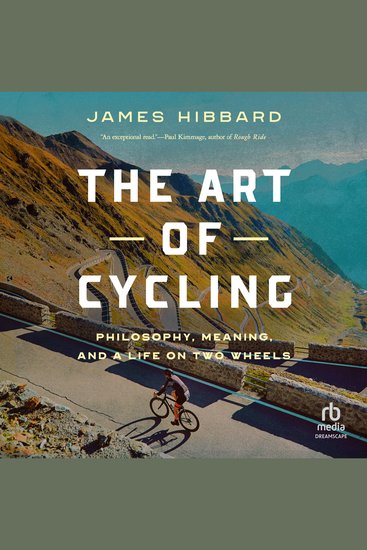
  • The Art of Cycling - Philosophy Meaning and a Life on Two Wheels - cover

    The Art of Cycling - Philosophy...

    James Hibbard

    • 0
    • 0
    • 0
    A meditative love letter to the sport of cycling, revealing how cycling can shed new light on age-old questions of selfhood, meaning, and purpose.Interweaving cycling, philosophy, and personal narrative, The Art of Cycling provides listeners with a deep understanding of the highs and lows of being an elite athlete, the limits of approaching any sporting pursuit from a strictly rational perspective, and how the philosophical and often counterintuitive lessons derived from sport can be applied to other areas of life.Accessible to everyone from the hardened racer to the casual fan, this updated American edition of The Art of Cycling engages the history of thought through the lens of cycling to undermine much of what is typically thought of as "intellectual," breathing new vitality into life, and countering society's obsession with progress and drive towards the abstract, detached, and virtual.
    Show book
  • PONS 10-Minuten-Lektüren Englisch - A Piece of Cake - Kurzgeschichten aus dem englischen Alltag - cover

    PONS 10-Minuten-Lektüren...

    GmbH PONS Langenscheidt

    • 1
    • 1
    • 0
    10-Minuten-Lektüren Englisch  
    - Haben Sie mal 10 Minuten? Dann lesen Sie los!  
    - Lernen Sie mit 15 kurzen und einfachen Geschichten Großbritannien und seine Bewohner kennen.
    - Unbekannte Wörter? Kein Problem. Erschließen Sie sich neue Wörter und Wortfamilien mit anschaulichen und liebevoll illustrierten Mind-Maps – einfacher geht's nicht!
    - Über die Fußnoten können Sie zudem direkt zur Übersetzung am Ende des Kapitels springen und wieder zurück zur Geschichte.
    Show book
  • The Hollow Crown - Shakespeare on How Leaders Rise Rule and Fall - cover

    The Hollow Crown - Shakespeare...

    Eliot A. Cohen

    • 0
    • 0
    • 0
    What Shakespeare's plays can teach us about modern-day politics 


    William Shakespeare understood power: what it is, how it works, how it is gained, and how it is lost. 


    In The Hollow Crown, Eliot A. Cohen reveals how the battling princes of Henry IV and scheming senators of Julius Caesar can teach us to better understand power and politics today. The White House, after all, is a court—with intrigue and conflict rivaling those on the Globe's stage—as is an army, a business, or a university. And each court is full of driven characters, in all their ambition, cruelty, and humanity. Henry V's inspiring speeches reframe John F. Kennedy's appeal, Richard III's wantonness illuminates Vladimir Putin's brutality, and The Tempest's grace offers a window into the presidency of George Washington. 


    An original and incisive perspective, The Hollow Crown shows how Shakespeare's works transform our understanding of the leaders who, for good or ill, make and rule our world.
    Show book
  • Marco Polo - The Voyager Who Discovered Parts of China and Asia in the 13th Century - cover

    Marco Polo - The Voyager Who...

    Kelly Mass

    • 0
    • 0
    • 0
    Marco Emilio Polo, born in Venice, was a Venetian merchant, explorer, and writer who became renowned for his extraordinary travels across Asia between 1271 and 1295. His journey, which spanned much of the Silk Road, was chronicled in The Travels of Marco Polo, also known as Book of the Marvels of the World and Il Milione (circa 1300). This book introduced Europeans to the vast and mysterious cultures of the East, revealing the immense wealth and size of the Mongol Empire and the Yuan Dynasty in China. It provided the first detailed European account of countries like Persia, India, Japan, and several other regions in Asia, offering a window into worlds previously unknown to the West. 
    Marco's journey was influenced by his family’s mercantile background. His father and uncles, Niccolò and Maffeo Polo, were established traders who had ventured into Asia, meeting the powerful Mongol leader, Kublai Khan. In 1269, after returning to Venice, they reunited with Marco and set off again for Asia. Along the Silk Road, they encountered various cultures and challenges before reaching Cathay, modern-day China, where they were welcomed by Kublai Khan’s court. The Khan was impressed with Marco’s intelligence and demeanor, appointing him as his foreign emissary. This role allowed Marco to undertake diplomatic missions across the Mongol Empire and beyond, traveling to places such as Burma, India, Sri Lanka, and Indonesia.
    Show book