Junte-se a nós em uma viagem ao mundo dos livros!
Adicionar este livro à prateleira
Grey
Deixe um novo comentário Default profile 50px
Grey
Assine para ler o livro completo ou leia as primeiras páginas de graça!
All characters reduced
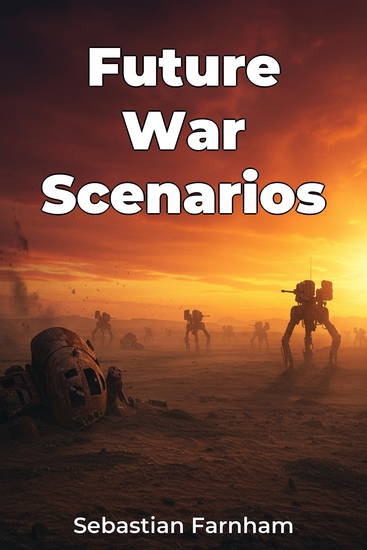
Future War Scenarios - cover
LER

Future War Scenarios

Sebastian Farnham

Tradutor A AI

Editora: Publifye

  • 0
  • 0
  • 0

Sinopse

Future War Scenarios explores how artificial intelligence, robotics, and climate change are converging to reshape future conflicts. It dives into how AI systems might automate military decisions and enhance weaponry, potentially leading to unforeseen escalations. The book highlights that climate change could exacerbate global tensions through resource scarcity and mass migrations, sparking new conflicts.

 
The book uniquely examines the synergistic effects of AI, robotics, and climate change, rather than treating them separately. It begins by introducing these core concepts, then progresses through sections analyzing AI-driven weapons, the use of robotics in combat, and climate change's impact on political stability. Using government reports, academic studies, and expert interviews, it builds convincing arguments about the future of war.

 
This analysis is critical for policymakers, military strategists, and anyone interested in global security. The book argues that understanding this transformation is essential for adapting military strategy and strengthening international cooperation in the face of evolving threats.
Disponível desde: 04/03/2025.
Comprimento de impressão: 71 páginas.

Outros livros que poderiam interessá-lo

  • Why Morals Fail Under Pressure - cover

    Why Morals Fail Under Pressure

    A.A. Castor

    • 0
    • 0
    • 0
    When crisis strikes, do our moral codes stand firm—or crumble beneath the weight of survival? In this riveting exploration, A.A. Castor reveals how the COVID-19 pandemic tested our deepest values, transforming bustling communities in the Philippines and beyond into crucibles of ethical tension. From the haunting stories of betrayal and greed to awe-inspiring acts of heroism and solidarity, Castor uncovers the hidden forces that shape our decisions when everything we hold dear hangs in the balance. 
    Drawing on real-life accounts, historical parallels, and philosophical insights, this book paints a vivid portrait of humanity at its breaking point—and at its most compassionate. You'll journey through desperate hoarding sprees and selfless community pantries, witness neighbors turn on each other and frontline workers rise to unprecedented challenges, and wrestle with the question: Can empathy truly conquer fear when survival is at stake? 
    Why I Am Writing This Book is not just a chronicle of crisis; it's a clarion call to examine our own moral resilience. Castor challenges you to reflect on what happens when the lines between right and wrong blur, urging readers to forge a future where ethical fortitude endures—even in the darkest moments. If you're seeking an unflinching look at how adversity can both shatter and strengthen our shared humanity, and if you long for hope in the face of uncertainty, this book offers a powerful roadmap to navigate the moral storms ahead.
    Ver livro
  • Sabotage! - An In-Depth Investigation of the 1943 Liberator Crash that Killed Polish General Sikorski - cover

    Sabotage! - An In-Depth...

    Chris Wroblewski, Garth Barnard

    • 0
    • 0
    • 0
    On the night of July 4, 1943, transport aircraft Liberator AL523 took off from Gibraltar's North Front tarmac and within moments crashed into the sea with only one survivor, the pilot. The commander-in-chief of the Polish army and prime minister of the Polish government-in-exile, General Wladyslaw Sikorski, was dead. 


    Rumors as to the cause of the crash abounded. Was it pilot error? Was it, as officially classified, merely an accident, or was it, as the authors conclude in this riveting and meticulous study, an act of sabotage? 


    In this extensive piece of research, Chris Wroblewski and Garth Barnard examine numerous primary sources, including the complete court of inquiry transcripts, produce detailed analysis of aircraft components and systems, and unearth many little-known eyewitness accounts to give this investigation a compelling conclusion. Within the book the authors also dispel several conspiracy theories that have emerged since this catastrophe; particularly that this event was a disastrous assassination attempt with blame on the British, Soviets, and Nazis. 


    This is an exhaustive piece of investigative journalism that puts the record straight once and for all.
    Ver livro
  • Cutting into the silence - Breaking through the systems that shape us - cover

    Cutting into the silence -...

    Baki Topal

    • 0
    • 0
    • 0
    Description: 
    Cutting into the Silence is a contemplative audiobook that blends personal memoir with reflection on care, resilience, and what it means to remain human in systems driven by efficiency and control. 
    Narrated with restraint and clarity, the book follows an oncology surgeon’s journey from a small mountain village in Turkey to a medical career in Belgium. Along the way, listeners are invited into moments of vulnerability, ethical doubt, and quiet determination—both in the operating room and beyond it. 
    Rather than offering prescriptions, the audiobook creates space for reflection. It introduces the Zigana model as a compass for growth — rooted in motivation, curiosity, and emotional and social intelligence—while remaining grounded in lived experience and patient stories. 
    Listener perspective: 
    “Contemplative memoir paralleling medical practice with the human experience.” — BookLife Reviews 
    “A powerful reminder that caring for others starts with understanding them as people, not cases.” — Readers’ Favorite 
    “A compassionate and thoughtful guide to reclaiming one’s humanity in a systems-driven world.” — Kirkus Reviews 
    This audiobook is for listeners interested in healthcare, leadership, ethics, and personal growth—and for anyone reflecting on how to live and work with integrity inside complex systems.
    Ver livro
  • Famous British Political Speeches - cover

    Famous British Political Speeches

    James Ramsay MacDonald, Neville...

    • 0
    • 0
    • 0
    This audio includes the actual recordings of speeches from six of the most famous British politicians: James Ramsay MacDonald, King George V, King Edward VIII, Stanley Baldwin, Neville Chamberlain, and King George VI. 
    ©2013 Rick Sheridan (P)2013 Rick Sheridan
    Ver livro
  • Wisdom in Speech - The Art of Communication - cover

    Wisdom in Speech - The Art of...

    Esther Jameson

    • 0
    • 0
    • 0
    Effective communication serves as the bedrock of personal and professional success. It enables us to express our ideas clearly, persuade others, and forge stronger relationships. This chapter delves into the essential elements that make up effective communication, emphasizing the need to understand its fundamental principles. 
    At the core of effective communication lies the understanding of its basics. This involves recognizing the different modes of communication—verbal, non-verbal, and written—and knowing when and how to use each mode effectively. Communication is not just about speaking or writing well; it's equally about listening. Active listening skills are crucial as they allow individuals to interpret both the words and the non-verbal cues sent by others, enhancing mutual understanding. 
    The distinction between verbal and non-verbal communication is another significant aspect. Verbal communication uses words to convey messages, which can be in oral or written form. In contrast, non-verbal communication includes gestures, facial expressions, body language, and even the tone of voice. Mastering both forms is vital for effective communication, as non-verbal cues often speak louder than words.
    Ver livro
  • The Battle of Britain - How the RAF Defended the Skies and Changed the Course of the War - cover

    The Battle of Britain - How the...

    Sage Winters

    • 0
    • 0
    • 0
     The Battle of Britain was not an isolated event. It was the culmination of a series of escalating tensions, military buildups, and ideological confrontations that had been brewing for years. By 1939, Europe was on the brink of war. The world watched as Adolf Hitler's ambitions for territorial expansion grew, and the Nazi regime began implementing its aggressive policies across Europe. 
      
    The rise of Nazi Germany under Hitler was a response to the humiliation the country had suffered after World War I. With the Treaty of Versailles in 1919, Germany was burdened with harsh reparations, which led to economic instability and social unrest. In this environment, Hitler’s National Socialist party capitalized on the public’s desire for national renewal. He began rearming Germany in the early 1930s, violating the treaty’s restrictions and asserting military strength across Europe. 
      
    By the mid-1930s, Britain and France found themselves at odds with Germany’s expanding influence. In 1938, Hitler annexed Austria and then demanded control over Czechoslovakia’s Sudetenland. When the Munich Agreement failed to halt his expansionist ambitions, Britain began to realize that appeasement would not work. The threat of war was no longer theoretical; it was imminent.
    Ver livro