Join us on a literary world trip!
Add this book to bookshelf
Grey
Write a new comment Default profile 50px
Grey
Subscribe to read the full book or read the first pages for free!
All characters reduced
Court Records - cover

Court Records

Sebastian Farnham

Translator A AI

Publisher: Publifye

  • 0
  • 0
  • 0

Summary

"Court Records" explores how pivotal legal battles have molded modern societies by examining landmark judicial proceedings and their lasting impact on justice systems worldwide. The book emphasizes that understanding the evolution of legal frameworks is essential for grasping the current social order and navigating future legal reforms. For instance, key legal battles have redefined civil rights and liberties, impacting freedom of speech and equality before the law. Similarly, cases addressing economic inequalities have scrutinized antitrust laws and labor rights, shaping corporate accountability. 

 
The book adopts a comparative approach, analyzing legal developments across diverse societies, including Asia, Africa, and Latin America, to avoid a Eurocentric bias. It delves into the core concept of judicial precedent and its role in shaping legal doctrines. By analyzing court archives, transcripts, and legal commentaries, the book reveals the interdisciplinary nature of legal studies, connecting law with political science, sociology, and history. 

 
The findings in "Court Records" offer real-world applications for legal professionals, policymakers, and citizens alike. It addresses ongoing debates, such as the role of judicial activism and the interpretation of constitutional principles, encouraging critical assessment of the legal landscape. 

 
The book progresses by first establishing fundamental principles, then exploring judicial precedent, and finally analyzing specific historical cases categorized by societal impact, offering a comprehensive view of legal history.
Available since: 03/29/2025.
Print length: 65 pages.

Other books that might interest you

  • Qin Dynasty - The Birth of China and the Great Wall Legacy - cover

    Qin Dynasty - The Birth of China...

    Rolf Hedger

    • 0
    • 0
    • 0
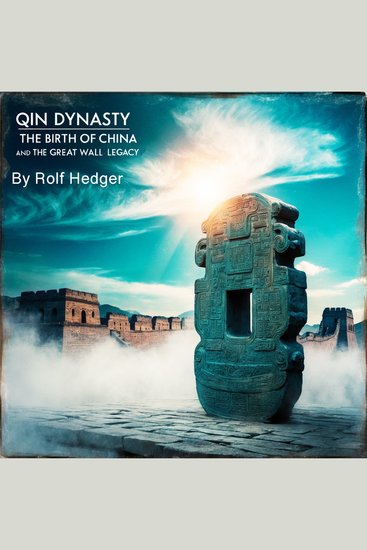
    The Qin state emerged as a formidable power during the turbulent Warring States period (475–221 BCE), a time when rival kingdoms vied for dominance over China. Originally a small and relatively minor state located in the western regions, Qin gradually expanded its influence through strategic warfare, strong leadership, and administrative reforms. Unlike some of the more culturally refined states in the east, Qin was often perceived as a land of rugged warriors and strict discipline, an image that ultimately worked in its favor. 
    One of the key figures in Qin’s rise was Duke Xiao (r. 361–338 BCE), who implemented sweeping reforms with the help of his advisor Shang Yang. Shang Yang, a staunch advocate of Legalism, introduced policies that emphasized merit-based governance, agricultural development, and a powerful military structure. His reforms transformed Qin into a highly efficient and centralized state, strengthening its ability to compete with and eventually surpass its rivals. While Shang Yang's policies greatly benefited Qin, they also led to significant social hardships, as strict laws and severe punishments were imposed to maintain order. 
    Militarily, Qin adopted advanced tactics and weaponry, incorporating iron tools and crossbows that gave its armies a technological edge. The state also developed a well-organized conscription system, ensuring a steady supply of disciplined soldiers. Unlike some of the fragmented alliances among other states, Qin’s centralized command structure allowed for swift and decisive military campaigns. Under leaders such as King Huiwen and later King Zhaoxiang, Qin expanded its territory, securing vital strategic locations that set the stage for its final conquest.
    Show book
  • End of History and the Last Man The: Book Summary & Analysis - cover

    End of History and the Last Man...

    Briefly Summaries

    • 0
    • 0
    • 0
    This is a concise summary and analysis of The End of History and the Last Man, by  
    Francis Fukuyama.
     
    It is not the original book and is not affiliated with or endorsed by Francis Fukuyama.
     
    Ideal those seeking a quick and insightful overview.
    The End of History and the Last Man explores the profound idea that history, as a dynamic process driven by ideological conflict, may have reached its conclusion with the triumph of liberal democracy. Combining political philosophy, history, and sociology, this groundbreaking work examines how liberal democracy emerged as the dominant form of governance, its strengths and vulnerabilities, and whether human fulfillment can truly be achieved within this framework. The book delves into the implications of this "end of history," questioning whether material progress and individual freedoms are enough to satisfy the human desire for recognition, identity, and meaning.
    Show book
  • The Chinese Great Leap Forward Famine - A Social and Political Catastrophe - cover

    The Chinese Great Leap Forward...

    Sarah Willards

    • 0
    • 0
    • 0
    The origins of the Great Leap Forward are deeply rooted in the political ambition and ideological vision of Mao Zedong, the founding leader of the People’s Republic of China. Following the success of the Communist revolution in 1949, Mao sought not only to rebuild a war-torn nation but to rapidly transform it into a socialist utopia capable of rivaling the industrial powers of the West. By the mid-1950s, China had already launched its First Five-Year Plan, modeled after the Soviet approach to centralized economic planning. Encouraged by early gains in heavy industry, Mao envisioned a second phase of development that would leap over traditional stages of economic growth. 
    At the heart of this vision was a push for mass mobilization. Mao believed that the sheer size of China's population could be harnessed as a revolutionary force capable of achieving miraculous feats. The Great Leap Forward, initiated in 1958, was designed to propel China into a modern communist society by emphasizing agricultural collectivization and rural industrialization simultaneously. Rather than relying on expert knowledge or slow-paced industrial planning, Mao favored decentralized enthusiasm and ideological commitment, trusting that the collective will of the people would overcome any technical limitations. 
    One of the most radical elements of this plan was the establishment of people’s communes, which replaced the traditional family unit and private farming with large-scale collective labor. Households were merged into communes comprising thousands of individuals, who would eat, sleep, and work under strict communal arrangements. The idea was to increase efficiency and free up labor for industrial production, especially in rural areas where backyard furnaces were set up to produce steel. This was accompanied by an aggressive campaign to eliminate what were seen as capitalist tendencies, including private plots and individual incentives.
    Show book
  • Yassir Arafat: A short biography - 5 Minutes: Short on time – long on info! - cover

    Yassir Arafat: A short biography...

    5 Minutes, 5 Minute Biographies,...

    • 0
    • 0
    • 0
    Yassir Arafat, leader of the Palestinians and Nobel Peace Prize laureate: Life and work in a short biography! Everything you need to know, brief and concise. Infotainment, education and entertainment at its best!
    Show book
  • Manipulation - A Complete Guide To Using Dark Psychology To Manipulate Influence Persuade And Control The Mind: NLP Body Language and How to Analyze People (Vol 2) - cover

    Manipulation - A Complete Guide...

    Adam Schultz

    • 0
    • 0
    • 0
    Highly Effective Techniques to Persuade and Influence Anyone! – Vol. 2 
      
    Manipulation can take many different forms. It can be used as a way of asking for a favor or manipulating others without being aware of it. Essentially, this is a tactic that is used to get someone to do something important. The following audiobook discusses 30 techniques that you can use to help you control somebody properly. While many people will see manipulation as a dishonest act, something that is evil and difficult to counter, manipulation is actually manipulating others to do what you want them to do. Whether you're trying to sell a product, a service, or just get someone to do you a favor, you're going to learn that coercion will help you get those kinds of results. 
    The fact is, we are imperfect human beings. We have some vulnerabilities. And if you research and get to know these vulnerabilities, you're going to have a huge power in your hands. Once you learn the right manipulation techniques, the real ones, it's entirely possible to manipulate other people's thoughts and make them do what you want. 
    Here's what you'll master with this bundle (Vol. 1 and Vol. 2):Using body language to become a fantastic communicatorInterpreting gestures, and subtle signs to analyze othersPersuading people with easeRecognizing when someone is manipulating youDefending yourself from every type of manipulatorDealing with an abusive or manipulative partnerUsing manipulation as a means of persuasionRaising your emotional intelligence and self-awarenessKnowing exactly how to act in any type of social or work situation 
      
    And much more! 
    So, What You're Waiting For, Get Started Today!
    Show book
  • History of New York City: A Captivating Guide to Historical Events and Facts You Should Know About NYC - cover

    History of New York City: A...

    Captivating History

    • 0
    • 0
    • 0
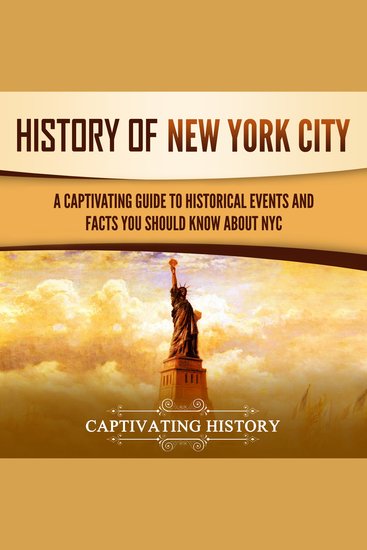
    Dive into the heart of New York City with this captivating guide. Discover the captivating saga of one of the world’s most iconic cities. 
    What This Audiobook Offers:Prehistoric Beginnings: Discover how the Ice Age sculpted the land that would become New York City, setting the stage for millennia of history.The Lenape Legacy: Explore the sustainable practices of the Lenape people, whose deep respect for the land influenced the early development of the area.Impact of European Exploration: Unveil the dramatic changes brought by European explorers and settlers, from the Dutch to the English, and how their ambitions shaped the city’s future.Pivotal Battles and Colonial Struggles: Relive the critical moments of conflict and courage that helped forge a nation with New York City at its core.Capital of a New Nation: Trace New York’s journey as the first capital of the United States and how it became a symbol of new beginnings and democratic ideals.Melting Pot of Cultures: Step into the diverse world of immigrants who found a home in New York, contributing to its rich cultural tapestry.Harlem Renaissance and Cultural Movements: Experience the explosion of creativity in the Harlem Renaissance and the city’s ongoing role as a beacon for cultural and social movements.And Much, Much More! 
    History of New York City is your ticket to understanding how New York became the city it is today. Scroll up and click the “add to cart” button to begin exploring the history of New York City today!
    Show book