Join us on a literary world trip!
Add this book to bookshelf
Grey
Write a new comment Default profile 50px
Grey
Subscribe to read the full book or read the first pages for free!
All characters reduced
Civil Rights - cover

Civil Rights

Sebastian Farnham

Translator A AI

Publisher: Publifye

  • 0
  • 0
  • 0

Summary

"Civil Rights" explores the long struggle for racial equality in the United States, highlighting legislative milestones, activism, and key court decisions. The book argues that this pursuit is ongoing, requiring constant vigilance to dismantle systemic barriers. Understanding the history of slavery and Jim Crow laws is crucial for grasping current challenges, as the book examines the social, political, and economic forces impacting civil rights.

 
The book begins by introducing foundational concepts before chronologically exploring the movement's phases. It delves into landmark legislation like the Civil Rights Act of 1964 and the Voting Rights Act of 1965, analyzing their impact. Central figures are profiled, and contemporary issues like systemic racism and police brutality are examined, demonstrating the movement's enduring relevance.

 
Supported by primary and secondary sources, "Civil Rights" uniquely draws connections between history, political science, sociology, and legal studies. This interdisciplinary approach enhances the book's argument by illustrating how social, political, and legal factors interact to shape the landscape of civil rights, offering a comprehensive understanding of the movement.
Available since: 03/21/2025.
Print length: 65 pages.
Other books that might interest you

  • Ownership - The Evangelical Legacy of Slavery in Edwards Wesley and Whitefield - cover

    Ownership - The Evangelical...

    Sean McGever

    • 0
    • 0
    • 0
    ECPA Top Shelf Book Cover Award
    The Gospel Coalition Book Awards Award of Distinction–History and Biography
    Men of their time?
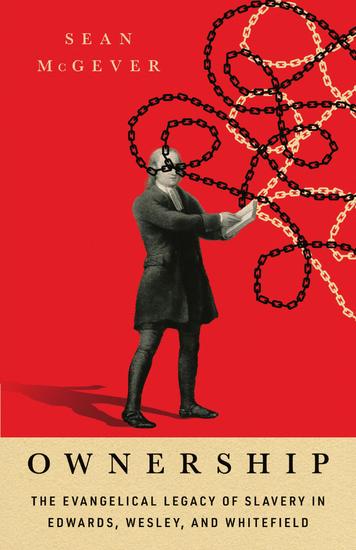
    Jonathan Edwards, John Wesley, and George Whitefield were the three most prominent early evangelicals—and all three were deeply compromised on the issue of slavery. Edwards and Whitefield both kept slaves themselves, and Wesley failed to speak out against slavery until near the end of his life.
    In Ownership, Sean McGever tells the true story of these men's relationships to slavery: a story that has too often been passed over or buried in scholarly literature. Laying out the dominant attitudes among Christians toward slavery at the time, McGever sets these "men of their times" in their own context, inviting us to learn how these shapers of American evangelicalism contributed to the tragic history of racism in America. He also explores how Christians finally began to recognize that slavery, which they'd excused for most of Christian history, is actually wrong. It's a story that white evangelicals must wrestle with today.
    Ownership is more than a book of history. It's an invitation to examine our own legacies and to understand—and take ownership of—both our heritage and our own part in the story.
    Show book
  • 999 Inside Death Row in the United States - cover

    999 Inside Death Row in the...

    Arnaud Gaillard

    • 0
    • 0
    • 0
    On death row, the poorest and most numerous, with no family and no decent lawyer, are sometimes executed before all their appeals have been exhausted. Their fate consigned to modest prison cemeteries. In Texas, the number engraved on the cement stone begins with 999.
    Out of 50 American states, 34 still have the death penalty. Why and how? The author's investigation took him to California, Utah, Oklahoma, Texas, Louisiana, Tennessee, Mississippi and Pennsylvania. A human immersion into the heart of American society and its judicial system, through encounters with death row inmates, lawyers and victims' families.
    This fascinating book finely deconstructs the American myth of fair and infallible justice—from the deplorable conditions of confinement to daily abuse, from random legal recourse to political and judicial manipulation. More than just a sentence, the death penalty appears to be torture with many faces. And in an America on the move, there are signs that abolition is on the way. 
    999, is the fruit of a fact-finding mission carried out by the French association, Ensemble contre la peine de mort (ECPM), with financial support from the European Union.
    Show book
  • Fleecy Clouds - One Woman's Story of Surviving and Thriving after Childhood Abuse - cover

    Fleecy Clouds - One Woman's...

    Gail Champion Barber, Alice...

    • 0
    • 0
    • 0
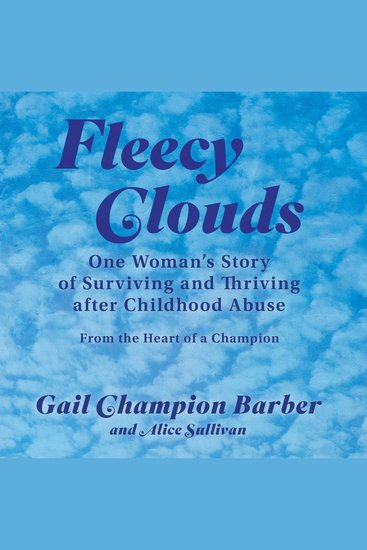
    Gail's family was poor but rich with love. When her mother was in the hospital giving birth to the youngest child, their house burned. Before leaving the hospital, Gail’s mother was diagnosed with cancer.  
    When her mother died, Gail and her siblings went to stay with their family, eventually living at her grandmother's house. Although warned that this was not a good decision, Gail’s father felt it was his only option. However, it was nearly fatal for little Gail. Her father—her hero—saved her in the nick of time.  
    The Welfare Department soon removed Gail and her two younger siblings and placed them in foster homes. They were ultimately placed at Childhaven, an orphanage for fortunate children. 
    Despite great sadness and pain in their early years, Gail and her siblings grew up to be strong, loving, and faith-filled adults. But those early traumatic childhood events weighed on Gail’s body, mind, and spirit until she was in her forties. Finally agreeing to seek help, she started seeing a Christian counselor. That was the beginning of her healing journey. 
    No matter how much hurt you’ve endured, there’s always a path to healing and wholeness. In Fleecy Clouds: One Woman’s Story of Surviving and Thriving after Childhood Abuse, Gail’s story is evidence of the resiliency of the human spirit, the power of love, and the never-ending mercies of a loving Father. 
    Show book
  • Transforming Focus: Reclaim Your Attention and Embrace a Fuller Life - "Elevate your focus! Discover transformative audio lessons to enhance your attention and enrich your life" - cover

    Transforming Focus: Reclaim Your...

    Orson Kincaid

    • 0
    • 0
    • 0
    Transforming Focus: Reclaim Your Attention and Embrace a Fuller Life  
    ⭐⭐ Simplified Guide & Explanations Included ⭐⭐  
    Are you eager to advance in your career and enhance your understanding by successfully applying deep thinking to reclaim your attention?   
    In search of a thorough guide that encompasses all the essential elements needed to unlock clarity in your life?   
    Your quest ends here!   
    This guide is your ultimate resource for enhancing your insight, applying your skills, and engaging in practical exercises. With this guide in hand, you're set for success.   
    Updated to reflect the latest strategies for reclaiming focus.   
    Key features of this enriched guide:  
    - In-depth insights into the art of deep thinking and reclaiming your attention   
    - Comprehensive exploration of methods for enhancing clarity   
    - Effective strategies for focusing your mind and overcoming distractions   
    Our guide stands out through its thorough coverage, which is crucial for your success in achieving clarity. Concepts are not merely touched upon; they are explored with clarity and precision.   
    Crafted with a logical structure and accessible language, our guide ensures smooth transitions between topics. Say goodbye to complex jargon and embrace clear, precise, and technically accurate content.   
    So, why hesitate? Click the BUY NOW button, secure your guide, and embark on your journey to reclaiming your attention and living a fuller life!
    Show book
  • The Holodomor - The Brutal Terror-Famine Inflicted on Millions of Ukrainians by the Soviet Union - cover

    The Holodomor - The Brutal...

    Kelly Mass

    • 0
    • 0
    • 0
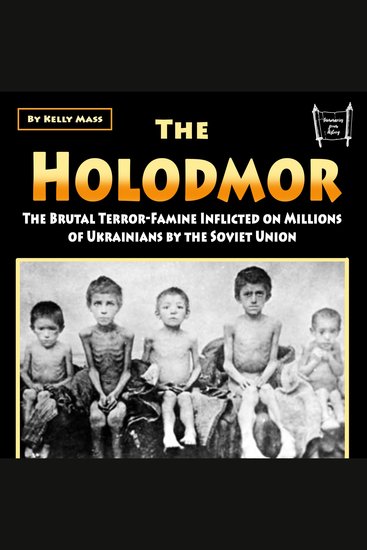
    The Holodomor, also known as the Terror-Famine (meaning 'to kill through starving' in Ukrainian) or The Great Famine, was a devastating man-made disaster that struck Soviet Ukraine between 1932 and 1933. It resulted in the deaths of millions of Ukrainians, with the word "Holodomor" specifically highlighting the purposeful nature of the famine. The term reflects the severity of the event, suggesting not only a catastrophic food shortage but also a deliberate attempt to destroy the Ukrainian population through starvation. Various factors contributed to the famine's man-made characteristics, including the refusal of Soviet authorities to allow outside aid, the forced confiscation of family food supplies, and the imposition of severe restrictions on population movement. 
    The Holodomor was part of a larger Soviet famine that affected other grain-producing regions of the USSR in the same period, but Ukraine, as one of the Soviet Union's most important agricultural producers, bore the brunt of the crisis. The famine was not a result of natural disasters but of Stalinist policies, such as forced collectivization, that wreaked havoc on Ukraine's agricultural systems. The Ukrainian people, most of whom were ethnic Ukrainians, faced the unimaginable toll of starvation in what remains one of the most catastrophic peacetime events in Ukrainian history. 
    Ukraine, along with 15 other countries, officially recognized the Holodomor as a genocide perpetrated by the Soviet regime against the Ukrainian people, a stance that has been supported since 2006. The question of how many people perished remains a subject of debate. A joint declaration made to the United Nations in 2003 suggested that between 7 and 10 million Ukrainians died during the famine. However, current estimates by scholars tend to range from 3.5 to 5 million deaths.
    Show book
  • The Contradictions of Ageing - cover

    The Contradictions of Ageing

    Violet Taylor

    • 0
    • 0
    • 0
    The book explores the problems that may arise from an overly open mindset, and uses a story about a community organization to illustrate the paradox of tolerance, pointing out that unlimited tolerance may lead to the disappearance of tolerance. It also mentions that one should be cautious about being open-minded in personal life, especially in terms of time allocation and career choices.
    Show book