Join us on a literary world trip!
Add this book to bookshelf
Grey
Write a new comment Default profile 50px
Grey
Subscribe to read the full book or read the first pages for free!
All characters reduced
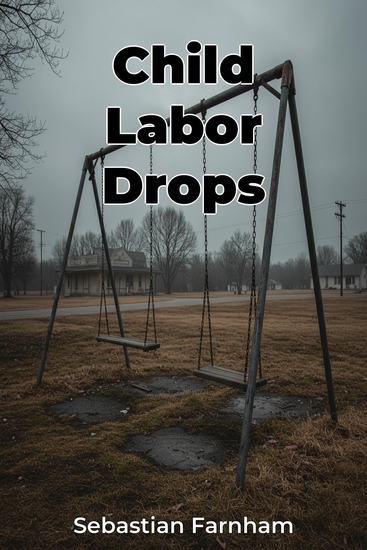
Child Labor Drops - cover

Child Labor Drops

Sebastian Farnham

Translator A AI

Publisher: Publifye

  • 0
  • 0
  • 0

Summary

"Child Labor Drops" examines the significant decline in youth employment during the Great Depression, positing that evolving labor laws, often overlooked, substantially shaped young people's lives. This book explores the intersection of political actions, economic hardships, and societal shifts that redefined the role of youth in the American workforce. For instance, while child labor was once common, the economic crisis intensified scrutiny, leading to reforms. 

 
The book analyzes the history by detailing pre-1930s attitudes towards child labor, the impact of the Great Depression, and the legislative landscape, including the New Deal policies. Drawing on government statistics, legislative records, and personal accounts, the book provides a comprehensive view of the era. It challenges conventional narratives by arguing that labor laws, sometimes with unintended consequences, played a critical role in reducing youth employment.
Available since: 02/27/2025.
Print length: 60 pages.


Other books that might interest you

  • Setting Sights: Histories and Reflections on Community Armed Self-Defense - cover

    Setting Sights: Histories and...

    scott crow

    • 0
    • 0
    • 0
    Decades ago, Malcolm X eloquently stated that communities have the legitimate right to defend themselves “by any means necessary” with any tool or tactic, including guns. This wide-ranging anthology uncovers the hidden histories and ideas of community armed self-defense, exploring how it has been used by marginalized and oppressed communities as well as anarchists and radicals within significant social movements of the twentieth and twenty-first centuries. 
    Far from a call to arms, or a “how-to” manual for warfare, this volume offers histories, reflections, and questions about the role of firearms in small collective defense efforts and its place in larger efforts toward the creation of autonomy and liberation. 
    Featuring diverse perspectives from movements across the globe, Setting Sights includes vivid histories and personal reflections from both researchers and those who participated in community armed self-defense. Contributors include Dennis Banks, Kathleen Cleaver, Mable Williams, Subcomandante Marcos, Kristian Williams, George Ciccariello-Maher, Ashanti Alston, and many more.
    Show book
  • Essays of Michel de Montaigne #1 - cover

    Essays of Michel de Montaigne #1

    Michel de Montaigne

    • 0
    • 0
    • 0
    Michel de Montaigne's Essays represent a groundbreaking contribution to literature and philosophy, establishing the essay as a distinct literary form. First published in 1580, with subsequent editions expanding the content, Montaigne published over 100 essays, exploring a diverse range of topics from the mundane to the profound. 
    At its core, Essays is a collection of Montaigne's personal reflections, characterized by a conversational style that invites readers into his intellectual journey. Montaigne's skepticism is a prominent theme; he questions accepted truths and highlights the fallibility of human knowledge. His famous motto, "What do I know?" encapsulates his belief in the limits of reason and understanding, urging readers to adopt a mindset of inquiry rather than certainty.Humanism and Individual Experience. Montaigne's humanism shines through his respect for individual dignity and experience. He emphasizes the importance of self-knowledge as a pathway to understanding the world. By advocating for learning from both classical texts and personal insights, he encourages readers to explore their own lives deeply.
    Show book
  • Grammar Land - Grammar in Fun for the Children of Schoolroom Shire (Annotated) - cover

    Grammar Land - Grammar in Fun...

    M. L. Nesbitt

    • 0
    • 0
    • 0
    There’s a fuss in Grammar Land and Judge Grammar has dispatched Serjeant Parsing to call all the Parts-of-Speech to court and settle the matter. Dr. Syntax must be obeyed or all the laws of Grammar Land will go to wreck and ruin. Join the children of Schoolroom Shire and discover the outcome of Judge Grammar’s trial. This imaginative tale brings the parts-of-speech to life with an engaging story.
    Show book
  • Eleanor of Aquitaine and Richard the Lionheart: The History of the Mother and Son Who Shaped Medieval Europe - cover

    Eleanor of Aquitaine and Richard...

    Charles River Editors

    • 0
    • 0
    • 0
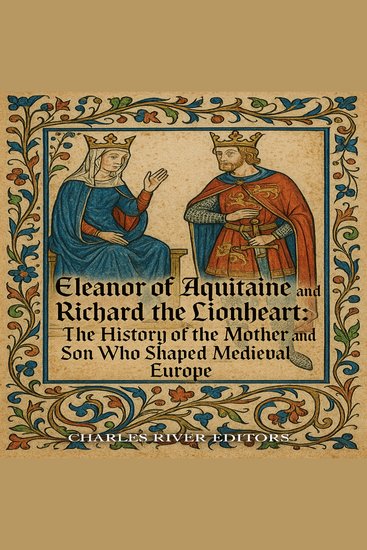
    Laying next to the tomb effigy of King Henry II of England in France's Fontevraud Abbey is a curious coffin chiseled in the shape of a young woman in repose. The once vibrant paint on the effigy is flaking, and several areas of the centuries-old tombs are chipped, but her general features are still somewhat recognizable. The beautiful, crowned queen, depicted with a soft smile on her face, was dressed in a simple, but elegant gown in white and blue, and an open book in her arms. The effigy is for none other than Duchess Eleanor of Aquitaine. 
    	Over the years, this mysterious 12th century figure has been portrayed in countless ways, from a valiant warrior queen and resourceful politician to a control-obsessed and manipulative siren whose only objective in life was power. What is clear is that during her long life, Eleanor she played an outsized role in both French and English history, and she also had an impact on the course of the Crusades, not just with her first husband, France’s King Louis VII, but also through her offspring with her second husband, Henry II.  
    	The enduring figure of the Middle Ages is the chivalrous knight who served as a hero across much of Europe, and nobody played a more defining role in casting the popular image of medieval knights than Eleanor’s son Richard the Lionheart, one of the most famous English kings and crusaders. In many respects, it was ironic that Richard became one of the central characters of the Middle Ages, and his very popular legacy today belies centuries of controversy. Richard I Plantagenet, better known by his nickname “Coeur de Lion” (Lionheart), eventually became King of England, Grand Duke of Aquitaine, Duke of Poitou, and Duke of Anjou, but as the third son in a large family, he did not expect to or even want to rule England. Nevertheless, it was he who eventually came to the throne upon his father's death, assisted in great measure by his statesmanlike mother Eleanor.
    Show book
  • Russia - History Facts and Biographies of Russian Leaders Tsars and Royalty - cover

    Russia - History Facts and...

    Kelly Mass

    • 0
    • 0
    • 0
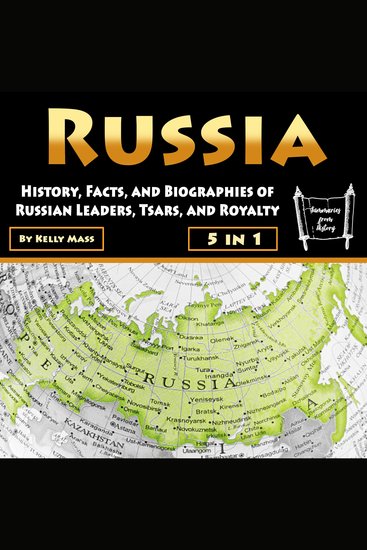
    This is a bundle of several books in 1, which are: 
    Ivan the Terrible - Ivan IV Vasilyevich, referred to as Ivan the Terrible in English, was the Grand Prince of Moscow from 1533 to 1547 and the very first Moscow ruler to announce himself Tsar of Russia from 1547 to 1584. Ivan was the first ruler of Moscow after the city's flexibility. 
    Leon Trotsky - Leon Trotsky was a Ukrainian-Russian Marxist revolutionary, political thinker, and political leader who lived from November the 7th, in the year 1879 till August the 21st 1940. He developed a variation of Marxism referred to as Trotskyism after being a communist ideologically. 
    Catherine the Great - Catherine II (born Sophie of Anhalt-Zerbst; May the 2nd 1729-- November the 17th 1796, typically called Catherine the Great, ruled as Empress of Russia from 1762 to 1796, making her the nation's longest-serving female ruler. Following the assassination of her spouse and 2nd cousin, Peter III, she rose to power. Russia grew bigger, its civilization was rejuvenated, and it was acknowledged as one of Europe's great powers during her reign. 
    Peter the Great - From May the 7th, in 1682 till his death in 1725, Peter the Great or Pyotr Alekséyevich governed the Tsardom of Russia and ultimately the Russian Empire, collectively ruling before 1696 with his older half-brother, Ivan V. He got ports on the Azov and Baltic Seas through a series of triumphant disputes, creating the structure for the Imperial Russian Navy, ending undisputed Swedish control in the Baltic, and launching the Tsardom's development into a much larger empire. 
    Grigori Rasputin - Rasputin, Grigori Yefimovich, was a Russian mystic and self-declared holy man who befriended the family of Nicholas II, Russia's last emperor, and accomplished massive power in late Imperial Russia.
    Show book
  • The Shocking Truth about Online Education - cover

    The Shocking Truth about Online...

    Zoey Fraisers

    • 0
    • 0
    • 0
    The rise of online education has been nothing short of revolutionary. Once considered an alternative to traditional schooling, it has now become a dominant force in the academic world. Institutions worldwide have embraced digital learning platforms, promising accessibility, affordability, and convenience. Students can earn degrees from prestigious universities without ever stepping into a classroom, and working professionals can upskill at their own pace. The appeal is undeniable, but beneath the surface, there are unsettling truths that often go unnoticed.  
      
    This book seeks to uncover the realities of online education—both its promises and its pitfalls. While it has opened doors for many, it has also introduced challenges that institutions and students alike struggle to address. The marketing around digital learning often highlights its flexibility and cost-effectiveness, but it rarely delves into issues such as hidden expenses, declining academic quality, and the mental health impact of isolated learning. Many students enroll in online programs believing they are receiving the same level of education as their on-campus counterparts, only to discover that the experience falls short of their expectations.  
      
    The influence of big tech companies has further complicated the landscape. These corporations play a major role in shaping the future of education, often prioritizing profits over student outcomes. From data privacy concerns to the rise of artificial intelligence in grading and instruction, online learning has become as much about business as it is about education. Meanwhile, employers remain skeptical about online degrees, leaving graduates questioning the true value of their qualifications. 
    Show book