¡Acompáñanos a viajar por el mundo de los libros!
Añadir este libro a la estantería
Grey
Escribe un nuevo comentario Default profile 50px
Grey
Suscríbete para leer el libro completo o lee las primeras páginas gratis.
All characters reduced
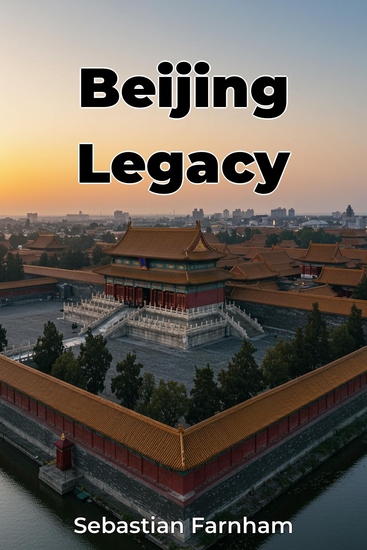
Beijing Legacy - cover

Beijing Legacy

Sebastian Farnham

Traductor A AI

Editorial: Publifye

  • 0
  • 0
  • 0

Sinopsis

"Beijing Legacy" explores the historical, political, and global dimensions of Beijing, revealing how it became the epicenter of China's identity and power. From its roots as an imperial capital with landmarks like the Forbidden City and Temple of Heaven to its current status as a global metropolis, the book examines how Beijing reflects China's transformation. Intriguingly, the city's urban planning has always been deeply intertwined with political symbolism, and its modern development is pivotal to understanding China's Belt and Road Initiative.

 
The book progresses chronologically, first establishing Beijing's imperial past and the shaping of its landscape by successive dynasties. It then transitions to Beijing's role in modern Chinese history, covering periods of revolution and the rise of the Communist Party. Finally, it analyzes Beijing's contemporary rise as a global city, looking at economic reforms and its increasing influence in international affairs, while also addressing the challenges it faces. This approach provides a comprehensive viewpoint of understanding China's evolving global posture.
Disponible desde: 20/02/2025.
Longitud de impresión: 64 páginas.

Otros libros que te pueden interesar

  • The Communist Manifesto - cover

    The Communist Manifesto

    Karl Marx, Friedrich Engels

    • 0
    • 0
    • 0
    The Communist Manifesto, originally the Manifesto of the Communist Party (German: Manifest der Kommunistischen Partei), is an 1848 political document by German philosophers Karl Marx and Friedrich Engels. Commissioned by the Communist League and originally published in London just as the Revolutions of 1848 began to erupt, the Manifesto was later recognised as one of the world's most influential political documents. It presents an analytical approach to the class struggle (historical and then-present) and the conflicts of capitalism and the capitalist mode of production, rather than a prediction of communism's potential future forms.The Communist Manifesto summarises Marx and Engels' theories concerning the nature of society and politics, namely that in their own words "the history of all hitherto existing society is the history of class struggles". It also briefly features their ideas for how the capitalist society of the time would eventually be replaced by socialism. In the last paragraph of the Manifesto, the authors call for a "forcible overthrow of all existing social conditions", which served as a call for communist revolutions around the world. In 2013, The Communist Manifesto was registered to UNESCO's Memory of the World Programme along with Marx's Capital, Volume I.
    Ver libro
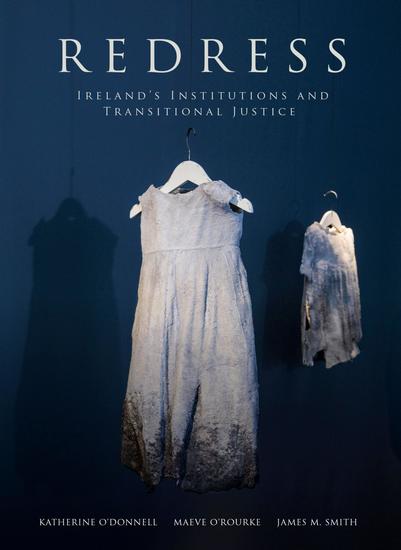
  • Redress: Ireland's Institutions and Transitional Justice - cover

    Redress: Ireland's Institutions...

    Katherine O'Donnell

    • 0
    • 0
    • 0
    How will Ireland redress its legacy of institutional abuse? What constitutes justice? What is Transitional Justice? How might democracy evolve if survivors' experiences and expertise were allowed to lead the response to a century of gender- and family separation-based abuses? REDRESS: Ireland's Institutions and Transitional Justice seeks the answers. This collection explores the ways in which Ireland – North and South – treats those who suffered in Magdalene Laundries, Mother and Baby Homes, County Homes, industrial and reformatory schools, and in a closed and secretive adoption system, over the last 100 years. The essays focus on the structures which perpetuated widespread and systematic abuses in the past and consider how political arrangements continue to exert power over survivors, adopted people and generations of relatives, as well as controlling the remains and memorialisation of the dead. As we mark the centenary of both jurisdictions on the island of Ireland, REDRESS: Ireland's Institutions and Transitional Justice forensically examines the two states' so-called 'redress' schemes and investigations, and the statements of apology that accompanied them. With diverse and interdisciplinary perspectives, this collection considers how a Transitional Justice-based, survivor-centred, approach might assist those personally affected, policy makers, the public, and academics to evaluate the complex ways in which both the Republic and Northern Ireland (and other states in a comparative context) have responded to their histories of institutionalisation and family separation. Importantly, the essays collected in REDRESS: Ireland's Institutions and Transitional Justice seek to offer avenues by which to redress this legacy of continuing harms.
    
    The Editors are donating all royalties in the name of survivors and all those affected by Ireland's carceral institutions and family separation to the charity Empowering People in Care (EPIC).
    Ver libro
  • Some Unfinished Chaos - The Lives of F Scott Fitzgerald - cover

    Some Unfinished Chaos - The...

    Arthur Krystal

    • 0
    • 0
    • 0
    Surely enough has been written about F. Scott Fitzgerald, the man who coined "the Jazz Age" and symbolized the Roaring Twenties, whose very name conjures up a meteoric rise and an equally spectacular fall? But the better question might be, why has so much ink been spent on a writer who completed only four novels, who fell from grace in the 1930s only to be resurrected twenty years later? The answer, according to the cultural critic Arthur Krystal, "is the problem that is Fitzgerald." 


    Drawn to the glitter of fame but aspiring to the empyrean heights of Joseph Conrad and James Joyce, Fitzgerald careened from the perfection of The Great Gatsby to the hack world of Hollywood screenwriting, penning stories that were either brilliant distillations of the age or superficial works of fiction. Like America itself, Fitzgerald was a work in progress, a self-created and conflicted human being striving for ideals that neither he nor the nation could ever live up to. 


    In this unusual biography Krystal gives us not only the peripatetic and turbulent life of a cultural icon but also the intellectual sweep of a period in history that created our modern America. Some Unfinished Chaos delivers a nuanced portrait of a man whose various sides embodied the trends, passions, and pursuits of the imperfect society that both glorified and dismissed him.
    Ver libro
  • Healthy Happy And Thriving After 60 A Guide To Longevity And Vitality - cover

    Healthy Happy And Thriving After...

    Robert Jakobsen

    • 0
    • 0
    • 0
    Rediscover the Joy of Living—Healthy, Happy & Thriving After 60! 
    Aging isn't about slowing down—it's about thriving! Healthy, Happy, and Thriving After 60 is your ultimate guide to embracing this exciting chapter of life with energy, confidence, and renewed purpose. Whether you're looking to boost your physical health, cultivate a strong mindset, or redefine what it means to age, this book offers powerful insights, science-backed strategies, and practical tips to help you live your best years yet. 
    In this engaging and inspiring guide, Robert Jakobsen redefines aging as a time of endless possibilities. Backed by the latest research on longevity, well-being, and cognitive health, this book will show you how to: 
    ✅ Adopt a thriving mindset that fuels passion, resilience, and purpose 
    ✅ Unlock the power of nutrition and fitness to sustain energy and strength 
    ✅ Prioritize mental and emotional well-being to live with joy and fulfillment 
    ✅ Build meaningful relationships and social connections for a rich and rewarding life 
    ✅ Tap into lifelong learning and personal growth to keep your mind sharp and active 
    ✅ Sleep better, stress less, and cultivate habits that promote long-term vitality 
    Aging doesn't mean fading away—it means stepping into a new era filled with opportunities, experiences, and adventures. Whether you're reinventing yourself, reigniting old passions, or simply looking for ways to feel your best every day, Healthy, Happy, and Thriving After 60 is your roadmap to a vibrant future. 
    Are you ready to redefine what it means to age? Your best years start now!
    Ver libro
  • The Perennials - The Megatrends Creating a Postgenerational Society - cover

    The Perennials - The Megatrends...

    Mauro F. Guillén

    • 0
    • 0
    • 0
    Get the best from accelerating social change with the new audiobook from the bestselling author of 2030 and “acclaimed thought leader” (Kirkus), Mauro Guillén. Adam Grant praises how the book "invites us to rethink our careers, our families, and our future plans.” Find out why business leaders and bestselling authors around the world are calling it "sharply relevant and necessary" (William P. Lauder), "insightful and deeply researched" (Richard Florida), and "a must read" (Mohammed A. El-Erian). In today’s world, the acceleration of megatrends – increasing longevity and the explosion of technology among many others – are transforming life as we now know it.In The Perennials, bestselling author of 2030 Mauro Guillén unpacks a sweeping societal shift triggered by demographic and technological transformation. Guillén argues that outmoded terms like Boomers, Gen X, Millennials, and Gen Z have long been used to pigeonhole us into rigid categories and life stages, artificially preventing people from reaching their full potential. A new postgenerational workforce known as “perennials” – individuals who are not pitted against each other either by their age or experience – makes it possible to liberate scores of people from the constraints of the sequential model of life and level the playing field so that everyone has a chance at living a rewarding life. Guillén unveils how this generational revolution will impact young people just entering the workforce as well as those who are living and working longer. This multigenerational revolution is already happening and Mauro Guillén identifies the specific cultural, organizational and policy changes that need to be made in order to switch to a new template and usher in a new era of innovation powered by the perennials.A Macmillan Audio production from St. Martin’s Press.
    Ver libro
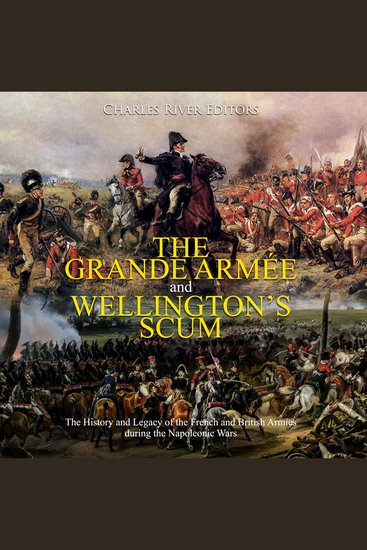
  • Grande Armée and Wellington’s Scum The: The History and Legacy of the French and British Armies during the Napoleonic Wars - cover

    Grande Armée and Wellington’s...

    Editors Charles River

    • 0
    • 0
    • 0
    Nearly 50 years after Napoleon met his Waterloo, generals across the West continued to study his tactics and engage their armies the same way armies fought during the Napoleonic Era. Despite advances in military technology and the advent of railroads for transportation, all of which made defensive warfare more effective, acclaimed military geniuses like Robert E. Lee used flank attacks and infantry charges against superior numbers in an effort to win decisive victories, and it would not be until World War I that concepts of modern warfare made the Napoleonic Era of the early 19th century outdated. 
    Napoleon’s enemies would famously say he was worth 50,000 men in the field, but the simple truth is he wasn’t able to dominate Europe on his own. In fact, the subordinates and soldiers underneath him participated in several of history’s most famous battles and charted the course of Napoleon’s rise and fall. No single factor can account for these victories, which could be attributed to a combination of high morale, a truly egalitarian approach to promotion from the ranks, a radical army organization, and the inspired leadership of Napoleon, all of which combined to make the Grande Armée virtually unbeatable for the first few years of its existence. 
    The 18th century was a tumultuous period for the British army, one often overlooked in popular accounts of British history. It began with the formal unification of Britain, a period of great success for the nation's armies, which were led by one of Britain's greatest generals, the Duke of Marlborough. This was followed by a period of global activity and military reform as the British Empire expanded. Though naval power played a greater part in this success, it led to new obligations and challenges for the army. Even as the empire soared to new heights, the 18th century was one that was initially marked by triumph but ended in failure and decline. 
    Ver libro