Join us on a literary world trip!
Add this book to bookshelf
Grey
Write a new comment Default profile 50px
Grey
Subscribe to read the full book or read the first pages for free!
All characters reduced
Searching for the Spirit of the West - Social Utopias and World Wars – A Hidden History of the USA in the Twentieth Century - cover

Searching for the Spirit of the West - Social Utopias and World Wars – A Hidden History of the USA in the Twentieth Century

Luigi Morelli

Publisher: Clairview Books

  • 0
  • 0
  • 0

Summary

How can the West rediscover its authentic spirit? Exploring the period from 1899 to 1945 – from the end of the US frontier and the writing of The Wonderful Wizard of Oz to the conclusion of World War II and the dropping of the atom bomb – Luigi Morelli traces the events that led the United States to become the world's dominating imperial force. America, he demonstrates, is deeply connected to Britain, Germany and Eastern Europe, particularly Russia. Yet despite their tragic collective histories, there is hope for the future – if only America can claim its true task.
Searching for the Spirit of the West challenges many of the falsehoods that pass for mainstream history. Utilizing a wealth of documented evidence from the research of overlooked historians, economists, social and spiritual thinkers, the author takes a symptomatic view of the past, revealing hidden, longer-term trends. This approach offers a new understanding of events such as the rise of Nazism, the Great Depression, the new Deal, and even the roles of banking and clandestine 'brotherhoods' in world history. Morelli also appraises The Wonderful Wizard of Oz in parallel with America's cultural achievements. Through imagination, L. Frank Baum's contemporary fairy-tale enables us to intuit the true mission of the West and its potential contribution to world culture, now and in the future.
Available since: 05/29/2023.
Print length: 382 pages.

Other books that might interest you

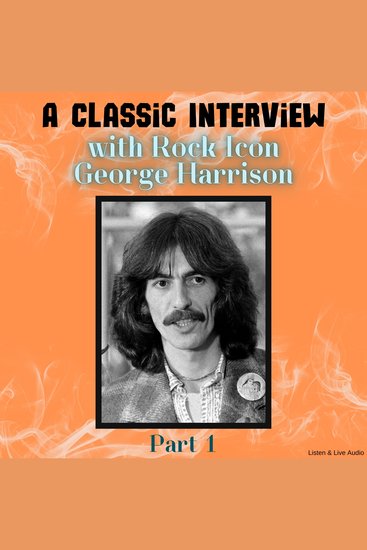
  • A Classic Interview with Rock Icon George Harrison Part 1 - cover

    A Classic Interview with Rock...

    George Harrison

    • 0
    • 0
    • 0
    George Harrison (February 25, 1943 - November 29, 2001) was an English musician, singer and songwriter who achieved international fame as the lead guitarist of the Beatles. Sometimes called "the quiet Beatle," Harrison embraced Indian culture and helped broaden the scope of popular music through his incorporation of Indian instrumentation. After the break-up of  The Beatles, Harrison had a notable solo career and success as part of The Traveling Wilberys. Some of Harrison's best-known compositions as part of The Beatles, include "Taxman", "Within You Without You", "While My Guitar Gently Weeps", "Something," and "Here Comes the Sun." The following interview was recorded in 1975.
    Show book
  • 100 Haunting Spooky Facts to Help You Fall Asleep on Halloween - cover

    100 Haunting Spooky Facts to...

    8 Hour Sleep Music

    • 0
    • 0
    • 0
    This audiobook contains 45-minutes of spooky facts, followed by 8 hours of eerily relaxing music, and a haunted forest ambience for deep Halloween sleep. 
    Settle into the stillness of Halloween night and drift through 100 softly haunting facts that bring the season’s mysteries to life, not to frighten you, but to lull you into peaceful sleep. 
    From the origins of jack-o’-lanterns and ancient Celtic rituals to ghostly folklore, haunted legends, and the comforting superstitions of autumn, this audiobook gently explores the magic that lingers between light and shadow. 
     Each fact is written and narrated in a calm, soothing tone designed to quiet your thoughts and guide you into deep rest. 
    You’ll wander candlelit graveyards, listen to the whispers of old traditions, and feel the soft chill of October air, all without fear, only fascination. 
     Every story moves slowly, like falling leaves under a harvest moon, until the final words fade into silence and you drift off into dreams. 
    If you love our other Sleep Facts audiobooks, or peaceful nighttime storytelling, this Halloween special is a perfect companion for the season. 
     So dim the lights, press play, and let the night carry you gently toward sleep. 
    🕯️ Calm. Creepy. Comforting. 
     Your Halloween dreams begin here.
    Show book
  • In Defense of Open Society: Book Summary & Analysis - cover

    In Defense of Open Society: Book...

    Briefly Summaries

    • 0
    • 0
    • 0
    This is a concise summary and analysis of In Defense of Open Society, by George Soros.
     
    It is not the original book and is not affiliated with or endorsed by George Soros.
     
    Ideal those seeking a quick and insightful overview.
     
    In a time of rising authoritarianism and political uncertainty, In Defense of Open Society explores the principles that uphold democratic societies. Drawing on personal experiences and decades of philanthropic efforts, the book examines the threats posed to open societies by nationalism, populism, and the erosion of civil liberties. Through sharp analysis and compelling arguments, it advocates for the preservation of freedom, transparency, and justice as the cornerstones of a better future.
    Show book
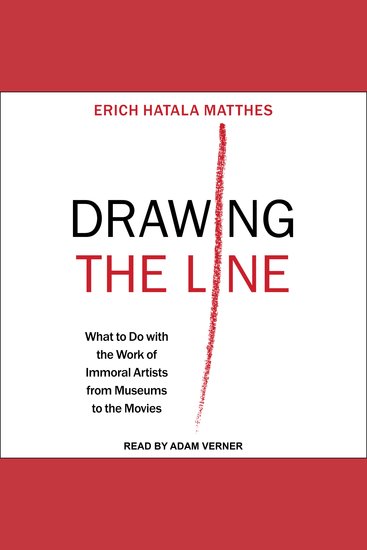
  • Drawing the Line - What to Do with the Work of Immoral Artists from Museums to the Movies - cover

    Drawing the Line - What to Do...

    Erich Hatala Matthes

    • 0
    • 0
    • 0
    Recent years have proven rife with revelations about the misdeeds, objectional views, and, in some instances, crimes of popular artists. Given more access than ever thanks to social media and the internet in general, the public has turned an alert and critical eye upon the once-hidden lives of previously cherished entertainers. But what should we members of the public do, think, and feel in response to these artists' actions or statements? It's a predicament that many of us face: whether it's possible to disentangle the deeply unsettled feelings we have toward an artist from how we respond to the art they produced. As consumers of art, and especially as fans, we have a host of tricky moral question to navigate: do the moral lives of artists affect the aesthetic quality of their work? Is it morally permissible for us to engage with or enjoy that work? Can we separate an artist from their art? 


    In Drawing the Line, Erich Hatala Matthes offers insight and clarity to the ethical questions that dog us. He argues that it doesn't matter whether we can separate the art from the artist, because we shouldn't. Matthes argues both that the lives of artists can play an important role in shaping our moral and aesthetic relationship to the artworks that we love and that these same artworks offer us powerful resources for grappling with the immorality of their creators.
    Show book
  • Out of Time and Out of Place: A History of Anomalous Objects and Events that Seemingly Appeared in the Wrong Time - cover

    Out of Time and Out of Place: A...

    Editors Charles River

    • 0
    • 0
    • 0
    “Time travel offends our sense of cause and effect - but maybe the universe doesn't insist on cause and effect.” - Edward M. Lerner, physicist and author  
    	We take time for granted as it passes during every moment of our existence. Other things may change, but time remains constant and predictable. The past, the present, and the future exist within a harmonious, reliable, and never-changing system. Or at least that’s how it seems… 
    	It was Albert Einstein who, in 1905, first theorized that time might not be quite as straightforward as that. In one of the most influential papers on physics ever published[1], he proposed something called “time dilatation.” This suggested that time was neither fixed nor constant and that the passage of time was related to the relative speed of the observer. The closer an object approached the speed of light, the more notable this effect was. For example, if it were possible to build an interstellar craft capable of reaching speeds that approached the speed of light, the passengers on that ship might experience the passage of a single year during a voyage, but when they returned to Earth, they might find that dozens of years had passed on the planet. 
    	That was a truly revolutionary idea back in 1905, and it wasn’t until the 1960s that technology had advanced to the point that it was possible to conduct experiments to check Einstein’s theory by measurement. Those experiments and subsequent tests proved that he was entirely correct. Even in 1908, new theories proposed that time was the fourth dimension of spacetime and that it wasn’t fixed at all but governed by the same laws of relativity that applied to other aspects of physics. 
    	These were exciting developments, and current theories of physics have taken this idea even further, suggesting that both space and time are “emergent.”
    Show book
  • Psychology of Crowds - cover

    Psychology of Crowds

    Gustave Le Bon

    • 0
    • 1
    • 0
    Psychology of Crowds by Gustave Le Bon
    A foundational work in social psychology exploring crowd behavior. Le Bon examines how individuals lose personal identity in groups, becoming susceptible to irrationality and emotional influence, shedding light on mass movements, propaganda, and the dynamics of collective behavior.
    Show book