Join us on a literary world trip!
Add this book to bookshelf
Grey
Write a new comment Default profile 50px
Grey
Subscribe to read the full book or read the first pages for free!
All characters reduced
This Is Not A Love Song - cover

This Is Not A Love Song

Sean O'Leary

Publisher: Next Chapter

  • 0
  • 0
  • 0

Summary

This Is Not A Love Song is a collection of short love stories from all around Australia, with only a few happy endings but many possibilities.
 
Travellers arrive in small towns and find unconventional love with people who are much more than what they first seem. The Sydney / Melbourne dilemma also raises its head, with people arriving or leaving the cities for love that never quite reaches its peak.
 
Nights out seeing bands, drugs stolen from dealers, barmaids and girls on the beach. Homecomings, falling in love with places, a mystical new bar and a lover's betrayal. You'll find these, and much more, in Sean O'Leary's 'This Is Not A Love Song'.
Available since: 11/02/2022.
Print length: 144 pages.

Other books that might interest you

  • The Creature from Beyond Infinity - cover

    The Creature from Beyond Infinity

    Henry Kuttner

    • 0
    • 0
    • 0
    A lone space traveler arrives on Earth seeking a new planet to colonize, his own world dead. At the same time a mysterious plague has infected Earth that will wipe out all life. Can a lone scientist stop the plague and save the world? Or will the alien find himself on another doomed planet? (Summary by Mark Nelson)
    Show book
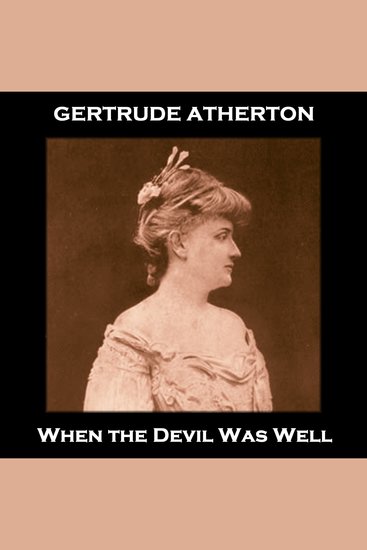
  • When the Devil Was Well - From their pens to your ears genius in every story - cover

    When the Devil Was Well - From...

    Gertrude Atherton

    • 0
    • 0
    • 0
    Gertrude Franklin Horn was born on October 30th, 1857, in San Francisco, California. Her parents separated in 1860 when she was two years old, and she was raised by her maternal grandfather, Stephen Franklin, a devout Presbyterian. He insisted she be well read, and was a great influence on her.  
    She attended St. Mary's Hall high school in Benicia, California, and, briefly, the Sayre School in Lexington, Kentucky. 
    In Kentucky, the rebellious Gertrude met George H.B. Atherton, who was courting her mother. His attentions wandered to Gertrude and, after she accepted his sixth proposal, they eloped on February 15th, 1876.  
    She went to live with him and his domineering Chilean mother. Gertrude found life stultifying. As a result of her disappointment she began to develop an independent life. But two tragedies changed her life dramatically: her son George died of diphtheria, and her husband died at sea. She was left with their daughter Muriel but and needed to support herself. Her mother-in-law agreed to raise Muriel. 
    Her first publication was ‘The Randolphs of Redwood: A Romance’, and serialised in The Argonaut in 1882. When she told her family, she was ostracized.  
    Gertrude’s first novel, ‘What Dreams May Come’, was published in 1888 under the pseudonym Frank Lin. 
    With the death of her grandfather and her mother-in-law she returned to California to resume care of Muriel. In 1891, while writing a weekly column for The San Francisco Examiner, she met Ambrose Bierce, with whom she carried on a love-hate relationship. 
    She wrote ‘Doomswoman’ in 1892, it was published in Lippincott's Monthly Magazine and as a book in 1893. The story focuses on Chonita Moncada y Iturbi and her love of Diego Estenega, as he dreams of modernizing California.  
    In 1892, Atherton left for New York to write for the New York World. She wrote letters to Bierce, confiding her loneliness, her dismay at freelance writing and her dislike of eastern literary circles. Whilst there though she published another California novel, ‘Before the Gringo Came’ (1894). 
    Following this was ‘Patience Sparhawk and Her Times’ (1897), but it proved to be controversial. Its rejection encouraged her to leave for London.  
    In 1898, she completed ‘The Californians’, her first novel set in the post-Spanish era. Critics received this much more positively: The Spectator said "The novel fairly establishes her claim to be considered as one of the most vivid and entertaining interpreters of the complex characters of emancipated American womanhood."  
    Further works followed, many from her California series dealing with the social history of California.  
    Gertrude wrote several stories of supernatural horror, including ‘Death and the Woman’, and ‘Crowned with One Crest’, as well as ‘The Foghorn’, and the much anthologised ‘The Striding Place’.  
    She was an early feminist well acquainted with the plight of women although she spoke against its militancy. Add to this her strong-will, independent-mind, and sometimes her oversteps into controversy, especially over anti-communism and its easy to identify why her novels had such sharp and strong characters. 
    Gertrude Atherton died on June 14th, 1948. She is buried in Cypress Lawn cemetery in Colma, California.
    Show book

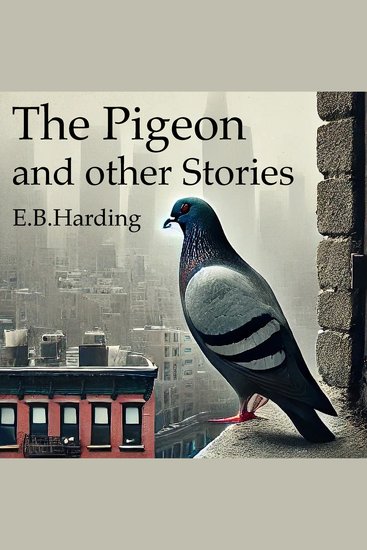
  • The Pigeon - and other Stories - cover

    The Pigeon - and other Stories

    E.B. Harding

    • 0
    • 0
    • 0
    The Pigeon: is a contemplative and subtly humorous exploration of the human condition, set against the backdrop of everyday life. The story follows Sam, a web designer, who becomes inexplicably fixated on a pigeon he sees perched on a ledge outside his window. As he grapples with the bird’s sudden disappearance, Sam begins to question the fleeting nature of existence and his place in the world. His partner, Emily, initially amused by his obsession, grows concerned as his thoughts deepen into an existential reflection. Through conversations with friends and a thought-provoking dinner party debate, Sam navigates his thoughts on life’s impermanence, searching for meaning in the mundane. The Pigeon is a poignant and relatable tale about finding peace amidst life's uncertainties and the significance of the small moments that shape our understanding of the world. 
    Dissociate As Henry struggles with writer's block, he turns to an AI for help, only to discover that it knows him better than he ever imagined. What begins as a tool to reignite his creativity soon becomes something far more personal, as the AI reveals a connection to his past that he can’t ignore. Haunted by memories and uncertain of what is real, Henry is drawn into a web of technology and emotion, where the lines between human and machine blur, and the echoes of lost love resurface in the most unexpected way. 
    Lavender is a poignant tale of love, loss, and discovery. After the sudden death of her estranged mother, Clara returns to her childhood home, a place filled with memories and unanswered questions. As she sorts through her mother’s belongings, Clara uncovers letters that reveal a tragic family secret: a sister she never knew, lost in a devastating accident. Guided by the faint scent of lavender and subtle apparitions, Clara pieces together the story of her mother’s overwhelming fear of loss and the deep, hidden love that drove her actions.
    Show book
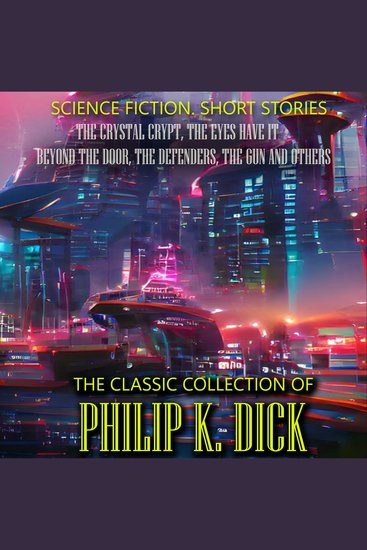
  • The Classic Collection of Philip K Dick Science Fiction Short Stories - The Crystal Crypt The Eyes Have It Beyond the Door The Defenders The Gun and others - cover

    The Classic Collection of Philip...

    Philip K. Dick

    • 0
    • 0
    • 0
    Philip Kindred Dick (December 16, 1928 – March 2, 1982), often referred to by his initials PKD, was an American science fiction writer. He wrote 44 novels and about 121 short stories, most of which appeared in science fiction magazines during his lifetime. His fiction explored varied philosophical and social questions such as the nature of reality, perception, human nature, and identity, and commonly featured characters struggling against elements such as alternate realities, illusory environments, monopolistic corporations, drug abuse, authoritarian governments, and altered states of consciousness.  
     Born in Chicago, Dick moved to the San Francisco Bay Area with his family at a young age. He began publishing science fiction stories in 1952, at age 23. He found little commercial success until his alternative history novel The Man in the High Castle (1962) earned him acclaim, including a Hugo Award for Best Novel, when he was 33.[6] He followed with science fiction novels such as Do Androids Dream of Electric Sheep? (1968) and Ubik (1969). His 1974 novel Flow My Tears, the Policeman Said won the John W. Campbell Memorial Award for Best Science Fiction Novel. 
       
     The Crystal Crypt 
     The Eyes Have It 
     Beyond the Door 
     Beyond Lies the Wub 
     The Defenders 
     The Gun 
     Tony and the Beetles 
     The Hanging Stranger 
     Adjustment Team 
     Of Withered Apples 
     Survey Team 
     The Crawlers 
     Meddler 
     Souvenir 
     Human Is
    Show book
  • The Whale - (or Moby Dick) - cover

    The Whale - (or Moby Dick)

    Herman Melville

    • 0
    • 0
    • 0
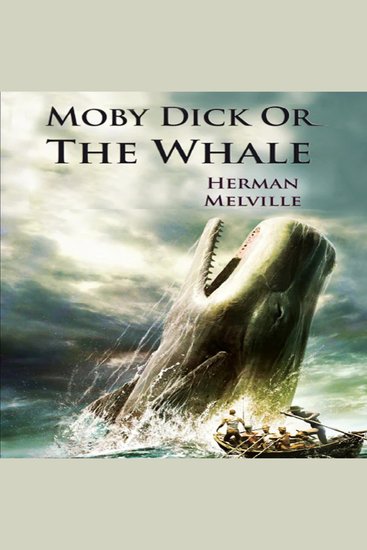
    "Moby Dick" (or "The Whale" as it was one known) is the unforgettable story of Captain Ahab’s quest to avenge the whale that ‘reaped’ his leg.  The quest and the novel is a story of how man can become blindly obsessed.  The tale is also a testament to democracy and liberation, as the ship's crew work together for a common end. 
    Ishmael, the novel’s narrator is a young, ordinary sailor learning the practice of whaling. 
    Moby Dick is one of the greatest novels ever written and a timeless classic.
    Show book
  • Leo Tolstoy - Six of the Best - Their legacy in 6 classic stories - cover

    Leo Tolstoy - Six of the Best -...

    Leo Tolstoy

    • 0
    • 0
    • 0
    Leo Tolstoy was born in 1828 in the Russian province of Tula to a wealthy noble family. As a child, he had private tutors but he showed little interest in any formal education. When he went to the University of Kazan in 1843 to study oriental languages and law, he left without completing his courses.  Life now was relaxed and idle but with some writing also taking place.  Gambling debts forced an abrupt change of path and he joined the army to fight in the Crimean War.  He was commended for his bravery and promoted but was appalled at the brutality and loss of life.  He recorded these and other earlier experiences in his diaries which formed the basis of several of his works. 
    In 1852 ‘Childhood’ was published to immediate success and was followed by ‘Boyhood’ and ‘Youth’. 
    His experience in the army and the horrors he witnessed resulted in ‘The Cossacks’ in 1862 and the trilogy ‘Sevastopol Tales’. After the war he travelled around Europe, visiting London and Paris and meeting such luminaries as Victor Hugo and Charles Darwin.  
    It was now that Tolstoy began his masterpiece, ‘War and Peace’. Published in 1869 it was an epic work that changed literature. He quickly followed this with ‘Anna Karenina’.  
    These successes made Tolstoy rich and helped him accomplish many of his dreams but also brought problems as he grappled with his faith and the lot of the oppressed poor. These revolutionary views became so popular that the authorities now kept him under surveillance.  
    He led a life of asceticism and vegetarianism and put his socialist ideals into practice by establishing numerous schools for the poor and food programmes. He also believed in giving away his wealth, which caused much discord with his wife.  
    His writing continued to bring forth classics such as ‘The Death of Ivan Ilyich’ and many brilliant and incisive short stories such as ‘How Much Land Does A Man Need’.  
    In 1901 Tolstoy was excommunicated from the Church and controversially deselected for the Nobel Prize for Literature. 
    Whilst undertaking a pilgrimage by train in October 1910 with his daughter Aleksandra he caught pneumonia in the nearby town of Astapovo.  Leo Tolstoy died on November 9th, 1910, he was 82.
    Show book