Join us on a literary world trip!
Add this book to bookshelf
Grey
Write a new comment Default profile 50px
Grey
Subscribe to read the full book or read the first pages for free!
All characters reduced
Words of Ahikar - cover

Words of Ahikar

Scriptural Research Institute

Publisher: Digital Ink Productions

  • 0
  • 0
  • 0

Summary

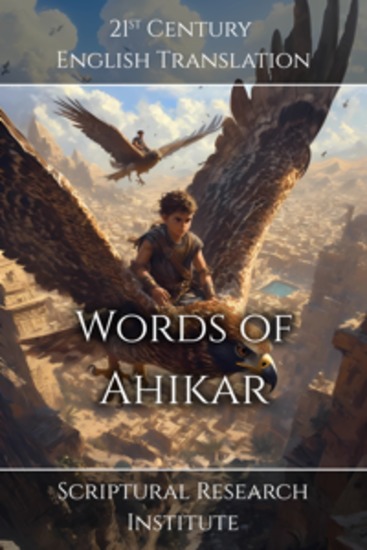
The Words of Ahikar is the oldest surviving Israelite story, with known copies in Aramaic dating back to the 5th-century BC. As it has been translated into many languages over the past two and a half millennia, it now has several names and translations, including the Words of Ahiqar, the Story of Ahikar, and various variations of the name, including Achiacharos, from the Greek translation, Ảḥyqr from the Aramaic translation, Akyrios from the Old Slavonic translation, Ḥayqār from the Arabic translation, and Xikar from the Armenian translation. This translation uses the most common English variation of Ahikar, which is based on a transliteration of the oldest surviving Aramaic version of the name. The oldest fragments of this book found to date, were discovered in Elephantine, Egypt, and date to the 5th century BC, making it a couple of centuries older than the oldest of the Dead Sea Scrolls.While the story is set during the Assyrian Captivity of the Samaritans during the 7th century BC, it is generally accepted by scholars that the book was written in its current form in the 6th century BC, during the Babylonian Captivity of the Judahites. The primary reason for this dating is the repeated referenced to Bôlả, which is generally accepted as a reference to the Neo-Babylonian god of the 6th century BC named Belu, more commonly called Bel in English based on his appearance in the Septuagint’s Book of Daniel, where he was called Bel. This book also repeatedly refers to the Highest God, El Elyon, the ancient Canaanite and Israelite god from the Torah, however, does not mention Iaw, and therefore does not appear to have been written by a Judahite. As Tobit claimed to be Ahikar’s uncle, and a Naphtalite captive in Assyria, this indicates that Ahikar was viewed as being a Samaritan, and not a Judahite at the time that Tobit was written.While Bôlả was the Aramaic translation of Belu, it was also the Aramaic translation of the Canaanite term Bôl, more commonly spelled as Ba‘al in English based on the Hebrew spelling of ba'al‎, meaning ‘lord,’ or ‘husband.’ This means that if the text was written by a Samaritan during the Neo-Assyrian era, the term would have been a common Canaanite word used in Samaria for ‘the Lord,’ or at least a ‘Lord.’ According to all historical evidence, and the written evidence in the Septuagint and Masoretic Text, the Israelites at the time were using the term Ba‘al to refer to several gods, including the god worshiped at the temples in Jerusalem and Samaria. Nevertheless, by the era of the oldest surviving fragments of Ahikar, the term does appear to have been interpreted as a reference to the Neo-Babylonian Bel, likely because the Israelites had stopped referring to their gods as Ba‘al by that era.
Available since: 06/14/2025.
Print length: 116 pages.

Other books that might interest you

  • In the Cause of Liberty - cover

    In the Cause of Liberty

    William King

    • 0
    • 0
    • 0
    This decidedly unusual book gives an excellent account of what its title purports. Rendering fresh views, not only of the poet and engraver William Blake and the radical-democratic pamphleteer Thomas Paine, but of the entirety of that cavalcade of events encompassed under the rubric of Revolution in the 18th Century—in America, in France, and in the Caribbean island known today as Haiti, as well as of the reform and radical movements contemporaneous in Britain with the rise of empire and “industrialism”. Proceedings that have had an influence on the debates on liberty and equality, and sovereign authority, in the ensuing two centuries; that remain, despite ever-burgeoning scholarship, controversial and perplexing, even elusive, today. 
    William S. King’s vividly written and excellently researched narrative also doubles as a noteworthy literary examination, including Mary Wollstonecraft and Edmund Burke, Thomas Paine and William Blake, Marat and Condorcet, and the booksellers Nicolas Bonneville and Joseph Johnson, and many, many others—all mounted in memorable and sometimes gory tableaux, sketched against the turbulence of the time. 
    This book will interest a diverse set of readers; all who are concerned with the ideas propounded at the end of the 18th century, by these persons and stirred by these events.
    Show book
  • Philosophers of Individual Rights and Society - The Role of Rights Ethics and Political Thought in Human Society (3 in 1) - cover

    Philosophers of Individual...

    Hector Davidson

    • 0
    • 0
    • 0
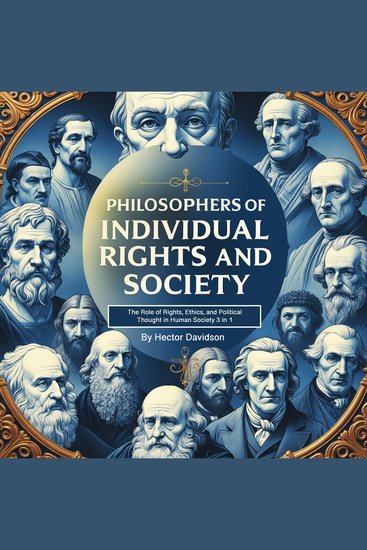
    This book consists of the following three titles: 
    - Ayn Rand: Ayn Rand, born Alisa Zinov'yevna Rosenbaum in 1905 in St. Petersburg, Russia, had a formative early life that significantly influenced her later philosophical ideas. Growing up in a middle-class Jewish family, Rand experienced the upheavals of the Russian Revolution and the subsequent rise of Bolshevism. These events deeply affected her worldview and instilled in her a strong opposition to collectivism and authoritarianism. 
    - John Stuart Mill: John Stuart Mill, a British philosopher and political economist, remains one of the most influential thinkers of the 19th century. Born in 1806, Mill was exposed to rigorous intellectual training from an early age, particularly through his father, James Mill, a prominent utilitarian philosopher. This early exposure shaped Mill's understanding of the world, leading him to become a key figure in the development of utilitarianism, a moral theory that evaluates actions based on their ability to promote the greatest happiness for the greatest number of people. 
    - Mary Wollstonecraft: Mary Wollstonecraft was a pioneering British writer and philosopher whose ideas on women’s rights and education laid the foundation for modern feminism. Born on April 27, 1759, in Spitalfields, London, she grew up in a time when society severely restricted women's opportunities. Despite these limitations, Wollstonecraft’s determination, intellect, and relentless pursuit of knowledge allowed her to challenge the status quo and advocate for gender equality. Her life was shaped by personal struggles, societal constraints, and an unwavering belief in the power of education.
    Show book
  • Book 1 Bricks that Build Us - Family Community Beliefs Philosophy Laws Conflict and Society - cover

    Book 1 Bricks that Build Us -...

    Rob Howat

    • 0
    • 0
    • 0
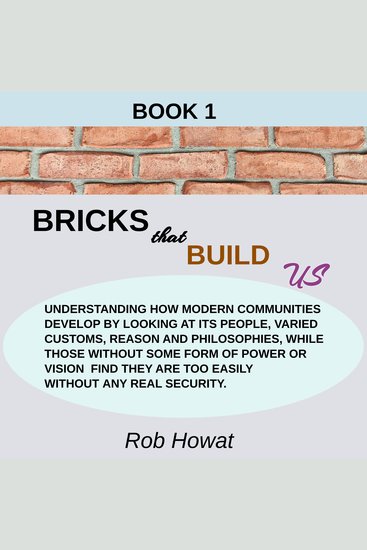
    Ideas build and destroy civilizations. Things are not going well. The need for action is now. After thousands of years of human development, our humanity seems to be intent upon disassembling itself with WOKE, Politically Correct thought police, rejected lessons from history and art, ‘book burning’, minorities DICTATING how we live and what we MUST think, riots, homelessness or helplessness and political polarizations with open conflicts and theft in our streets. How to revitalize harmonious existence, individual respect, laws equally for us all, and spirituality either via religion or constructive logic. So to create the conditions for cooperative, harmonious, self-disciplined inter-personal life: a return to greater stability of both mind and action working together for the good of communities and an increasingly interdependent World Social Family. 
    This building and rebuilding process will take generations, the current alternative will be humanity’s exit which would be both painful and permanent. This need not be. We each can learn so confidently form a renewal of our children’s real future but only by rebuilding our thought processes, awareness, and understanding with and through calm debate, discussion, and sharing of mind.  
    Industry, agriculture, and the use of both people’s time and natural abilities matter greatly: smaller could well be far more beneficial. Creating public demand to raise output and income too often leads to waste and even harm while generating wealth for a minority, too many of whom are amoral or undeserving.  
    What is reality other than what we decide it to be? All stems from family upbringing, mental inputs and experiences; educational practices, understood beliefs, the free flow of ideas; respecting other's thoughts, and community actions, which all coalesce into formed concepts and so beliefs. These and more build our minds, humour, fears and needs. These are the very Bricks that Build Us
    Show book
  • The Tales of a Tiger - Memoirs from the Vietnam War - cover

    The Tales of a Tiger - Memoirs...

    Michael R. Farley

    • 0
    • 0
    • 0
    This is an autobiography of my three tours of combat duty, as a USAF member, in the Vietnam War. It was written over a period of several years.....
    Show book
  • The First Lessons In Principles of Cooking - cover

    The First Lessons In Principles...

    Lady Barker

    • 0
    • 0
    • 0
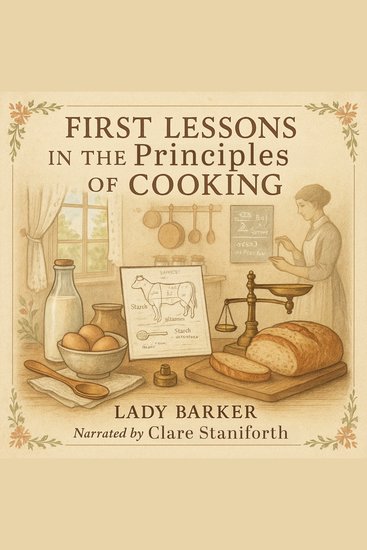
    Discover the timeless wisdom of Victorian domestic science in First Lessons in the Principles of Cooking by Lady Barker—a thoughtful and empowering guide for anyone interested in the foundations of cookery. Written in the late 19th century, this classic manual goes far beyond recipes, exploring the “why” behind food preparation with a practical, scientific lens. 
    Lady Barker advocates for economy, nutrition, and efficiency in the kitchen, teaching readers how to minimize waste and improve health through knowledge of food composition and cooking methods. From milk and bread to beef, vegetables, and boiling techniques, each chapter blends chemistry with domestic pragmatism. 
    Perfect for culinary historians, home cooks, and those curious about the roots of nutritional education, this audiobook offers both inspiration and insight into the intelligent art of cookery—revealing how understanding the science of food can uplift households of any size or income.
    Show book
  • The Indigenous Peoples' Message To The World - Words & Music - cover

    The Indigenous Peoples' Message...

    David Ison, Various Various

    • 0
    • 0
    • 0
    INDIGENOUS PEOPLES’ MESSAGE TO THE WORLD 
    This is our chance to listen to a message from people closely connected to the Earth. The industrial world has put their very existence at stake. Stop and listen to their world! -- Mickey Hart, drummer with the Grateful Dead and author of Drumming at the Edge of Magic Available for the first time in a digital format, the “Indigenous Peoples’ Message To The World” documents the First World Conference of Indigenous Peoples, a collaboration of numerous organizations, individuals and indigenous peoples from around the globe. The lectures and cultural music presentations that made up the conferences were recorded live in the Amazon 
    jungle in Brazil in 1992 and delivers a timeless and deeply relevant message to us all. The extraordinary partnership captured here was spearheaded by Marcos Terena, the founder of the United Indigenous Nations, and supported by the Tribal Link Foundation and Land is Life, organizations that actively promote and protect the rights of indigenous peoples. 
    Not only did this program receive a starred review in Publishers Weekly (PW), which called it a who of ritual tribal music and ceremony", but PW was inspired to create a new award – The pioneering Hybrid of the Month Award – specifically for this moving title. 
    Total Running Time: 75 minutes 
     
    ISBN: 978-1-61544-019-1
    Show book