Join us on a literary world trip!
Add this book to bookshelf
Grey
Write a new comment Default profile 50px
Grey
Subscribe to read the full book or read the first pages for free!
All characters reduced
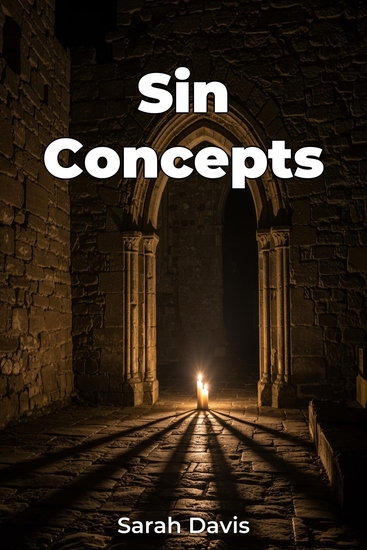
Sin Concepts - cover

Sin Concepts

Sarah Davis

Translator A AI

Publisher: Publifye

  • 0
  • 0
  • 0

Summary

Sin Concepts explores the evolving definitions of sin, examining how these concepts have been shaped by historical context, religious teachings, and power structures. The book argues that sin is not a static, divinely ordained concept but rather a dynamic social construct reflecting a society's values and power dynamics. Intriguingly, what constitutes a sin can vary drastically across different eras and cultures; behaviors considered sinful in one context might be acceptable or even virtuous in another. 

 
The book examines the role of religious institutions in shaping and enforcing definitions of sin, highlighting the interplay between religious doctrine, political power, and social norms. It also delves into the consequences of sin, from spiritual damnation to earthly punishments, and how these consequences have shaped individual behavior and social order. 

 
Beginning with core concepts, the book progresses through specific historical periods and religious traditions, analyzing the development of unique sin concepts before culminating in an exploration of the contemporary relevance of sin concepts in moral debates and social justice movements.
Available since: 02/27/2025.
Print length: 65 pages.

Other books that might interest you

  • Climate Hope - Stories of Action in an Age of Global Crisis - cover

    Climate Hope - Stories of Action...

    David Geselbracht

    • 0
    • 0
    • 0
    Climate change is a problem so enormous and complex—with threats so frightening in their implications—that many of us fend off confusion and hopelessness by simply turning away. Meanwhile, with delayed action, missed targets, and increasingly dire reports at the international level, a notion that the crisis is intractable continues to spread. And the proposed solutions can be just as daunting. They often involve jargon about gigatons of carbon and kilowatt-hours of electricity. In a deeply polarized political environment, any sense of the common purpose required to make these work seems to dissolve into denial or paralysis. With all this fear and conflict, the question must be asked: How do we find the tools and the hope we need to tackle such a wickedly difficult issue? 


    In Climate Hope, journalist David Geselbracht blends in-depth research, expert interviews, and on-the-ground reporting in multiple countries, revealing remarkable efforts to identify the causes and impacts of climate change—and devise crucial ways to address them. The scale of the challenge is clear in the range of fields he covers, from glaciology and climate science to law and diplomacy. But in drawing these approaches together, he shares stories of hope, awe, and wonder that encourage us to confront this long-term, world-warping phenomenon with a renewed sense of purpose and possibility.
    Show book
  • Reshaping EU Democracy Support and Democratic Practices - The EU in the Eastern and Southern Neighbourhoods - cover

    Reshaping EU Democracy Support...

    Akram Ezzamouri

    • 0
    • 0
    • 0
    This edited volume offers a critical analysis of the complex and contested field of European Union democracy support and democratic practices in its Eastern and Southern neighbourhoods. Drawing on extensive empirical and discourse research developed within the SHAPEDEM-EU project, and focusing on six case studies (Armenia, Georgia, Ukraine, Lebanon, Palestine and Tunisia), it examines how the EU's democratic commitments are articulated, challenged and implemented in diverse neighbouring contexts. While democracy support is officially framed as a central pillar of EU foreign policy, this volume addresses the persistent gap between rhetoric and practical implementation. By combining discourse analysis with an investigation of policy instruments, it highlights how democracy is both narrated and enacted by the EU, revealing contrasts between its stated normative aspirations and interests.
    By integrating discursive and behavioural perspectives, the volume offers insights into how the EU can rethink and reshape its democracy support and practices in its Eastern and Southern neighbourhoods. It highlights the need to move beyond symbolic commitments toward more inclusive, context-sensitive and socially empowering practices. Ultimately, it invites critical reflection on how the EU should strengthen its credibility and effectiveness as a supporter of democracy in an increasingly complex and contested regional landscape.
    Show book
  • Bible Codes - cover

    Bible Codes

    Raphael Terra

    • 0
    • 0
    • 0
    This audiobook has been recorded using Text to speech (TTS). 
     
    Billions of people across the world and across time have followed the words of this ancient book. Countless numbers have died defending it. Even today, in the 21st century heated debates are fought every day over the truth which lies within. 
     
    Great thinkers and intellectuals have seen something of pure wisdom and truth in it and others simply see it as an historical document, written by people from a different time and place. 
     
    But there is much more to this archaic document than meets the eye. There are in fact hidden secrets. Great profound mysteries can be unravelled if we just take a look at the Bible in a different way. Understanding the truth of the Bible is the way forward to understand the vast history of mankind. The Messiahs of the globe are all locked away in there awaiting discovery. And some of these Messiahs are indeed from outer space. They are great, tall, shining beings that descended from huge ships in the sky. Yes, this is in the Bible. And the facts are that Messiahs, prophecies and more are shared with civilizations across the globe. 
     
    And these special people left behind secret codes locked away in their Holy book that predict every single event in human history. How? 
     
    Prepare to unlock the sacred code once and for all, but remember you may never see the world in the same way again.
    Show book
  • German Order of Battle - Panzer Panzer Grenadier and Waffen SS Divisions in WWII - cover

    German Order of Battle - Panzer...

    Samuel W. Mitcham

    • 0
    • 0
    • 0
    The third volume in this definitive reference on the German Army in WWII, covering the organization, combat histories, and commanders of each division. Military historian Samuel Mitcham is a noted expert in Germany’s ground forces during the Second World War. In his three-volume German Order of Battle, he presents the most detailed and authoritative reference work on the subject to date. Mitcham’s narrative histories highlight the organization, commanders, experiences, and casualties of each division, as well as sources for further research.  Taken together, these volumes are the most comprehensive and accessible reference available on the Germany Army in World War II, unmatched in the information compiled on each division from inception to destruction. Volume Three covers the Panzer, Panzer Grenadier, and Waffen SS Divisions.
    Show book
  • Facing Armageddon - With the RAF on Christmas Island 1961-1962 - cover

    Facing Armageddon - With the RAF...

    Chas Hall

    • 0
    • 0
    • 0
    After being called up for National Service in July 1960, twenty-year-old Chas Hall joined the RAF and signed on to extend his time for an extra three years becoming a regular serviceman. Following initial training, he became a wireless operator and served at RAF Mildenhall. It was shortly after this that he got his first foreign posting in late 1961 to Christmas Island. It was on this island, that Chas encountered the horrors of nuclear testing. In an operation codenamed "Brigadoon" by the British government and "Dominic" by the Americans, Chas experienced twenty-five atmospheric nuclear tests. This he describes as his "twelve-month sentence" alongside over 300 British and 10,000 American servicemen who were posted to one corner of a remote coral island. Facing Armageddon reveals the true extent of the controversial nuclear testing and how it affected servicemen; with twenty-five men dying during Chas's time on Christmas Island and many more suffering mentally as they continued serving on the island. With the British government announcing medals for nuclear test veterans in November 2022 to recognize their contribution in the tests after a four-year campaign by participants and The Mirror newspaper, Chas's story gives insight to why these servicemen deserve the recognition for their part in these tests.
    Show book
  • Ukraine: The History and Legacy of Ukraine from the Middle Ages to Today - cover

    Ukraine: The History and Legacy...

    Charles River Editors

    • 0
    • 0
    • 0
    The history of Ukraine is a fascinating story of how cultures, political systems, religions, and power have met, intersected, morphed, and expanded. The region was relatively sparsely populated for much of ancient history, a wilderness of rivers, forests, and steppes, but that does not detract from the rich historical development of the region. A huge area, Ukraine is wedged between the continents of Asia and Europe, and its position as a crossroads ensured there was fierce competition for influence there. Historians have called the formation of Ukraine the “establishment of a unity among three zones…the ports of Crimea and the coast, the rich steppe heartland, and the forests,” based around the themes of “geography, ecology and culture.”  
    	Today’s Ukraine is a huge country, incorporating an area over 600,000 square kilometers and home to 42 million people. It stretches from the Crimean Peninsula on the Black Sea in the south to Belarus in the north, Russia to the east, and Poland, Slovakia, and Hungary to the west. The Dnieper River is the region’s key waterway, running into the Black Sea, while the Danube Delta also forms its border with modern-day Romania to the southwest. A steppe exists in the middle of the country while the Carpathian Mountains feature in the west. This geographical formation has influenced some of the country’s key historical developments, as well as the location of its major settlements. Kiev (known today as Kyiv) is, of course, the longstanding capital of the country, located on the Dnieper River in the central northern part of modern Ukraine. Lviv is another large city, located in the northwest near the border with Poland. Odessa is a seaside city on the Black Sea in Ukraine’s southwest, while Kharkiv, Luhansk, and Donetsk are major cities in the country’s east, close to the Russian border. 
    Show book