

Join us on a literary world trip!
Add this book to bookshelf
Grey
Write a new comment Default profile 50px
Grey
Subscribe to read the full book or read the first pages for free!
All characters reduced
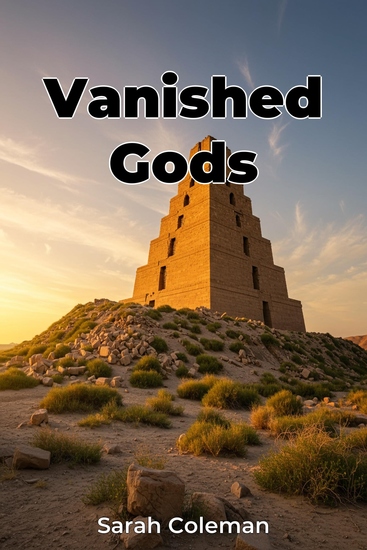
Vanished Gods - cover

Vanished Gods

Sarah Coleman

Translator A AI

Publisher: Publifye

  • 0
  • 0
  • 0

Summary

Vanished Gods explores the intriguing phenomenon of forgotten deities and the reasons behind their decline, offering insights into ancient religions and cultures. The book examines how political upheaval, religious competition, and the rise of new belief systems contributed to the fading of once-prominent gods. It also delves into the social structures and cultural practices associated with these lost gods, shedding light on the lives of their worshippers. For example, many ancient societies saw religious landscapes as dynamic, with gods gaining and losing importance over time. This study uniquely focuses on the process of divine decline, moving beyond mere identification of vanished gods to examining the specific factors leading to their disappearance. Drawing from archaeology, ancient texts, and comparative mythology, the book analyzes how these deities are preserved or transformed in myths, legends, and art. It is structured in three parts, beginning with case studies from Mesopotamia, Egypt, and the Near East, then moving to the gods of Greece and Rome, and finally examining their legacy in modern culture. Vanished Gods demonstrates that even forgotten deities can exert a subtle influence, prompting readers to consider the ephemeral nature of belief and the enduring power of stories. The book's approach shifts the focus from a passive understanding of religious evolution to an active investigation of the historical and cultural forces that shape divine fates.
Available since: 02/26/2025.
Print length: 60 pages.
Other books that might interest you

  • In Praise of Listening - A Gathering of Stories - cover

    In Praise of Listening - A...

    Christian McEwen

    • 0
    • 0
    • 0
    In her latest book, In Praise of Listening, Christian McEwen reflects on listening (silence, music, nature, prayer) in a series of thoughtful chapters, each one focused on a different theme. When an athlete speaks of "listening to his body," or a gardener describes herself as "listening to the land," when writers and artists explain that they are "listening" to their work-in-progress, they are using the word as she chooses to use it here—as an extended metaphor for openness and receptivity, rippling out from the self-centered human to the farthest reaches of the non-human world. 


    In Praise of Listening is a kind of sister or first cousin to McEwen's earlier, timely, and very popular, World Enough & Time, with the same emphasis on creativity and slowing down. As McEwen says: Most of us think of listening in fairly literal fashion: human beings listening (or not listening) to one another; the pleasure of attending to a familiar piece of music. But listening can have a far broader and more capacious meaning, moving out beyond the small apparatus of the ears to the hands or belly or enveloping spirit/mind.
    Show book
  • Statesman - cover

    Statesman

    Plato

    • 0
    • 0
    • 0
    The text Statesman, by Plato, is a Socratic dialogue composed of several allegorical myths that aim to assess the qualifications of rulership and the properties of wisdom. Through his discourse with Socrates, Theaetetus strives to determine what exactly constitutes a statesman - seeking to find an answer which surpasses mere technical expertise. Read in English, unabridged.
    Show book
  • Mind the Inclusion Gap - How allies can bridge the divide between talking diversity and taking action - cover

    Mind the Inclusion Gap - How...

    Suzy Levy

    • 0
    • 0
    • 0
    We live in a wonderfully diverse and increasingly connected world. With that rise in connection comes a steep rise in expectations. 
    ... Expectations that we know how to talk about diversity, including with people who are different than ourselves. 
    ... Expectations that we lean into uncomfortable conversations, with sufficient fluency that we don't cause offence. 
    ... Expectations that we act, instead of simply walking by inequality. 
    Although most of us are curious about diversity, and some would go as far as to call ourselves allies, very few of us are skilled in inclusion. In the absence of knowing what to do, we double down on being nice and hope that will be enough. Unfortunately, this optimistic attitude may harm as much as help.  
    Mind the Inclusion Gap is for anyone who wants to move beyond talking to actively shaping an inclusive future. It looks beyond singular diversity categories, exploring the connections between race, ethnicity, sex, sexual orientation and gender identity. Filled with insight and everyday skills, it will help you navigate the polarised and divisive issues we face in the workplace and in the world.
    Show book
  • Dirtbag Massachusetts - A Confessional - cover

    Dirtbag Massachusetts - A...

    Isaac Fitzgerald

    • 0
    • 0
    • 0
    NEW YORK TIMES BESTSELLER 


    USA TODAY BESTSELLER 


    Winner of the New England Book Award for Nonfiction 


    "The best of what memoir can accomplish . . . pulling no punches on the path to truth, but it always finds the capacity for grace and joy." —Esquire, "Best Memoirs of the Year" 


    A TIME Best Book of the Season * A Rolling Stone Top Culture Pick * A Publishers Weekly Best Memoir of the Season * A Buzzfeed Book Pick * A Goodreads Readers' Most Anticipated Book * A Chicago Tribune Book Pick * A Boston.com Book You Should Read * A Los Angeles Times Book to Add to Your Reading List * An Entertainment Weekly Best Book of the Month 


    Isaac Fitzgerald has lived many lives. He's been an altar boy, a bartender, a fat kid, a smuggler, a biker, a prince of New England. But before all that, he was a bomb that exploded his parents' lives—or so he was told. In Dirtbag, Massachusetts, Fitzgerald, with warmth and humor, recounts his ongoing search for forgiveness, a more far-reaching vision of masculinity, and a more expansive definition of family and self. 


    Fitzgerald's memoir-in-essays begins with a childhood that moves at breakneck speed from safety to violence, recounting an extraordinary pilgrimage through trauma to self-understanding and, ultimately, acceptance. From growing up in a Boston homeless shelter to bartending in San Francisco, from smuggling medical supplies into Burma to his lifelong struggle to make peace with his body, Fitzgerald strives to take control of his own story: one that aims to put aside anger, isolation, and entitlement to embrace the idea that one can be generous to oneself by being generous to others. 


    Gritty and clear-eyed, loud-hearted and beautiful, Dirtbag, Massachusetts is a rollicking book that might also be a lifeline. 


    "Fitzgerald nestles comfortably on a bar stool beside writers like Kerouac, Bukowski, Richard Price and Pete Hamill . . . The book’s charm is in its telling of male misbehavior and, occasionally, the things we men get right. The fights nearly all come with forgiveness. It is about the ways men struggle to make sense of themselves and the romance men too often find in the bottom of a bottle of whiskey . . . an endearing and tattered catalog of one man's transgressions and the ways in which it is our sins, far more than our virtues, that make us who we are." —New York Times Book Review 


    "Isaac Fitzgerald's memoir-in-essays is a bighearted read infused with candor, sharp humor, and the hope that comes from discovering saints can be found in all sorts of places." —Rolling Stone, "Top Culture Picks of the Month" 


    "Dirtbag, Massachusetts is the best of what memoir can accomplish. It's blisteringly honest and vulnerable, pulling no punches on the path to truth, but it always finds the capacity for grace and joy." —Esquire, "Best Memoirs of the Year" 


    "Told without piety or violin strains of uplift, but rather, an embrace of the chaos of just getting by." —Chicago Tribune, "Books for Summer 2022: Our Picks" 


    "Fitzgerald reflects on his origins—and coming to terms with self-consciousness, anger, and strained family relationships. His writing is gritty yet vulnerable." —TIME, "27 New Books You Need to Read This Summer" 


    "Fitzgerald never stopped searching for a community that would embrace him. That search took him from San Francisco to Burma (now Myanmar), and he candidly shares the formative experiences that helped him put aside anger to live with acceptance and understanding." —Washington Post, "12 Noteworthy Books for July" 


    "Fitzgerald's project
    Show book
  • Vocabulary Advancement - 12th Prep for Standardized Test and College Success - cover

    Vocabulary Advancement - 12th...

    Sophia Mitchell

    • 0
    • 0
    • 0
    This five session guide builds your vocabulary for college by presenting challenging words in multiple settings. Learning new vocabulary is a multi-stage process involving multiple interactions with new words in context. This course achieves this by explaining words through their definitions as you would expect, but then presenting them in stories, with their opposites, explaining relevant Greek and Latin word stems, semantic scales and using other proven techniques to rapidly expand your vocabulary via challenging, but commonly used words. This can be helpful for college readiness or test prep. Words include acrimonious, maudlin, nefarious, quixotic and pernicious. The audiobook includes over 100 grade-appropriate words. Each session is around 15 minutes long, making this a quick and easy way to grow your vocabulary and come back for a refresher as often as you need.
    Show book
  • Zebulon Pike: The Life and Legacy of One of Early America’s Most Important Explorers - cover

    Zebulon Pike: The Life and...

    Editors Charles River

    • 0
    • 0
    • 0
    Given that Lewis and Clark remain so famous, it was inevitable that the other American explorers would be overlooked, particularly William Eaton, the hero of the Battle of Derna in the Barnaby Wars, and Zebulon Montgomery Pike, the explorer of the Mississippi. In the case of Pike, Orsi suggests that the explorer is overlooked and in some cases slighted due to what the expeditions did and did not accomplish. Eaton and Pike represented “the first wave of Manifest Destiny, expanding the republican principles of liberty and citizenship in the world.”[1] 
    	Contrasted to that patriotic sentiment are caveats and questions. The career of Zebulon Pike was “dominated by ambiguously motivated explorations of the American West.”[2] With the procurement of the Louisiana Purchase, which doubled the size of the nation, Pike had the full force of American authority at his disposal, and his travels through the Colorado Rockies into New Mexico pushed the boundaries between America and Spain. Captured by Spanish officials for illegal entry, he was finally released back into American custody after a year’s time with a volume of new information on Spanish territory, its economy, and its military configuration. This sparked a debate about whether the capture was planned by the American government itself. 
    	Pike’s return is still debated, as is his relationship with General James Wilkinson and Aaron Burr. The controversy is relevant to Burr’s alleged conspiracy to establish a competing empire in the American Southwest, or perhaps as a way of conquering Spanish America without involving the White House. Pike’s papers, confiscated by the Spanish, have complicated the search for the truth, and any evidence of his complicity remains confidential, in part because of the unpredictable explorer’s unpredictable demise.
    Show book
