

Join us on a literary world trip!
Add this book to bookshelf
Grey
Write a new comment Default profile 50px
Grey
Subscribe to read the full book or read the first pages for free!
All characters reduced
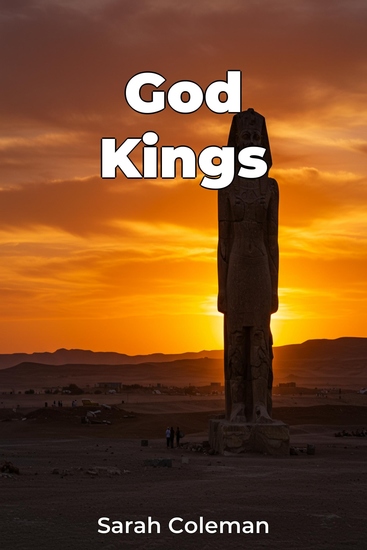
God Kings - cover

God Kings

Sarah Coleman

Translator A Ai

Publisher: Publifye

  • 0
  • 0
  • 0

Summary

"God Kings" explores the captivating phenomenon of rulers considered divine throughout history, delving into the intricate relationship between leadership, religious belief, and societal control. The book examines how the concept of divine rule shaped ancient civilizations and influenced the course of history, offering a unique lens to explore the development of religion and its profound impact on political structures. For example, the legitimacy conferred by perceived divine status enabled rulers to enact laws and command armies with unparalleled authority. 

 
The book unfolds in three parts, beginning with the origins of divine rule and the theological justifications used to support it. It then examines specific examples of god-kings from different regions and time periods, such as pharaohs of ancient Egypt, emperors of Rome, and rulers in pre-Columbian America. Finally, it considers the legacy of divine kingship and how the concept continues to influence political and religious thought today. 

 
The book employs a multidisciplinary approach, drawing on historical records, archaeological findings, religious texts, and anthropological studies.
Available since: 02/27/2025.
Print length: 60 pages.

Other books that might interest you

  • I Think Therefore I Orgasm - Philosophy of Sex - cover

    I Think Therefore I Orgasm -...

    Sylvain Bosselet

    • 0
    • 0
    • 0
    In their search for truth and happiness, the classical philosophers overlooked one of the most important facets of our lives—sexuality. The author rectifies this error by questioning this field of knowledge and practice: What is "good" coitus? What is a "nice" ass? What is a "legal" sexual act? What is universally "true" in sexuality? Who is "perverse?" Does sex represent a momentary pleasure, or could it embody a foundation for happiness? Using concrete examples, Sylvain Bosselet deconstructs the preconceptions that hinder our freedom and hinder sexual happiness. He seeks to lay the foundations for a philosophy of sex.
    Show book
  • Paris Is Not Dead - Surviving Hypergentrification in the City of Light - cover

    Paris Is Not Dead - Surviving...

    Cole Stangler

    • 0
    • 0
    • 0
    The Paris of popular imagination is lined with cobblestone streets and stylish cafés, a beacon for fashionistas and well-heeled tourists. But French-American journalist Cole Stangler, celebrated for his reporting on Paris and French politics, argues that the beating heart of the City of Light lies elsewhere—in its striving, working-class districts whose residents are being priced out of their hometown today. 


    Paris Is Not Dead explores the past, present, and future of the City of Light through the lens of class conflict, highlighting the outsized role of immigrants in shaping the city's progressive, cosmopolitan, and open-minded character—at a time when politics nationwide can feel like they're shifting in the opposite direction. This is the Paris many tourists too often miss: immigrant-heavy districts such as the 18th arrondissement, where crowded street markets still define everyday life. Stangler brings this view of the city to life, combining gripping, street-level reportage, stories of today's working-class Parisians, recent history, and a sweeping analysis of the larger forces shaping the city. 


    In the tradition of Lucy Sante and Mike Davis, Paris Is Not Dead offers a bottom-up portrait of one of the world's most vital urban centers—and a call to action to Francophiles and all who care about the future of cities everywhere.
    Show book
  • Soviet and Post-Soviet Foreign Policies I - East-South Relations and the Political Economy of the Communist Bloc 1971–1991 - cover

    Soviet and Post-Soviet Foreign...

    Robert M. Cutler

    • 0
    • 0
    • 0
    This collection of studies investigates the political economy of international relations between the Soviet bloc (the “East”) and the developing world (the “South”), spanning the entire post-Stalin era while focusing on the 1970s and 1980s. The works examine East-South relations from the standpoints of international trade patterns, financial transfers, military relations including their economic angle, interactions within the United Nations Conference on Trade and Development (UNCTAD), and the international legal framework for trade embedded in the “socialist offensive in international law.” The chapters provide extensive bibliographies making this volume a handbook  of great interest not only to researchers, but also to university students and the general public.
    Show book
  • Urban Poverty and Inequality - Analysis and Solutions - cover

    Urban Poverty and Inequality -...

    Lyric Vale

    • 0
    • 0
    • 0
    Urban poverty is a pervasive issue that affects millions of people living in cities worldwide. As cities continue to grow at an unprecedented rate, the number of urban poor continues to rise, with large portions of the population living in conditions of extreme deprivation. The term "urban poverty" refers to the situation where individuals and families in urban areas experience a lack of access to basic resources, such as adequate housing, healthcare, education, and employment opportunities. Despite being situated in areas of economic activity and growth, urban poor populations face numerous challenges that contribute to their ongoing struggle for survival and upward mobility. 
    The growth of cities and urban centers has been accompanied by an increasing divide between the wealthy and the poor. While urban areas are often seen as hubs of opportunity, economic growth, and development, they also tend to highlight social and economic inequalities. Rapid urbanization, coupled with limited resources, leads to overcrowded slums, informal settlements, and a lack of infrastructure in many parts of cities. In such environments, the poor face challenges such as high unemployment rates, limited access to education, and poor healthcare services. These conditions create a cycle of poverty that is difficult to escape. 
    In addition, the urban poor are often excluded from key economic and social systems that would help alleviate their poverty. The concentration of wealth in urban centers disproportionately benefits the middle and upper classes, while marginalized communities remain on the periphery, unable to fully participate in the economic, political, and social life of the city. This growing inequality between different social classes exacerbates poverty and leaves the urban poor trapped in a cycle of disadvantage.
    Show book
  • The Emperors of Rome - A Biographical Dictionary - cover

    The Emperors of Rome - A...

    Rogan Fish

    • 0
    • 0
    • 0
    The Founding Emperors of Rome laid the groundwork for the Roman Empire, marking a shift from the Roman Republic to imperial rule. Augustus, Tiberius, and Caligula stand as the pivotal figures in this transformation, each shaping the empire in distinct ways. 
    Augustus, born Gaius Octavius, was the first emperor and one of the most successful leaders in Roman history. His reign, from 27 BCE to 14 CE, ushered in the Pax Romana, a period of relative peace and prosperity. Augustus was not only a military genius but also a skilled politician who effectively consolidated power. By presenting himself as the restorer of the Roman Republic, he maintained a delicate balance between autocratic rule and the preservation of traditional republican institutions. Augustus implemented numerous reforms, including the establishment of a professional standing army and a system of taxation that stabilized the empire’s finances. His legacy is marked by the expansion of Roman territory and the establishment of Rome as the center of the ancient world. 
    Following Augustus, his stepson Tiberius became emperor in 14 CE. Tiberius' reign is often seen as a contrast to Augustus. While Augustus sought to maintain the image of republican values, Tiberius became increasingly reclusive and suspicious, particularly in the later years of his reign. His reign was marked by significant military achievements, including the consolidation of Rome’s frontiers in Germania and the Balkans, but his reign was also tainted by political purges and a growing atmosphere of distrust. Tiberius left the throne to his adopted son Caligula, but the political instability and paranoia of his reign would have lasting consequences on the empire.
    Show book
  • The Drive for Dollars - How Fiscal Politics Shaped Urban Freeways and Transformed American Cities - cover

    The Drive for Dollars - How...

    Eric A. Morris, Brian D. Taylor,...

    • 0
    • 0
    • 0
    The story of the interplay between finance, freeways, and urban form in the twentieth century and their enduring impact on American cities and neighborhoods in the twenty-first. 


    American cities are distinct from almost all others in the degree to which freeways and freeway travel dominate urban landscapes. In The Drive for Dollars, Brian D. Taylor, Eric A. Morris, and Jeffrey R. Brown tell the largely misunderstood story of how freeways became the centerpiece of US urban transportation systems, and the crucial, though usually overlooked, role of fiscal politics in bringing freeways about. The authors chronicle how the ways that we both raise and spend transportation revenue have shaped our transportation system and the lives of those who use it, from the era before the automobile to the present day. They focus on how the development of one revolutionary type of road—the freeway—was inextricably intertwined with money. With the nation's transportation finance system at a crossroads today, this book sheds light on how we can best fund and plan transportation in the future. The authors draw on these lessons to offer ways forward to pay for transportation more equitably, provide travelers with better mobility, and increase environmental sustainability and urban livability.
    Show book
