Join us on a literary world trip!
Add this book to bookshelf
Grey
Write a new comment Default profile 50px
Grey
Subscribe to read the full book or read the first pages for free!
All characters reduced
Rebuilding Trust after Infidelity for Women - cover

Rebuilding Trust after Infidelity for Women

Sandra Davis

Publisher: Right A Livingstone

  • 0
  • 0
  • 0

Summary

Discover the path to healing and reclaim your strength with Rebuilding Trust After Infidelity for Women, a comprehensive and compassionate guide designed to help you navigate the complex journey of rebuilding trust and rediscovering your identity after betrayal. This essential resource offers expert advice, practical strategies, and heartfelt support tailored specifically for women facing the aftermath of infidelity.
Key Features:

	Understanding Infidelity: Gain deep insights into the nature of infidelity, including the emotional and psychological effects it has on women. Learn to process your emotions and understand the underlying causes of betrayal.
	The Emotional Rollercoaster: Navigate the turbulent emotions of shock, anger, sadness, and grief with practical tools and compassionate guidance that help you regain your emotional equilibrium.
	Psychological Effects: Address the impact on self-esteem, trust issues, paranoia, depression, and anxiety with expert advice on managing and overcoming these challenges.
	Social Repercussions: Explore the dynamics of family and friends, social stigma, and workplace impacts, and learn how to rebuild your social support network.
	Should I Stay or Should I Go?: Evaluate your relationship with clarity, considering your personal values and beliefs, and seek professional guidance to make informed decisions about your future.
	Communicating with Your Partner: Master the art of honest conversations, setting boundaries, and expressing your needs and expectations to rebuild trust and intimacy.
	Self-Care and Self-Love: Prioritize physical wellness, emotional well-being, and spiritual practices to nurture yourself and foster resilience during this challenging time.
	Building a Support System: Leverage the power of friends, family, support groups, therapy, and online communities to find strength and solidarity.
	Rediscovering Your Identity: Reconnect with your hobbies and interests, set career and personal goals, and rebuild your confidence to emerge stronger and more empowered.
	Establishing Trust: Learn to foster transparency, consistency, reliability, and mutual respect to create a solid foundation for rebuilding trust.
	Effective Communication: Enhance your relationship with active listening, conflict resolution, and healthy emotional expression techniques.
	Intimacy and Connection: Reconnect emotionally and physically with your partner, and create shared experiences and activities to deepen your bond.
	Setting Long-Term Goals: Define relationship goals, personal aspirations, and future plans to guide your journey towards a fulfilling and purposeful life.
	Maintaining Progress: Implement regular check-ins, ongoing therapy, and celebrate milestones to sustain your growth and ensure lasting change.

Rebuilding Trust After Infidelity for Women is more than just a guide; it’s a lifeline for women seeking to heal, grow, and reclaim their lives. With its empathetic approach and practical advice, this book empowers you to move forward with confidence, resilience, and hope. Take the first step towards rebuilding trust and rediscovering your strength today.
Available since: 05/20/2024.
Other books that might interest you

  • Parenting Without Chaos - Turning Everyday Parenting Struggles into Moment of Calm - cover

    Parenting Without Chaos -...

    CLINTON GREENE

    • 0
    • 0
    • 0
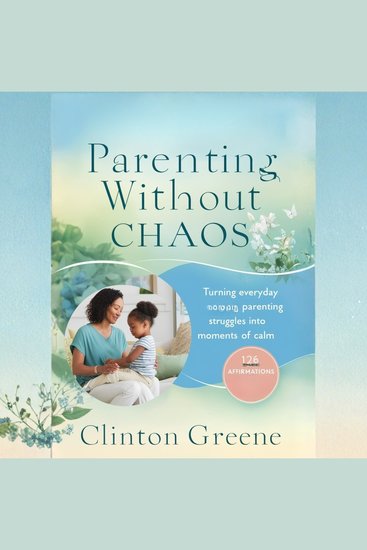
    Parenting was never meant to feel like constant crisis management. 
    Yet for many parents, daily life is filled with raised voices, power struggles, guilt, exhaustion, and the lingering fear that they are somehow getting it wrong. Mornings begin in a rush, evenings end in frustration, and in between is a cycle of correcting, negotiating, apologizing, and starting over again. Love is present—but so is chaos. 
    Parenting Without Chaos was written for parents who are tired of surviving and ready to start leading their homes with calm, clarity, and confidence. 
    This book does not promise perfect children or silent households. What it offers instead is something far more realistic and powerful: a new way of thinking about parenting—one that replaces reactivity with intention, control with connection, and constant conflict with steady guidance. 
    Chaos in parenting is rarely caused by children alone. More often, it grows from uncertainty, unexamined habits, and unrealistic expectations passed down from generation to generation. Many parents were never taught how to regulate their own emotions, set firm but loving boundaries, or discipline without anger. As a result, they parent from stress instead of strategy. 
    Clinton Greene challenges the idea that parenting must be loud, overwhelming, or emotionally draining to be effective. Drawing from real-life experiences, behavioral insight, and practical observation, he shows how calm leadership—not force—is the foundation of a healthy family environment. 
    At its core, Parenting Without Chaos is about reclaiming peace in the home—not by controlling children, but by mastering yourself. When parents change the way they show up, children respond differently. Homes become calmer. Relationships strengthen. Trust grows.
    Show book
  • Man In My Head Has Lost His Mind The (What Makes Us Conscious?) - A thought experiment exploring consciousness and free will identity and the moral self - cover

    Man In My Head Has Lost His Mind...

    Carter Blakelaw

    • 0
    • 0
    • 0
    The howl of the bedside clock-radio carves through your dreams like a buzz-saw through butter, and you are awake. In another place. 
    Never mind the bright yellow sunlight that flecks your pillow and warms your face; you are rudely awake, and resent it. Gah! 
    You roll onto your side, cantilever your legs over the side of the bed and plant your feet squarely on the carpet. You rub your face. Massage your neck. Oh, what it is to be alive!--and conscious--oh oh oh, indeed. 
    But what is it to be alive, and conscious? 
    Alive, we have some inkling of; you eat, you sleep, you exercise. You stay healthy and keep your body going as best you can. But conscious? What even is that? 
    A good question is what that is, and a question for which this book has an answer. 
    So in this text, first I set the scene:Did our consciousness evolve?Does consciousness give us free will?Which animals do we think are conscious?Where does consciousness go when we sleep?How does consciousness deliver meaning?What might a theory of consciousness look like? 
    Then I propose:A model for consciousness at the macro scaleA mechanism for consciousness at the micro scale 
    Finally, I suggest some real world tests that science will one day be able to perform which will either corroborate or invalidate the theory I present here. This is a workable, testable theory. Science and philosophy demand nothing less. 
    A must-listen for the curious-minded, which you are, are you not? So listen on...
    Show book
  • Inventing Human Rights - A History - cover

    Inventing Human Rights - A History

    Lynn Hunt

    • 0
    • 0
    • 0
    How were human rights invented, and how does their tumultuous history influence their perception and our ability to protect them today? From Professor Lynn Hunt comes this extraordinary cultural and intellectual history, which traces the roots of human rights to the rejection of torture as a means for finding the truth. She demonstrates how ideas of human relationships portrayed in novels and art helped spread these new ideals and how human rights continue to be contested today.
    Show book
  • The Sun Also Rises - cover

    The Sun Also Rises

    Ernest Hemingway

    • 0
    • 0
    • 0
    The debut novel from the Nobel Prize-winning author that is both a tragic love story and a searing group portrait of hapless American expatriates drinking, dancing, and chasing their dreams in postwar Europe. 
    “An absorbingly beautiful and tenderly absurd, heart-breaking narrative ... It is a truly gripping story.” —The New York Times 
    Ernest Hemingway, winner of the Nobel Prize in Literature in 1954, exerted a lasting influence on fiction in English through his economical prose style that conceals more than it reveals. His first novel, published in 1926, is narrated by world-weary journalist Jake Barnes, who is burdened by a wound acquired in World War I and by his utterly hopeless love for the flamboyantly decadent Lady Brett Ashley. The Sun Also Rises tracks the Lost Generation of the 1920s from the nightclubs of Paris to the bullfighting arenas of Spain
    Show book
  • Lankesh - cover

    Lankesh

    Devdutt Pattanaik

    • 0
    • 0
    • 0
    Lankesh, a book written by Devdutt Pattanaik, is based on the Ramayana and various other scriptures. Through it, he tries to present Ravana’s perspective. Each part of the book offers a unique lesson that helps us conquer the ‘Ravana’ within ourselves and ignite the light of ‘Rama’ in our hearts.
    Show book
  • Practicing New Worlds - Abolition and Emergent Strategies - cover

    Practicing New Worlds -...

    Andrea J. Ritchie, Alexis...

    • 0
    • 0
    • 0
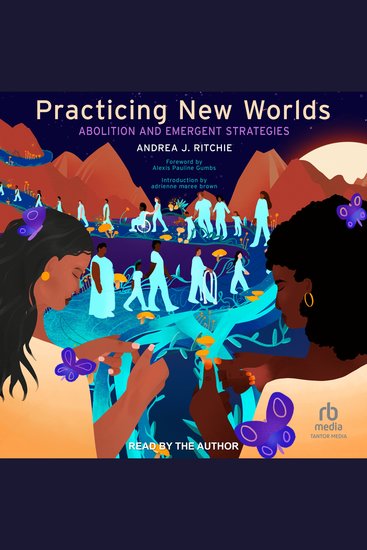
    Practicing New Worlds explores how principles of emergence, adaptation, iteration, resilience, transformation, interdependence, decentralization, and fractalization can shape organizing toward a world without the violence of surveillance, police, prisons, jails, or cages of any kind, in which we collectively have everything we need to survive and thrive. 


    Drawing on decades of experience as an abolitionist organizer, policy advocate, and litigator in movements for racial, gender, economic, and environmental justice and the principles articulated by adrienne maree brown in Emergent Strategy: Shaping Change, Changing Worlds, Ritchie invites us to think beyond traditional legislative and policy change to create more possibilities for survival and resistance in the midst of the ongoing catastrophes of racial capitalism—and the cataclysms to come. Rooted in analysis of current abolitionist practices and interviews with on-the-ground organizers resisting state violence, building networks to support people in need of abortion care, and nurturing organizations and convergences that can grow transformative cities and movements, Practicing New Worlds takes listeners on a journey of learning, unlearning, experimentation, and imagination to dream the worlds we long for into being.
    Show book