¡Acompáñanos a viajar por el mundo de los libros!
Añadir este libro a la estantería
Grey
Escribe un nuevo comentario Default profile 50px
Grey
Suscríbete para leer el libro completo o lee las primeras páginas gratis.
All characters reduced
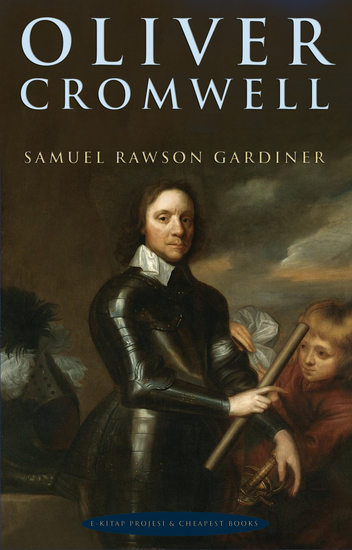
Oliver Cromwell - cover

Oliver Cromwell

Samuel Rawson Gardiner

Editorial: E-Kitap Projesi & Cheapest Books

  • 0
  • 0
  • 0

Sinopsis

Oliver Cromwell, the future Lord Protector of the Commonwealth of England, was born at Huntingdon on April 25, 1599, receiving his baptismal name from his uncle, Sir Oliver Cromwell of Hinchingbrooke, a mansion hard by the little town. It was at Huntingdon that the father of the infant, Robert Cromwell, had established himself, farming lands and perhaps also adding to his income by the profits of a brewhouse managed by his wife, Elizabetha descendant of a middle-class Norfolk family of Stewardoriginally Stywardwhich, whatever writers of authority may say, was not in any way connected with the Royal House of Scotland."I was," said Cromwell in one of his later speeches, "by birth a gentleman, living neither in any considerable height nor yet in obscurity. I have been called to several employments in the nation, andnot to be overtediousI did endeavour to discharge the duty of an honest man in those services to God and His people's interest, and to the Commonwealth." The open secret of Cromwell's public life is set forth in these words:his aim being: first, to be himself an honest man; secondly, to serve God and the people of God; and thirdly, to fulfil his duty to the Commonwealth. In this order, and in no other, did his obligations to his fellow-creatures present themselves to his eyes. For the work before him it could not be otherwise than helpful that his position in life brought him into contact with all classes of society.What powers and capacities this infantor indeed any other infantmay have derived from this or the other ancestor, is a mystery too deep for human knowledge; but at least it may be noted that the descent of the Cromwells from Sir Richard Williams, the nephew of Thomas Cromwell, the despotic Minister of Henry VIII., brought into the family a Welsh strain which may have shown itself in the fervid idealism lighting up the stern practical sense of the warrior and statesman.Of Oliver's father little is known; but his portrait testifies that he was a man of sober Puritanism, not much given to any form of spiritual enthusiasmvery unlike his elder brother, Sir Oliver, who had inherited not only the estate, but the splendid ways of his father, Sir Henry Cromwellthe Golden Knightand who, after running through his property, was compelled to sell his land and to retire into a more obscure position. As the little Oliver grew up, he had before his eyes the types of the future Cavalier and Roundhead in his own family. So far as parental influence could decide the question, there could be no doubt on which side the young Oliver would take his stand. His education was carried on in the free school of the town, under Dr. Beard, the author of The Theatre of God's Judgments Displayed, in which a belief in the constant intervention of Providence in the punishment of offenders was set forth by numerous examples of the calamities of the wicked. Though Oliver afterwards learned to modify the crudeness of this teaching, the doctrine that success or failure was an indication of Divine favour or disfavour never left him, and he was able, in the days of his greatness, to point unhesitatingly to the results of Naseby and Worcester as evidence that God Himself approved of the victorious cause.
Disponible desde: 19/01/2024.
Longitud de impresión: 300 páginas.

Otros libros que te pueden interesar

  • The Wisdom Of Carl Jung - Decoding Archetypes The Shadow Synchronicities Dreams Symbols Mandalas And The Collective Unconscious - cover

    The Wisdom Of Carl Jung -...

    Malcolm J. Austin

    • 0
    • 0
    • 0
    This audiobook is narrated by an AI Voice.   
    THE WISDOM OF CARL JUNG is a captivating journey into the heart of Jungian psychology, exploring the profound ideas that shaped our understanding of the human psyche. Through thirty concise yet powerful chapters, this audiobook illuminates Jung’s core concepts—archetypes, the shadow, synchronicity, dreams, symbols, mandalas, and the collective unconscious—with clarity and depth. 
    Rather than serving as a guide or reference manual, this work is a narrative synthesis of Jung's intellectual legacy. It begins with his early influences and dramatic break with Freud, then builds toward his groundbreaking insights into depth psychology. 
    Listeners will discover how archetypes like the hero, the mother, and the wise old man influence both personal and cultural life. The audiobook dives into the interplay between the persona and the shadow, unveiling their essential roles in psychological development. Dreams and synchronicities emerge as bridges between the conscious and unconscious, while symbols and mandalas become keys to inner transformation. 
    Beyond his better-known theories, this exploration ventures into Jung's lesser-known fascinations—alchemy, paranormal research, and Eastern spiritual traditions—revealing them as vital elements of his holistic vision of the soul. 
    The final chapters reflect on Jung’s enduring influence in contemporary life, from politics and art to religion and popular culture. His concept of the collective unconscious continues to shed light on modern society’s myths and struggles. 
    Accessible yet intellectually rigorous, this audiobook is an invitation to immerse yourself in the depth of Jungian thought. It avoids simplifications while offering a clear structure, making it indispensable for those seeking to understand Carl Jung’s profound and timeless contributions to psychology and beyond.
    Ver libro
  • How to Analyze People - Master The Process And Tools Of Speed Reading And Analyzing People - cover

    How to Analyze People - Master...

    Kevin Hallstone

    • 0
    • 0
    • 0
    All of us judge people when we see them, and even if we aren't consciously aware of the conclusions that we make about people, we still do make them, as that determines our actions towards people. Reading people is a human habit and one that we cannot get rid of. We read people because we are threatened by new people that we meet, we want to determine if this person is someone that we can trust or not and a lot of times we end up making the wrong decisions. 
    The purpose of this book is to make this inexact science of judging people a little more exact. By giving you some standards based on which you can judge people, you will become consciously aware of how people function, and more importantly, you'll have a guideline according to which you can read body language. It'll also help you to be sure about the conclusions you come to because a lot of times, our intuition tells us that something is wrong with a person, but we just shut it off because we are too scared of coming off as judgmental. 
    Analyzing people is not only good for protecting yourself but also helps you to communicate better with your loved ones. You can notice small things once you start looking at people, and you will know how to manufacture a situation where everyone can feel comfortable. Being able to read body language also gives you a sense of control since you have information about people that you can use to judge their intentions, control their behavior, and even your behavior. 
    In this book, we're going to take a look at how the process of analyzing people works, why self-awareness is important and the role it plays in analyzing others, the basics of nonverbal and verbal communication, some intricacies of human psychology and lastly, the practical applications that you can derive out of all this knowledge.
    Ver libro
  • Agency - The Four Point Plan (FREE) for All Children to Overcome the Victimhood Narrative and Discover Their Pathway to Power - cover

    Agency - The Four Point Plan...

    Ian V. Rowe

    • 0
    • 0
    • 0
    Every child deserves to know that a path to a successful life exists and that they have the power to follow it. But many never set foot on that path because they grow up hearing the message that systemic forces control their destinies, or that they are at fault for everything that has gone wrong in their lives. 


    Yet this phenomenon is not universal. Some children thrive where others do not. Why? Are there personal behaviors and institutional supports that have proven to make a difference? Agency answers with a loud and clear "yes!" 


    This book describes four pillars that can uplift every young person: family, religion, education, and entrepreneurship. These pillars embody the meaning of freedom, wherein people are motivated to build healthy social structures and shape the outcomes of their lives. 


    For that reason, Ian Rowe calls the four pillars the FREE framework. With this framework, children are empowered to develop agency. 


    In addition to making the case for agency, Rowe shares his personal story coming from an immigrant family. He champions a game plan for creating new agents of agency, promoting the spirit of America's children and showing them the path that will set them FREE.
    Ver libro
  • Nature & Culture - A change empowered by joy! - cover

    Nature & Culture - A change...

    Eco-Philosophy The Council for

    • 0
    • 0
    • 0
    Dalai Lama (2000) believes that seeking happiness "lies in our nature": The desire or need to be happy knows no bounds. It is something that lies in our nature. As such, it needs no grounds and it is justified by the simple fact that it is something we rightly want out of our nature. One has also asked if happiness is as important in all cultures. The answer is that happiness is at the top of the wish-list in every country; It is more important than wealth and to come to heaven, and as important as love (Diener and Biswas-Diener, 2008)...what makes us richer has been costly. The wealth, or what has been the prerequisite for wealth, has reduced a quieter life, close and stable relationships, we are moving apart. A materialistic lifestyle has a negative connection with happiness (Hellevik, 2003). NEF (2016) has calculated values on Happy Planet Index for 140 countries. Highest ranks Costa Rica and a number of other countries in Latin America. The population of Costa Rica has high values for happiness and longevity, and they have low values of ecological footprints. Norway has very high values of happiness and longevity, but also of footprints. In total, Norway is ranked twelfth and therefore highest among European countries, but closely followed by Albania. The United Kingdom is at thirty-fourth place, Canada number eighty-five and the United States number 108.
    Ver libro
  • End of World War II in the Pacific The: The History of the Final Campaigns that Led to Imperial Japan’s Surrender - cover

    End of World War II in the...

    Editors Charles River

    • 0
    • 0
    • 0
    By the spring of 1943, American military planners had begun to create a plan to dislodge Japan from east and southeast Asia. To do so, parts of the Philippines were considered main strategic points in the potential Allied attack in the Pacific. The end goal of the Allied plan was an invasion of the Japanese home islands, in which heavy aerial bombardment would precede a ground assault. In order for this to occur, Allied forces would have to occupy areas surrounding Japan, with China adding to Luzon (the largest island in the Philippines) and Formosa (a large island off the coast of China) to create a triangle from which they could launch their bombers. 
    When Admiral Chester Nimitz was directed to capture an island in the Bonin group, Iwo Jima stood out for its importance in making progress against the mainland, with three airfields that would allow American air forces to attack the Japanese mainland. But the Japanese were also well aware of how important Iwo Jima was, and they fought desperately in bunkers and tunnels that required the Americans to carefully clear them out gradually.  
    Near the end of 1944, as Allied forces were pushing across the Pacific and edging ever closer to Japan, plans were drawn up to invade the Ryuku islands, the most prominent of them being Okinawa. Given the horrific nature of the combat, and the fact that it was incessant for several weeks, it’s no surprise that Okinawa had a profound psychological effect on the men who fought, but it also greatly influenced the thinking of military leaders who were planning subsequent campaigns, including a potential invasion of the Japanese mainland. The casualty tolls at Okinawa ultimately helped compel President Truman to use the atomic bombs on Hiroshima and Nagasaki in an effort to end the war before having to attempt such an invasion.
    Ver libro
  • Marcus Aurelius: A short biography - 5 Minutes: Short on time - long on info! - cover

    Marcus Aurelius: A short...

    5 Minutes, 5 Minute Biographies,...

    • 0
    • 0
    • 0
    Marcus Aurelius, the philosopher among Roman emperors: Life and works in a short biography! Everything you need to know, brief and concise. Infotainment, education and entertainment at its best!
    Ver libro