Join us on a literary world trip!
Add this book to bookshelf
Grey
Write a new comment Default profile 50px
Grey
Subscribe to read the full book or read the first pages for free!
All characters reduced
A Comprehensive Compendium of 42 Books on Social Pathology - The Deaf The Battle with the Slum Degeneracy The Leaven in a Great City Boyville etc - cover

A Comprehensive Compendium of 42 Books on Social Pathology - The Deaf The Battle with the Slum Degeneracy The Leaven in a Great City Boyville etc

Samuel Merwin, William Booth, Bernard Mandeville, Jacob A. Riis, Guy Thorne, Margaret Wynne Nevinson, Charles Kingston, W. T. Stead, Wellington Scott, Josiah Flynt, Carlo de Fornaro, Sophie Van Elkan Lyons Burke, James Harold Romain, Eugene S. Talbot, Mary Higgs, L. O. Curon, John Thomas Smith, Clifton R. Wooldridge, John E. Gunckel, Lillian William Betts, Harry Best, V. M. Masten, Caroline H. Woods, Charles Gustavus Mutzenberg, R. M. Algie, Sigmund Engel, Louis Albert Banks, George M. White, Hans Kurella, John Josiah Munro, Samuel Paynter Wilson, Jacobus X, Roy K. Anderson, Nels Anderson, 1 A-No., W. A. Chapple, Arthur Lawrence Hayward, Roland Burnham Molineux

Publisher: e-artnow

  • 0
  • 0
  • 0

Summary

Delve into the profound and multifaceted world of societal imperfections with 'A Comprehensive Compendium of 42 Books on Social Pathology.' This anthology presents a panoramic exploration of social issues, ranging from urban poverty and criminality to behavioral psychology and societal reform. The collection encompasses a variety of literary styles, including investigative narratives, philosophical musings, and reformist essays, each contributing a unique lens to the intricate tapestry of social pathology. Among the wealth of works, readers will find pieces that illuminate the complexities of human behavior set against the backdrop of societal structures, revealing the pervasive issues that have intrigued thinkers across generations. The contributors of this anthology are a diverse assembly of social reformers, writers, and philosophers, whose works collectively span the evolving discourse of social pathology. Figures such as Bernard Mandeville and William Booth intersect with lesser-known but equally poignant voices like Mary Higgs and Jacob A. Riis, creating a rich dialogue that reflects various historical, cultural, and academic influences. Their writings echo movements from the Enlightenment to the Progressive Era, underscoring the persistent quest to understand and improve the human condition through a kaleidoscope of perspectives. This compendium is an invaluable resource for anyone seeking a deeper understanding of the social forces that shape human behavior and societal structures. It offers a rare opportunity to engage with a multitude of perspectives within a single tome, fostering a nuanced comprehension of complex social issues. Readers are invited to immerse themselves in these thought-provoking texts, sparking introspection and discussion while broadening one's awareness and empathy for the multifaceted narratives of human experience.
Available since: 03/04/2025.
Print length: 2546 pages.

Other books that might interest you

  • Scotland's Democracy Trail - cover

    Scotland's Democracy Trail

    Donald Smith

    • 0
    • 0
    • 0
    The trail follows the emergence of democratic thought and action in Scotland from the 16th century onwards, linking pivotal events to locations along the way. It is a story of ups and downs, triumphs and tragedies, borne along by a stubborn, persistent advance.
    
    
    The evolution of democracy in Scotland is a fascinating story. Join Stuart McHardy and Donald Smith as they tell this story via a guided tour of the landmarks and monuments of Edinburgh, leading you from Edinburgh Castle to the Scottish Parliament, and through over 500 years of political development.


    From the antics of the Edinburgh Mob and the cruelties of Henry Dundas, to the more recent Vigil for a Scottish Parliament and the 2014 referendum on Scottish independence, this book will show you the democratic and historic significance of the places, people and ideas on the route.


    A comprehensive timeline, detailed map and photographs throughout make it easy to follow the route and discover the story of Scottish democracy. Scotland's Democracy Trail brings the key political events in Scotland's history to life, demonstrating just how relevant they remain today.
    Show book
  • Classic Movie Radio Commercials - Volume 1 - cover

    Classic Movie Radio Commercials...

    Various Various

    • 0
    • 0
    • 0
    This fascinating audio program includes actual radio commercials from the 1960s and 1970s for the following classic movies: A Clockwork Orange (1971), directed by Stanley Kubrik, featuring Malcolm McDowell and Patrick Magee; Beyond The Valley of the Dolls (1970), directed by Russ Meyer, featuring Dolly Reed, Cynthia Meyers, Marcia McBroom; Easy Rider (1969), directed by Dennis Hopper, featuring Peter Fonda, Dennis Hopper, Jack Nicholson. A Guide For The Married Man (1967), directed by Gene Kelly, featuring Walter Matthau, Inger Stevens, Sue Ane Langdon. I Love You Alice B. Toklas! (1968), directed by Hy Averback, featuring Peter Sellers, Jo Van Fleet, Leigh Taylor-Young. Musical Mutiny (1970), directed by Barry Mahon, featuring Erik Braunn, Ron Bushy, Terri de Sario. Psych-Out (1968), directed by Richard Rush, featuring Susan Strasberg, Dean Stockwell, Jack Nicholson. Reflections In A Golden Eye (1967), directed by John Huston, featuring Elzabeth Taylor, Marlon Brando, Brian Keith; Secret Ceremony (1968), directed by Jospeh Losey, featuring Elizabeth Taylor, Robert Mitchum, Mia Farrow. Stamping Ground(1971), directed by Hans Jurgen Pohland, George Sluizer, featuring Pink Floyd, Jefferson Airplane, Santana, Canned Heat, The Byrds; Teenage Mother (1967), directed by Jerry Grossfeaturing Arlene Farber, Frederick Riccio, Julie Ange; The Damned (1969), directed by Luchino Visconti, featuring Dirk Bogarde, Ingrid Thulin, Helmut Griem; The Jokers (1967), directed by Michael Winner, featuring Michael Crawford, Oilver Reed, Harry Andrews; The Thomas Crown Affair (1968), directed by Norman Jewison, featuring Steve McQueen, Faye Dunaway, Paul Burke; The Trip (1967), directed by Roger Corman, featuring Peter Fonda, Dennis Hopper, Susan Strasberg; The Wild Angels (1966), directed by Roger Corman, featuring Peter Fonda, Nancy Sinatra, Bruce Dern.
    Show book
  • How to Write a Novel - From Idea to Book - cover

    How to Write a Novel - From Idea...

    Joanna Penn

    • 0
    • 0
    • 0
    Writing a novel will change your life. 
    It might not be in the way that you expect, but when you hold your book in your hand and say, “I made this,” something will shift.  
    The process of getting to that point will light a spark in your creative soul and help you discover unexpected aspects of yourself. It will be one of the things you are most proud of in your life. 
    I’m Joanna (J.F.) Penn, award-nominated, New York Times and USA Today bestselling author of 18 novels and novellas with nearly a million books sold in over one hundred countries. 
    This book will help you write your first novel, or improve your creative process so you can write more books and reach more readers. It covers mindset, ideas and research, plotting/outlining and discovery writing, aspects of craft from character to setting to voice and much more, how to write a first draft, and work through an editing process to a finished book.  
    If you want to (finally) write your novel, then buy How to Write a Novel today.
    Show book
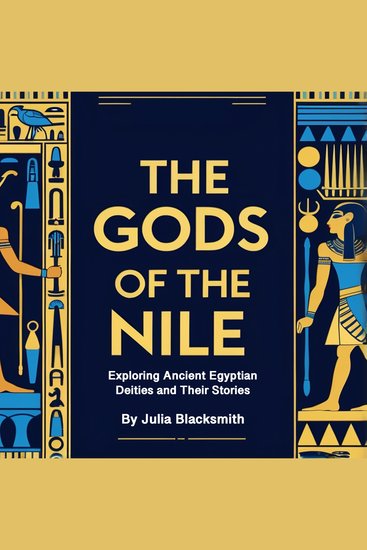
  • The Gods of the Nile - Exploring Ancient Egyptian Deities and Their Stories - cover

    The Gods of the Nile - Exploring...

    Julia Blacksmith

    • 0
    • 0
    • 0
    Ancient Egypt was a civilization deeply rooted in religion, where gods and goddesses played an essential role in shaping daily life, governance, and the afterlife. The Egyptian pantheon was vast, with deities representing natural forces, human emotions, and cosmic order. These gods were not distant or abstract figures but were actively involved in the lives of the people, influencing everything from the flooding of the Nile to the fate of the soul after death. The Egyptians believed that by honoring their gods through rituals, prayers, and temple offerings, they could maintain harmony in the universe.  
    One of the defining aspects of Egyptian religion was its polytheistic nature. Unlike monotheistic faiths, which center around a single divine being, the Egyptians worshipped hundreds of gods, each with unique attributes, symbols, and responsibilities. Some, like Ra, the sun god, were powerful and widely revered, while others, such as Taweret, the hippo goddess of childbirth, had more specialized roles. Many deities evolved over time, merging with others or taking on new characteristics as different cities and dynasties rose to prominence. This fluidity allowed Egyptian religion to remain relevant for over three thousand years.  
    The gods were not only worshipped in grand temples but were also deeply integrated into the personal lives of the people. Pharaohs were believed to be divine or semi-divine figures, ruling as representatives of the gods on Earth. Priests conducted elaborate ceremonies in temple complexes dedicated to major deities, ensuring their favor and protection over the land. Ordinary Egyptians also kept small shrines in their homes, prayed to household gods for blessings, and wore protective amulets bearing sacred symbols. Magic and mythology were intertwined with religious practice, with spells and sacred texts often invoking the names of gods for healing, guidance, and protection. 
    Show book
  • What Your Favorite Color Says About You - The Psychology of Color Preferences - cover

    What Your Favorite Color Says...

    John Harpoon

    • 0
    • 0
    • 0
    Color is a fundamental part of human experience, shaping emotions, perceptions, and even behavior. From ancient civilizations to modern psychology, color has been studied for its impact on the human mind. Some colors evoke feelings of warmth and excitement, while others create a sense of calm and relaxation. But beyond their immediate effects, colors can also serve as a reflection of personality and identity. The idea that a person’s favorite color reveals something about their character has intrigued psychologists, researchers, and individuals alike. This book explores the fascinating connection between color preferences and human psychology, offering insights into how and why we gravitate toward certain shades.  
    How a person develops a preference for a particular color is influenced by multiple factors, including early childhood experiences, cultural associations, and even genetic predispositions. Some psychologists suggest that color preferences are rooted in personal memories—positive experiences with a specific color may lead to a lasting affinity for it. Additionally, cultural and societal norms play a significant role in shaping perceptions of color. For example, while white represents purity and new beginnings in Western cultures, it is often associated with mourning in parts of Asia. These cultural variations demonstrate that color meanings are not universal, but rather deeply ingrained in social contexts.  
    Despite these external influences, color preferences are also highly personal and can evolve over time. A child who loves bright and playful colors like yellow or orange may later develop an appreciation for more subdued tones such as blue or gray. Life experiences, emotional growth, and shifting priorities contribute to these changes.
    Show book
  • Ring of Fire - High-Stakes Mining in a Lowlands Wilderness - cover

    Ring of Fire - High-Stakes...

    Virginia Heffernan

    • 0
    • 0
    • 0
    A valuable discovery under the world’s second-largest temperate wetland and in the traditional lands of the Cree and Ojibway casts light on the growing conflict among resource development, environmental stewardship, and Indigenous rights
    		 
    When prospectors discovered a gigantic crescent of metal deposits under the James Bay Lowlands of northern Canada in 2007, the find touched off a mining rush, lured a major American company to spend fortunes in the remote swamp, and forced politicians to confront their legal duty to consult Indigenous Peoples about development on their traditional territories. But the multibillion-dollar Ring of Fire was all but abandoned when stakeholders failed to reach a consensus on how to develop the cache despite years of negotiations and hundreds of millions of dollars in spending. Now plans for an all-weather road to connect the region to the highway network are reigniting the fireworks.
    		 
    In this colorful tale, Virginia Heffernan draws on her bush and newsroom experiences to illustrate the complexities of resource development at a time when Indigenous rights are becoming enshrined globally. Ultimately, Heffernan strikes a hopeful note: the Ring of Fire presents an opportunity for Canada to leave behind centuries of plunder and set the global standard for responsible development of minerals critical to the green energy revolution.
    Show book