Join us on a literary world trip!
Add this book to bookshelf
Grey
Write a new comment Default profile 50px
Grey
Subscribe to read the full book or read the first pages for free!
All characters reduced
The Way of All Flesh - cover

The Way of All Flesh

Samuel Butler

Publisher: Memorable Classics eBooks

  • 0
  • 0
  • 0

Summary

The Way of All Flesh by Samuel Butler  is a semi-autobiographical novel by Samuel Butler that attacks Victorian-era hypocrisy. Written between 1873 and 1884, it traces four generations of the Pontifex family.

Butler dared not publish it during his lifetime, but when it was published (in 1903) it was accepted as part of the general reaction against Victorianism. In its posthumous publication in 1903, Butler's first literary executor, R A Streatfeild, made substantial changes to Butler's manuscript. The original manuscript was first published in 1964 by Houghton Mifflin Company, Boston, edited by Daniel F. Howard.

The title is a quotation from the Douay–Rheims Bible's translation of the Biblical Hebrew expression, to "go the way of all the earth", meaning "to die", in the Books of Kings: "I am going the way of all flesh: take thou courage and shew thyself a man." (1 Kings 2:2).
In 1998, the Modern Library ranked The Way of All Flesh twelfth on its list of the 100 best English-language novels of the 20th century.
Available since: 06/03/2022.
Other books that might interest you

  • Renegade MD - A Doctor's Stories from the Streets - cover

    Renegade MD - A Doctor's Stories...

    Susan Partovi

    • 0
    • 0
    • 0
    Empowering stories from the frontlines of compassion. 
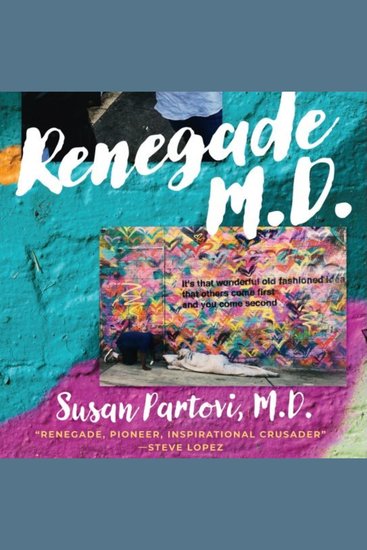
    Dr. Susan Partovi first experienced poverty medicine volunteering at a dump site in Tijuana during high school. There, she recognized the need for all people to have access to quality medical care. Over the years, she has worked in various facilities around Los Angeles County, incorporating her renegade method of going the extra mile for her patients. As Medical Director of Homeless Health Care Los Angeles, she works to provide a safety net of care for the underserved skid row community and surrounding neighborhoods. 
    Recognized internationally as a leader in street medicine, Dr. Partovi started documenting her patients' stories so that others could hear their voices. By addressing the practical and moral considerations when treating each patient, Dr. Partovi developed her philosophies about what it means to be a "good doctor." Along the way, she began to understand how her personal ethics evolved―from a challenging childhood and complicated relationships with her parents, through professional hurdles―often, she had to push against a system that doesn't always put the patient first. 
    Renegade MD: A Doctor's Stories from the Streets is a powerful and inspiring memoir by Dr. Susan Partovi, a renowned street doctor who has dedicated her life to treating the impoverished around the world and people experiencing homelessness on LA's skid row. Through her stories, Dr. Partovi takes us on a journey to the heart of the challenges faced by those living on the streets, and shines a light on her unwavering commitment to advocate for social justice and to provide compassionate care to some of the most vulnerable people in our society.
    Show book
  • Chelkash by Maxim Gorky - A small time thief is caught up in a larger scheme testing his willpower and showing the dangers of greed - cover

    Chelkash by Maxim Gorky - A...

    Maxim Gorky

    • 0
    • 0
    • 0
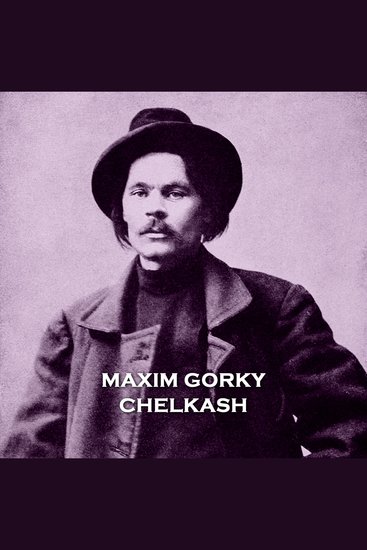
    Alexei Maximovich Peshkov was born on 28th March 1868, in Nizhny Novgorod, Russia. 
     
    Better known as Maxim Gorky he was orphaned at 11 and ran away from home at 12.  At 19 he had already attempted suicide and thereafter travelled, by foot, across the Russian Empire for 5 years. 
     
    His first book ‘Essays & Stories’ in 1898 was a sensation and so began a long career as an author of short stories, novels and plays.  Gorky saw writing as a moral and political act that would help to change the unjust world around him.  He was an ardent early advocate of the emerging Marxist movement and publicly opposed the Tsarist regime leading several times to his arrest.  
     
    In 1904 he began his own theatre but the censor banned every play and Gorky was forced to abandon the project. 
     
    But Gorky was a financially successful author, editor, and playwright and gave monies to political parties as well as for civil rights and social reform.  The brutal shooting of workers, which set in motion the Revolution of 1905, pushed Gorky more decisively toward radical solutions.  
     
    In 1906 he went to the United States to raise funds for the Bolsheviks. Those experiences including a scandal over travelling with his lover and not his wife deepened his contempt for the ‘bourgeois soul.’ 
     
    Gorky now moved to Capri in Italy, both for health reasons and to escape the increasingly repressive times in Russia.  
     
    An amnesty for the 300th anniversary of the Romanov dynasty saw him return to Russia in 1914. His politics remained close to the Bolshevik cause.  But soon, after the 1918 revolution, his essays referred to Lenin as a tyrant for his senseless arrests and repression.  He was soon appealing to the outside world for food aid after the catastrophic crop failure. 
     
    In October 1921 Gorky returned to Italy, now in Fascist hands, and settled in Sorrento until 1932.  His health worsened with the onset of tuberculosis. 
     
    He wrote several successful books there but now decided to find an understanding with the communist regime. Stalin invited him home and his return was hailed as a major propaganda victory.  He was decorated with the Order of Lenin, and a province, a park, and various streets re-named in his honour. 
     
    But he had his faults too.  In 1933, Gorky co-edited a book on the White Sea-Baltic Canal and denied even a single prisoner died during its construction, but thousands had. As well, knowing that some Nazis were homosexual, a phrase was attributed to him that said ‘exterminate all homosexuals and fascism will vanish’.  Although he was himself was quoting another he was decidedly homophobic. 
     
    With the increase of Stalinist repression in 1935 Gorky was placed under unannounced house arrest. 
     
    Maxim Gorky died on the 18th June 1936 from pneumonia.  He was 68. 
     
    Stalin and Molotov were among those who carried Gorky's urn of ashes at his funeral.  
     
    In Gorky’s story, a thief, Chelkash, ensnares a young man into his scheme to steal silk from a ship.  When he then sells the stolen goods he is set upon by the young accomplice.  What happens then is as unexpected as it is remarkable.
    Show book
  • Frosting on the Cake 3 - cover

    Frosting on the Cake 3

    Karin Kallmaker

    • 0
    • 0
    • 0
    From a red-carpet Halloween costume to the fireworks of New Year's, Karin Kallmaker is adding a holiday layer to her literary cake with short stories inspired by her classics and recent novels. It's a baker's dozen buffet of pure holiday deliciousness. 


    Join her for a Car Pool family table Thanksgiving and Paperback Romance small town concert. A Warming Trend North Pole wonderland and Maybe Next Time Hawaiian Christmas. A reality show holiday bake-off with Wild Things. And Simply the Best ever New Year's Day. Every story will wrap you in family, friendships, and romance, all with a holiday bow on top. 


    Karin Kallmaker's delightful and moving short stories have won Lambda Literary and Golden Crown awards and are sure to have you falling in love with her characters all over again.
    Show book
  • Port Arthur Massacre The: Forensic Gaps Media Silence and a Nation Misled - cover

    Port Arthur Massacre The:...

    Charlie Armstrong Adams

    • 0
    • 0
    • 0
    This audiobook is narrated by an AI Voice.   
    The Port Arthur Massacre: Forensic Gaps, Media Silence, and a Nation Misled 
    This audiobook is narrated by an AI Voice. 
    On 28 April 1996, Australia was shaken by one of the deadliest mass shootings in modern history. Within hours, Martin Bryant was branded guilty, and within weeks, sweeping gun laws were pushed through. But behind the headlines lies a darker truth—one of forensic gaps, sealed witness statements, and a story that was never tested in open court. 
    Why were over 800 witness statements withheld? Why was there no coronial inquest? And how could a man with an IQ of just 66 carry out a massacre with military precision? 
    This audiobook asks the questions the government and media never wanted answered. It exposes contradictions, examines the evidence that was buried, and shines light on what may be the greatest unresolved mystery in Australian history. 
    If you value truth over silence, if you believe facts matter even when uncomfortable, this book will challenge everything you thought you knew about Port Arthur. 
    Prepare to be enlightened. Prepare to question the narrative. And prepare to discover why, nearly 30 years later, the questions just won’t die.
    Show book
  • Crash Landing - NOW WHAT DO I DO? - cover

    Crash Landing - NOW WHAT DO I DO?

    Shera Winter

    • 0
    • 0
    • 0
    "Crash Landings" traces the author's journey through a series of events that require her to make continuous changes, redefining herself multiple times. It is set against the backdrop of having a verbally abusive mother and an absentee father, and later a high-tech career during the emergence of Silicon Valley. In the memoir, she delves into family dynamics, overcoming adversity, and personal growth. Throughout the memoir, she explores both failed and successful relationships, changes her career from writing to computer science, and overcomes multiple difficulties while also enjoying satisfying successes.
    Show book
  • Serving Up Love - A Four-in-One Harvey House Brides Collection - cover

    Serving Up Love - A Four-in-One...

    Tracie Peterson, Karen...

    • 0
    • 11
    • 0
    Bestselling novelist Tracie Peterson joins Karen Witemeyer, Regina Jennings, and Jen Turano in this collection of four novellas, each featuring a Harvey Girl heroine. From Kansas to Texas, the Grand Canyon to New Mexico, the stories cross the country with tales of sweet romance and entertaining history.  
     
    In Karen Witemeyer's "More Than a Pretty Face," a young woman works her hardest to escape poor choices from her youth. Tracie Peterson offers "A Flood of Love," where reuniting with an old flame after more than a decade offers unexpected results. Regina Jennings's "Intrigue a la Mode" delights with a tale of a young woman determined to help support her family, despite warnings of danger nearby. And Jen Turano's "Grand Encounters" heads to the Grand Canyon with a tale of a society belle intent on finding a new life for herself.
    Show book