Join us on a literary world trip!
Add this book to bookshelf
Grey
Write a new comment Default profile 50px
Grey
Subscribe to read the full book or read the first pages for free!
All characters reduced
Travels In the Heart of Africa - cover

Travels In the Heart of Africa

Samuel Baker

Publisher: BookRix

  • 0
  • 0
  • 0

Summary

Narrating his experiences in Africa, Baker has dwelled upon the wild and untamed beauty of the land. He elaborates the culture of the people, their religion as well as the wild-life and its habitat. The book offers a detailed study of the area with a profound personal touch and opinions of the author.
Available since: 12/19/2023.
Print length: 357 pages.

Other books that might interest you

  • Scars on the Land - An Environmental History of Slavery in the American South - cover

    Scars on the Land - An...

    David Silkenat

    • 0
    • 0
    • 0
    Scars on the Land is the first comprehensive history of American slavery to examine how the environment fundamentally formed enslaved people's lives and how slavery remade the Southern landscape. Over two centuries, from the establishment of slavery in the Chesapeake to the Civil War, one simple calculation had profound consequences: rather than measuring productivity based on outputs per acre, Southern planters sought to maximize how much labor they could extract from their enslaved workforce. They saw the landscape as disposable, relocating to more fertile prospects once they had leached the soils and cut down the forests. On the leading edge of the frontier, slavery laid waste to fragile ecosystems, draining swamps, clearing forests to plant crops and fuel steamships, and introducing devastating invasive species. On its trailing edge, slavery left eroded hillsides, rivers clogged with sterile soil, and the extinction of native species. While environmental destruction fueled slavery's expansion, no environment could long survive intensive slave labor. The scars manifested themselves in different ways, but the land too fell victim to the slave owner's lash.
    Show book
  • How to Analyze People - A Comprehensive Beginners Guide to Learn the Techniques of Speed Reading and Analyzing People - cover

    How to Analyze People - A...

    Kevin Hallstone

    • 0
    • 0
    • 0
    In this age of technology and modernization, everything becomes available online. You can easily transact business with someone you haven’t even met and are likely to remain strangers forever. Even dating online became a commonly accepted way of searching and establishing relationships with someone you do not know. So it is for these reasons why some people fall victim to coning, deceptions, and betrayals. 
    In instances when you are dealing with unscrupulous individuals – online or offline, having the skill to read and interpret body language is essential. Not only would it give you the awareness and insight on the kind of individual that you are dealing with, but it also teaches you on how to conduct the right behavior to keep you out of danger. 
    Body language embraces a wide range of nonverbal communications, including voice, tones, and pitch. So even when you have no chance of seeing that individual in person or through video facilities, you can still detect signals and cues that will give you information related to his behavior and personality even without seeing them. 
    So, before you fall victim to a con artist or get engaged in any fraudulent transaction, learn and master the art of body language. 
    This book will tell you how much you want to know about a person’s behavior, characteristics, personality, and psychology.
    Show book
  • The Sociology of Crime - Understanding the Roots and Impacts of Criminal Behavior - cover

    The Sociology of Crime -...

    Fred Grandsen

    • 0
    • 0
    • 0
    Crime is not merely a legal category but a social construct shaped by historical, cultural, and political forces. What is considered criminal behavior varies across societies and time periods, reflecting changing moral values, power structures, and social interests. Understanding crime as a social construct allows us to analyze how laws are created, enforced, and challenged within different social contexts. 
    One of the key aspects of the social construction of crime is that laws are not neutral or universal. Instead, they are established by those in positions of power who determine what behaviors should be criminalized. For example, certain acts such as drug use, gambling, or even political protests have been criminalized in some societies while being tolerated or even encouraged in others. The legal system often reflects the interests of dominant groups, leading to selective enforcement of laws. Historically, vagrancy laws targeted the poor, while modern drug laws have disproportionately affected marginalized communities. 
    Crime is also shaped by cultural perceptions and media representations. The way crime is reported in the news and depicted in television shows or films influences public perceptions of who is considered criminal. For instance, street crime is often sensationalized, while corporate or white-collar crimes receive comparatively little attention, despite their significant social and economic impact. This selective framing reinforces stereotypes and can lead to policies that prioritize punishment for certain groups while overlooking more systemic forms of harm.
    Show book
  • Shakespeare's White Others - cover

    Shakespeare's White Others

    David Sterling Brown

    • 0
    • 0
    • 0
    Examining the racially white 'others' whom Shakespeare creates in characters like Richard III, Hamlet, and Tamora—figures who are never quite 'white enough'—this bold and compelling work emphasizes how such classification perpetuates anti-Blackness and reaffirms white supremacy. David Sterling Brown offers nothing less here than a wholesale deconstruction of whiteness in Shakespeare's plays, arguing that the 'white other' was a racialized category already in formation during the Elizabethan era—and also one to which Shakespeare was himself a crucial contributor. In exploring Shakespeare's determinative role and strategic investment in identity politics (while drawing powerfully on his own life experiences, including adolescence), the author argues that even as Shakespearean theatrical texts functioned as engines of white identity formation, they expose the illusion of white racial solidarity. This essential contribution to Shakespeare studies, critical whiteness studies, and critical race studies is an authoritative, urgent dismantling of dramatized racial profiling. 


    To access the virtual gallery accompanying this book, please visit https://hubs.mozilla.com/mEd5aWD/david-sterling-brown-gallery-vrv?utm_source=hootsuite&utm_medium=twitter&utm_campaign=MNE_campaign.
    Show book
  • An Antietam Veteran's Montana Journey - The Lost Memoir of James Howard Lowell - cover

    An Antietam Veteran's Montana...

    Katharine Seaton Squires

    • 0
    • 0
    • 0
    In this recently unearthed memoir, Civil War veteran James Howard Lowell offers a firsthand account of his brutal journey west on a wagon train attacked by Indian Dog Soldiers. The Boston Yank staggers snow blind through a Laramie Plains blizzard to reach Salt Lake City, where he meets Brigham Young. In Montana, he joins an old forty-niner to work a mining claim, practices "tomahawk jurisprudence" in Fort Benton and builds a mackinaw to head downriver through Deadman Rapids to trade with the Crow and Gros Ventre tribes. Lowell's great-great-granddaughter edits this tale populated with colorful characters, narrow escapes and important historical events, such as the Baker Massacre. It features Lowell's letters to his sweetheart and Civil War correspondence.
    Show book
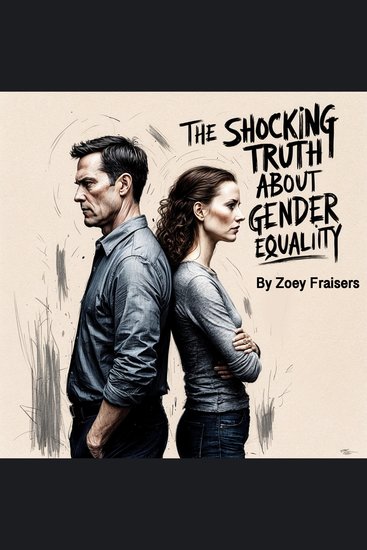
  • The Shocking Truth about Gender Equality - cover

    The Shocking Truth about Gender...

    Zoey Fraisers

    • 0
    • 0
    • 0
    Gender equality is one of the most discussed and debated topics in modern society. It influences nearly every aspect of life, from economic opportunities and political representation to cultural expectations and personal freedoms. Despite the progress made over the decades, disparities between genders persist, often in ways that are not immediately visible. While some argue that true equality has already been achieved, the reality is far more complex. Deep-rooted biases, systemic barriers, and societal norms continue to shape the way individuals experience the world based on their gender.  
      
    Historically, gender roles were rigidly defined, with men and women assigned specific duties and responsibilities. In many ancient civilizations, men held positions of power and authority, while women were expected to focus on domestic duties and child-rearing. Over time, these roles began to shift, particularly with movements advocating for women’s rights, suffrage, and equal opportunities. The 20th century saw monumental changes, including women gaining the right to vote, increased access to education, and entry into the workforce. Yet, even in the 21st century, inequalities remain, with gender wage gaps, political underrepresentation, and cultural biases still shaping societal structures.  
      
    The concept of gender equality extends beyond just men and women. It also encompasses issues related to gender identity and expression, ensuring that people of all gender identities have equal rights and opportunities. In recent years, discussions about gender have become more nuanced, recognizing the experiences of non-binary and transgender individuals who face unique challenges in accessing equal treatment. True gender equality means breaking down barriers for all individuals, regardless of how they identify, and fostering an inclusive society that values everyone’s contributions. 
    Show book