Join us on a literary world trip!
Add this book to bookshelf
Grey
Write a new comment Default profile 50px
Grey
Subscribe to read the full book or read the first pages for free!
All characters reduced
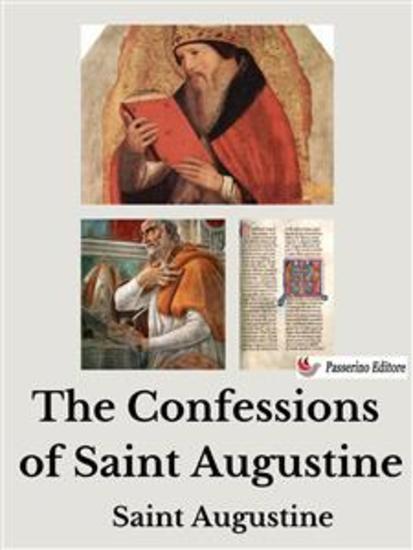
The Confessions of Saint Augustine - cover

The Confessions of Saint Augustine

Saint Augustine

Publisher: Passerino

  • 0
  • 0
  • 0

Summary

The Confessions is an autobiographical work written by Saint Augustine of Hippo, one of the most influential Christian theologians and philosophers. It is considered a classic of Western literature and is often regarded as the first Western autobiography.

Augustine wrote "The Confessions" between 397 and 398 AD, during his later years as the Bishop of Hippo in North Africa. The book is written in the form of a prayer to God, where Augustine reflects upon his life, his sinful youth, and his conversion to Christianity.

Saint Augustine of Hippo, also known as Augustine or Saint Augustine, was a Christian theologian, philosopher, and bishop who lived from 354 to 430 AD. He is considered one of the most influential figures in Western Christianity and is often referred to as the Doctor of Grace.

Augustine was born in Thagaste, a small town in present-day Algeria. His mother, Saint Monica, was a devout Christian, while his father, Patricius, was a pagan. Augustine received a classical education and showed exceptional intellectual abilities from a young age.

During his early years, Augustine led a hedonistic lifestyle, indulging in various pleasures and intellectual pursuits. He pursued a career in rhetoric and philosophy and became influenced by the teachings of Manichaeism, a dualistic religious sect. However, he later became disillusioned with Manichaeism due to its failure to provide satisfactory answers to his philosophical inquiries.

In his early thirties, Augustine moved to Milan, where he encountered the bishop Ambrose, whose sermons had a profound impact on him. Through his interactions with Ambrose and his study of Neoplatonic philosophy, Augustine underwent a profound spiritual transformation.

In 387 AD, Augustine converted to Christianity and was baptized by Ambrose. He returned to Africa and settled in Hippo, where he became a priest and later the bishop. Augustine dedicated himself to the service of the Church, defending Christian orthodoxy and combating various heresies.

Augustine's theological and philosophical works have had an enduring influence on Western thought. His most famous writings include "The Confessions," which we discussed earlier, and "The City of God," a monumental work that explores the nature of the earthly and heavenly cities, the fall of Rome, and the ultimate triumph of the City of God.

Augustine's theological ideas profoundly shaped the development of Western Christianity, particularly in the areas of original sin, predestination, grace, and the nature of God. He emphasized the importance of divine grace in the salvation of humanity and stressed the necessity of the Church as a guide on the path to salvation.

Saint Augustine's contributions to Christian theology, philosophy, and spirituality have made him one of the most influential figures in Western intellectual history. His ideas continue to be studied and debated by theologians, philosophers, and scholars to this day.

Translated by E.B. Pusey.
Available since: 06/01/2023.

Other books that might interest you

  • Lifeform - cover

    Lifeform

    Jenny Slate

    • 0
    • 0
    • 0
    Comedian and New York Times bestseller Jenny Slate’s wild, hilarious, genre-bending essays read in her singular voice depict life and motherhood as you’ve never seen it before. Featuring narration from friends Vanessa Bayer and Will Forte (“Schumacher 2”), and George Saunders (“The Therapist”).   What happened was this: Jenny Slate was a human mammal who sniffed the air every morning hoping to find another person to love who would love her, and in that period there was a deep dark loneliness that she had to face and befriend, and then we are pleased to report that she did fall in love, and in that period she was like chimes, or a flock of clean breaths, and her spine lying flat was the many-colored planks on the xylophone, but also she was rabid with fear of losing this love, because of past injury. And then what happened was that she became a wild-pregnant-mammal-thing and then she exploded herself by having a whole baby blast through her vagina during a global plague and then she was expected to carry on like everything was normal—but was this normal, and had she or anything ever been normal? Herein lies an account of this journey, told in five phases—Single, True Love, Pregnancy, Baby, and Ongoing—through luminous, laugh-out-loud funny, unclassifiable essays that take the form of letters to a doctor, dreams of a stork, fantasy therapy sessions, gossip between racoons, excerpts from an imaginary olden timey play, obituaries, theories about post-partum hair loss, graduation speeches, and more. No one writes like Jenny Slate.
    Show book
  • EvvaLution: Life-Inspired Memoirs of Serendipity Courage and Coming of Age - cover

    EvvaLution: Life-Inspired...

    Evva Fenison

    • 0
    • 0
    • 0
    "EvvaLution is a captivating memoir that shares the transformative experiences of a remarkable woman, highlighting her life-changing journey. The memoir delves into the pivotal moments that shaped her life, from unexpected encounters to bravery, and the trials and triumphs of coming of age. It is an inspiring testament to the power of resilience and self-discovery, highlighting the importance of courage and self-reflection in embracing one's true potential and finding meaning in the serendipitous moments that shape our existence." 
    "Evva and I have supported and helped each grow through professional, personal and spiritual evolution for over a decade. An accomplished and empowered individual, Evva lends her wisdom and experiences to this phenomenal guide with the intention of helping others. As I state that my purpose is to empower women to make a difference for the better on this planet thus raising the value of the woman globally, Evva's purpose is surely to connect to everyone she encounters with an attitude of empathy and kindness. Evva's book, Evva Lution, is a real life roadmap to choosing to follow one's dreams, move through life with purpose and achieve personal growth. A fantastic read with lots of insights from a true friend who has had an impact on my life and continues to inspire others." 
    Elena Cardone, 10X Entrepreneur, Author, Billionaire, International Speaker & Real Estate Mogul
    Show book
  • Marcus Aurelius - A Roman Emperor Philosopher and Author - cover

    Marcus Aurelius - A Roman...

    Kelly Mass

    • 0
    • 0
    • 0
    Marcus Aurelius Antoninus was a Stoic philosopher and the Roman Emperor from 161 to 180 CE. He is remembered as the last of the Five Good Emperors, a term coined by Niccolò Machiavelli over a thousand years later, and as the final ruler of the Pax Romana, the long period of relative peace and stability that the Roman Empire experienced from 27 BCE to 180 CE. Throughout his political career, Marcus held the position of Roman consul in 140, 145, and 161, marking his steady ascent to power.  
    Born during the reign of Emperor Hadrian, Marcus was the son of Marcus Annius Verus, a praetor, and Domitia Calvilla, a wealthy heiress. His father passed away when he was only three years old, leaving him to be raised primarily by his mother and grandfather. Recognizing Marcus' potential, Hadrian ensured his future by naming his uncle, Antoninus Pius, as heir following the unexpected death of Hadrian’s initial choice, Aelius Caesar, in 138 CE. As part of this arrangement, Antoninus was required to adopt both Marcus and Aelius' son, Lucius Verus. When Hadrian died later that year, Antoninus became emperor, and Marcus was positioned as his successor. Over the following decades, Marcus received an extensive education, studying Greek and Latin under renowned scholars such as Herodes Atticus and Marcus Cornelius Fronto. In 145 CE, he married Antoninus' daughter, Faustina the Younger, solidifying his connection to the imperial family.  
    Upon Antoninus Pius’ death in 161, Marcus ascended to the throne alongside his adopted brother, Lucius Verus, marking the first time in Roman history that the empire was ruled by co-emperors. His reign was defined by continuous military conflicts.
    Show book
  • The Death of a Jaybird - Essays on Mothers and Daughters and the Things They Leave Behind - cover

    The Death of a Jaybird - Essays...

    Jodi M. Savage

    • 0
    • 0
    • 0
    Reminiscent of The Year of Magical Thinking and Somebody’s Daughter, a deeply empathetic and often humorous collection of essays that explore the author’s ever-changing relationships with her grandmother and mother, through sickness and health, as they experience the joys and challenges of Black American womanhood. 
    Jodi M. Savage was raised in Brooklyn, New York, by her maternal grandmother. Her whip-smart, charismatic mother struggled with addiction and was unable to care for her. Granny—a fiery Pentecostal preacher who had a way with words—was Jodi’s rock, until Alzheimer’s disease turned the tables, and a 28-year-old Jodi stepped into the role of caretaker. It was up to Jodi to get them both through the devastations of a deteriorating mind. After Granny passed away, Jodi spent years trying to reckon with her grief. Jodi and her mother were both diagnosed with breast cancer nearly a decade later, and then Jodi lost her too. 
    In this searing, candid collection of essays, Jodi illuminates the roles that identity and memory play in preserving those we love. Jodi explores the lives of modern Black women and communities through the prism of her personal experiences. With grace, creativity, and insight, she looks at femininity, family, race, mental illness, grief, healthcare, and faith. Jodi deftly portrays how trauma is inherited, and how the struggle to break a generational curse can last a lifetime. 
    The Death of a Jaybird is a thoughtful examination of complicated family love, loss, and the liberating power of claiming our stories.
    Show book
  • John Adams - The American Statesman Diplomat Writer and Founding Father - cover

    John Adams - The American...

    Kelly Mass

    • 0
    • 0
    • 0
    John Adams was the 2nd president of the United States, serving from 1797 to 1801. He was an American leader, lawyer, diplomat, author, and Founding Father. He was the first vice president of the U.S.A. and a leader of the American Revolution, which caused the nation's independence from Great Britain. Adams kept a journal and communicated with certain crucial individuals in early American history, including his marriage partner and consultant Abigail Adams and Thomas Jefferson. 
    Prior to the revolution, Adams was an attorney and political activist who had faith in the right to counsel and the assumption of innocence. He withstood anti-British belief by effectively protecting British warriors implicated of murder in the Boston Massacre. 
    Adams was an agent from Massachusetts to the Continental Congress who rose to end up being an advanced leader. In the year 1776, he helped make up the Declaration. As a diplomat in Europe, he contributed to negotiating a peace handle the UK and protecting vital federal government loans. Adams was the primary writer of the Massachusetts Constitution, which affected the USA Constitution, as did his post Thoughts on Federal government, which was released in the year 1780. 
    Let’s learn more about this prominent historical figure.
    Show book
  • Know About "HAMMURABI" - The Code of Hammurabi One of the Earliest Known Legal Codes in Human History - cover

    Know About "HAMMURABI" - The...

    Saurabh Singh Chauhan

    • 0
    • 0
    • 0
    This is the copy of introduction of the book : Hammurabi, a ruler of ancient Babylon, left an indelible mark on history with his ground-breaking legal code that shaped civilizations for centuries. As we journey through the life and legacy of this remarkable figure. 
    2. Early Life and Rise to Power 
    Discover the origins of Hammurabi and how he climbed the ranks to become a powerful king. Explore the influences that shaped his early years and the events that set the stage for his reign. 
    3. Babylon: City of Legends 
    Step into the bustling heart of Mesopotamia, where the city of Babylon stood as a symbol of power and culture. Learn about its significance and the backdrop against which Hammurabi's story unfolds. 
    4. Hammurabi's Vision for Babylon 
    Delve into Hammurabi's aspirations for Babylon and how he sought to transform it into a thriving hub of civilization, governance, and innovation. 
    5. The Path to Kingship 
    Follow Hammurabi's journey to the throne, marked by challenges, alliances, and strategic decisions that paved the way for his rule. 
    6. Babylon's Golden Age 
    Witness the pinnacle of Babylon's prosperity under Hammurabi's rule, a period of flourishing arts, economy, and societal progress.
    Show book