Join us on a literary world trip!
Add this book to bookshelf
Grey
Write a new comment Default profile 50px
Grey
Subscribe to read the full book or read the first pages for free!
All characters reduced
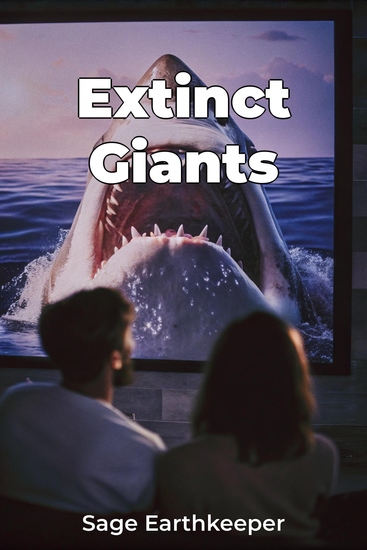
Extinct Giants - cover

Extinct Giants

Sage Earthkeeper

Translator A AI

Publisher: Publifye

  • 0
  • 0
  • 0

Summary

"Extinct Giants" explores the fascinating realm of colossal prehistoric life, examining the evolution, environmental context, and ultimate extinction of these titans. The book highlights the era when biological limits were stretched, diving into the reasons behind the emergence and disappearance of these enormous creatures. Understanding the fate of these giants provides vital insights into the principles governing life on Earth, and the implications of current environmental shifts. For example, the book looks at how the Megalodon evolved into a massive marine predator and how the Woolly Mammoth adapted to Ice Age conditions.

 
The book progresses systematically, starting with an introduction to gigantism and its drivers. It then investigates the marine environment, focusing on giant sharks and marine reptiles, before shifting to land to explore gigantic mammals like the woolly mammoth. Finally, it examines the extinction events that wiped out many of these giants, evaluating the roles of climate change and human activity.

 
The book presents information from paleontology, geology, and evolutionary biology in an accessible style, avoiding technical jargon and explaining complex concepts clearly, making it valuable to those interested in Earth Sciences, Biology, and prehistoric life.
Available since: 02/15/2025.
Print length: 73 pages.
Other books that might interest you

  • Hothouse Earth - An Inhabitant's Guide - cover

    Hothouse Earth - An Inhabitant's...

    Bill McGuire

    • 0
    • 0
    • 0
    'It's a paradox but this was one of the most chilling books I've read this year. It's the definitive guide to where we're heading' ANTHONY HOROWITZ
    
    
    'The Earth is already in a dangerous phase of heating. Many scientists admit privately to actually being "scared" by recent weather extremes. But the public doesn't like pessimism, so we environment journalists hint at future optimism. This book provides a more steely-eyed view on how we can cope with a hothouse world.' - ROGER HARRABIN, former BBC Environment Analyst
    
    
    'This accessible and authoritative book is a must-read for anyone who still thinks it could be OK to carry on as we are for a little bit longer, or that climate chaos might not affect them or their kids too badly.' MIKE BERNERS-LEE is a professor at Lancaster University, founder of Small World Consultancy and author of There is No Planet B: A Handbook for the Make or Break Years
    
    
    'If you read just one book about the menace of climate breakdown, make it this one.' - TIM RADFORD, Climate News Network
    
    
    We inhabit a planet in peril. Our once temperate world is locked on course to become a hothouse entirely of our own making.
    
    Hothouse Earth: An Inhabitant's Guide provides a post-COP26 perspective on the climate emergency, acknowledging that it is now practically impossible to keep this side of the 1.5°C dangerous climate change guardrail. The upshot is that we can no longer dodge the arrival of disastrous, all-pervasive, climate breakdown that will come as a hammer blow to global society and economy.
    
    
    Bill McGuire, Professor of Geophysical and Climate Hazards, explains the science behind the climate crisis and for the first time presents a blunt but authentic picture of the sort of world our children will grow old in, and our grandchildren grow up in; a world that we catch only glimpses of in today's blistering heatwaves, calamitous wildfires and ruinous floods and droughts. Bleak though it is, the picture is one we must all face up to, if only to spur genuine action - even at this late stage - to stop a harrowing future becoming a truly cataclysmic one.
    Show book
  • Modern Technology - Chemical Electrical Industrial and Mechanical Engineering (4 in 1) - cover

    Modern Technology - Chemical...

    Phil Gilberts

    • 0
    • 0
    • 0
    This book consists of 4 titles, which are: 
    1 - Chemical Engineering: Chemical engineering is a multidisciplinary field that integrates principles from chemistry, physics, mathematics, and economics to tackle complex challenges across a diverse range of industries. At its core, chemical engineers focus on efficiently harnessing, transforming, and transporting chemicals, materials, and energy on a large scale. This involves not only designing and optimizing processes but also understanding the fundamental properties of substances and the underlying mechanisms governing their behavior. 
    2 - Electrical Engineering: Electrical engineering is a diverse and dynamic field that involves the study, design, and application of equipment, devices, and systems that use electricity, electronics, and electromagnetism. It encompasses a wide range of sub-disciplines, including power engineering, electronics, control systems, signal processing, and telecommunications. 
    3 - Industrial Designs: Industrial design plays a pivotal role in modern industry by significantly influencing product functionality, aesthetics, user experience, and market competitiveness. One of the primary contributions of industrial design is the enhancement of product functionality and usability. Designers achieve this by thoroughly understanding user needs and behaviors, which allows them to create products that are intuitive and easy to use. This not only boosts customer satisfaction but also reduces the demand for customer support. 
    4 - Mechanical Engineering: Mechanical technology encompasses a broad spectrum of techniques and tools used in the design, analysis, manufacturing, and maintenance of mechanical systems. This field merges principles from physics, engineering, and materials science to create and improve machinery and devices that perform specific functions.
    Show book
  • Stars and the Shadow Realm - The Role of Dark Space in Cosmic Evolution - cover

    Stars and the Shadow Realm - The...

    Dirk Fallon

    • 0
    • 0
    • 0
    The cosmos, an endless expanse of stars, planets, and unknown realms, is far more complex than it appears. Humanity has long gazed at the night sky, wondering about the vastness of space and the mysteries it holds. From ancient civilizations to modern scientific advancements, we have strived to understand the fundamental nature of the universe. Yet, the more we learn, the more we realize how little we truly know. The universe is constantly evolving, and its story is a tale of creation, destruction, and the delicate balance that sustains it all. 
    The birth of stars marks the beginning of cosmic evolution. Stars form from vast clouds of gas and dust, which collapse under their own gravity, eventually igniting nuclear fusion in their cores. This process is the foundation of stellar life, and it is responsible for the creation of all the elements we find on Earth. Stars shine brightly, providing energy and light to their surrounding environments, but their life cycles are fleeting. Over millions or even billions of years, stars undergo dramatic changes, from the fusion of lighter elements to the eventual formation of heavier ones. These transformations have profound implications for the surrounding space and the evolution of galaxies. 
    The concept of dark space is equally crucial to understanding the cosmos. Dark space, often associated with dark matter and dark energy, is an invisible component of the universe that does not emit or interact with electromagnetic radiation. While we cannot directly observe dark space, scientists have inferred its existence by studying the gravitational effects it has on visible matter. It is believed that dark space plays a vital role in the overall structure and expansion of the universe. In many ways, it serves as a backdrop to the more visible phenomena we observe, yet its influence is undeniable. Dark space not only shapes the formation of galaxies but also dictates their movement and evolution over time.
    Show book
  • Keepers of the Shield - cover

    Keepers of the Shield

    Sandy Kelly

    • 0
    • 0
    • 0
    Why would anyone spend a large portion of their life in a world that doesn’t really exist, or with friends they have never met? Those are questions anyone considering online gaming should explore. It starts out innocently enough—with the excitement, unbelievable graphics, and unique storylines that suck you into a world which can rob you of time, self-esteem, health, and the ability to distinguish between reality and fantasy.The sad truth is that there are millions upon millions of people just like you and me who fall down that rabbit hole. It’s a drug, an escape, a test of our fortitude—and it can replace reality to the point of a false existence. And yet, we do it over and over, and we love almost every minute.We, who are called humans, are easily sideswiped off the road of common sense into the dumpster of adventure. I, of all people, can point this out because I spent almost 22 years, and even now—after five years away—I am still going through withdrawals.This is what some call tough love.
    Show book
  • Hope for Caregivers - A 42-Day Devotional in Company with Henri J M Nouwen - cover

    Hope for Caregivers - A 42-Day...

    Henri Nouwen

    • 0
    • 0
    • 0
    Henri Nouwen's timeless wisdom reminds us once again of the transformation that love brings, both when we allow ourselves to give love with abandon and when we allow ourselves to receive love. Caregiving too often is reduced to a list of tasks—doing the things that another individual cannot do independently. In six weeks of daily devotions inspired by the words of Henri Nouwen and intertwined with Scripture and prayer, Hope for Caregivers summons us away from our lists for a few moments each day and draws us to a fresh framework for the experience of giving care.
    Show book
  • Can Medicine be Cured? - cover

    Can Medicine be Cured?

    Seamus O'Mahony

    • 0
    • 0
    • 0
    A fierce, honest, elegant and often hilarious debunking of the great fallacies that drive modern medicine. 
    Seamus O'Mahony writes about the illusion of progress, the notion that more and more diseases can be 'conquered' ad infinitum. He punctures the idiocy of consumerism, the idea that healthcare can be endlessly adapted to the wishes of individuals. He excoriates the claims of Big Science, the spending of vast sums on research follies like the Human Genome Project. And he highlights one of the most dangerous errors of industrialized medicine: an over-reliance on metrics, and a neglect of things that can't easily be measured, like compassion. 
    'A deeply fascinating and rousing book' MAIL ON SUNDAY 
    'What makes this book a delightful, if unsettling read, is not just O'Mahony's scholarly and witty prose, but also his brutal honesty' THE TIMES
    Show book