Join us on a literary world trip!
Add this book to bookshelf
Grey
Write a new comment Default profile 50px
Grey
Subscribe to read the full book or read the first pages for free!
All characters reduced
World War - cover

World War

Sabine Lorca

Translator A AI

Publisher: Publifye

  • 0
  • 0
  • 0

Summary

"World War" offers a compelling exploration of how the two World Wars fundamentally reshaped the 20th century, impacting global politics, societies, and technological advancements. It examines crucial military strategies and battlefield tactics, delving into the political realignments and social upheavals that defined the era. One intriguing aspect covered is the acceleration of technological progress during these conflicts, which led to innovations such as advanced armored warfare and aerial bombardment. Another is the redrawing of political boundaries as empires collapsed and new ideologies emerged, forever changing the international landscape. The book uniquely presents a balanced analysis of the military, political, technological, and social facets of the wars, making it accessible to a broad audience interested in Military History and World History. It progresses by first laying the groundwork with long-term causes and immediate triggers, then moves into detailed analyses of military campaigns and their social and political consequences. Finally, the book analyzes the long-term geopolitical implications, providing readers with a comprehensive understanding of the wars' enduring legacy.
Available since: 03/06/2025.
Print length: 65 pages.


Other books that might interest you

  • The Broken Mirror - Adapting in the Abyss of Simulation - cover

    The Broken Mirror - Adapting in...

    Halasius Bradford

    • 0
    • 0
    • 0
    In an age where connectivity has reached unprecedented heights, humanity paradoxically experiences intensified solitude. The Internet, social media, and digital communication tools promise constant interaction, yet beneath the veneer of perpetual engagement lies a profound sense of detachment. We have woven an expansive digital web, intricately threading through every dimension of our lives. Yet, far from binding us together in deeper and more meaningful ways, this net has fragmented our relationships, distorted our sense of self, and left us lonelier than ever. 
    Indeed, the irony of our modern era is that as connectivity increases, isolation intensifies. Rather than fostering intimacy, the digital world frequently reduces interactions to hollow performances, substituting genuine human connection with a relentless pursuit of validation. We inhabit a world where messages traverse the globe instantaneously, yet conversations grow superficial; friendships are quantified by follower counts rather than measured by emotional depth; and love becomes mediated through glowing screens, stripped of warmth, tactile presence, and vulnerable authenticity.
    Show book
  • A Tyranny for the Good of Its Victims - The Ugly Truth about Stakeholder Capitalism - cover

    A Tyranny for the Good of Its...

    Andrew F. Puzder

    • 0
    • 0
    • 0
    Asset manager mega-giants BlackRock, State Street, and Vanguard have accumulated unprecedented levels of stock ownership in every major US company. Voting the shares they hold for clients allows these companies to force their own "environmental, social, and governance" or "ESG" agenda on the American corporate sector and, by extension, on all of us. An asset manager's traditional duty is to maximize returns for its investors, but these financial elites expand their duties through "stakeholder capitalism," the idea that a company is responsible not only for its actual shareholders, but for everyone who is affected by the company. Thus, they can impose their preferred ESG goals under the guise of benefiting an amorphous group of non-investors. 


    This elite-dominated economic system is nothing more than socialism in sheep's clothing. "ESG" defines the champagne socialist agenda that would devastate the working and middle classes globally. Now, in the face of rising opposition, these financial elites are rebranding—shifting their terminology to conceal their intent. A Tyranny for the Good of its Victims exposes how these elites have pursued—and will continue to pursue—their ESG goals: to transform our consumer-driven free-market economy into one that is subject to their elitist demands, overriding the will of the people whom they deem incapable of self-government.
    Show book
  • Surviving a Shark Attack (On Land) - Overcoming Betrayal and Dealing with Revenge - cover

    Surviving a Shark Attack (On...

    Dr. Laura Schlessinger

    • 0
    • 0
    • 0
    With her trademark no-nonsense approach, New York Times bestselling author Dr. Laura Schlessinger gives her readers the emotional defenses they need to overcome the worst life will throw at them, whether it's a cheating spouse, a lying sibling, or a ruthless colleague. 
    Author and renowned radio host Dr. Laura has helped countless men and women become better husbands, wives, parents, and people. She's helped them cope with grief; shown them how to handle adversity; and set them on the path to understanding and living happy, well-adjusted lives. In Surviving a Shark Attack (on Land) she turns to an emotionally explosive subject that has touched all our lives: betrayal and the desire for revenge. And for the first time, she shares her own personal experiences with betrayal, humiliation, and pain, connecting with her readers as never before and putting this important subject into context. 
    In this powerful and thought-provoking book, Dr. Laura offers readers the perceptive, common-sense insight they need to live healthier, better lives.
    Show book
  • Emperor Hirohito: The Life and Legacy of Japan’s Ruler during World War II - cover

    Emperor Hirohito: The Life and...

    Charles River Editors

    • 0
    • 0
    • 0
    The man known to most of the world as Emperor Hirohito ruled during some of the most tumultuous years in Japanese history. When he came to the throne in 1926, he inherited control of a country which had only recently emerged as a major industrial and world power, and through the aggressive expansion and wars of the 1930s, Hirohito was at the head of one of the world’s foremost powers. Throughout the maelstrom of World War II, he remained in power, a distant and, to most outsiders, inscrutable factor in the rise of the Japanese Empire. 
    Before and during the war, many people in America and elsewhere believed that Emperor Hirohito was at least partly responsible for both the confrontational Japanese approach to foreign affairs, and for the often brutal conduct of the Japanese armed forces during the wars which followed. As such, when the war ended, there were plenty of calls for the emperor to be indicted for war crimes along with other senior figures in Japan. However, a new feeling emerged at that time, suggesting that in reality Hirohito had been little more than a figurehead taken along by a tide of militarism, helpless to intervene or influence the course of events. 
    This book looks at the role of the enigmatic leader in the rise, fall and rebirth of modern Japan. Along with pictures depicting important people, places, and events, you will learn about Emperor Hirohito like never before.
    Show book
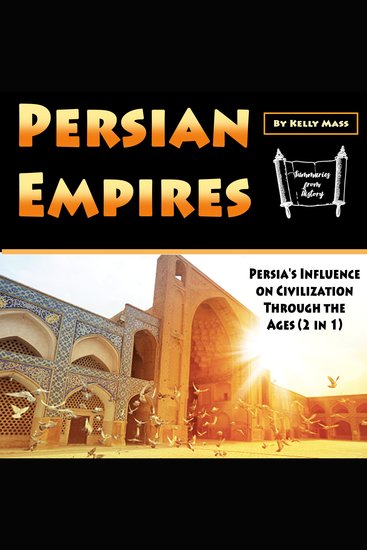
  • Persian Empires - Persia's Influence on Civilization Through the Ages (2 in 1) - cover

    Persian Empires - Persia's...

    Kelly Mass

    • 0
    • 0
    • 0
    This title contains two books, which are these: 
    1 - Safavid Empire - The Safavid Empire, often referred to as Safavid Iran or Safavid Persia, stands out as one of the most influential Iranian empires following the Muslim conquest of Persia in the 7th century. Ruling from 1501 to 1736, the Safavid dynasty is regarded as the catalyst for modern Iranian history and is recognized as one of the prominent gunpowder empires of its time. A pivotal moment in Muslim history, the Safavid rulers established the Twelver school of Shia Islam as the empire's official religion, which fundamentally shaped the spiritual and political landscape of Iran. 
    The origins of the Safavid dynasty can be traced back to a Sufi order founded in the Azerbaijani city of Ardabil. Initially a spiritual movement, the Safavid order transformed into a formidable political force. The dynasty, which had Kurdish Iranian roots, became increasingly Turkified through intermarriages with various ethnic groups, including Turkoman, Georgian, Circassian, and Pontic Greek officials. As a result, the Safavid leaders became Turkish-speaking and culturally integrated into the diverse milieu of the region. 
    2 - Sasanian Empire - The Sasanian Empire, often referred to by historians as the Neo-Persian Empire, was the last significant Iranian empire before the Muslim invasions of the 7th and 8th centuries AD. Named after the House of Sasan, this empire lasted nearly four centuries, from 224 to 651 AD, making it the longest-lived Persian imperial dynasty. The Sasanian Empire emerged during late antiquity, succeeding the Parthian Empire and re-establishing Persian prominence in the region, rivaling the Roman Empire (later known as the Byzantine Empire after 395 AD).
    Show book
  • Testing Education - A Teacher's Memoir - cover

    Testing Education - A Teacher's...

    Kathy Greeley

    • 0
    • 0
    • 0
    Since the 2002 implementation of No Child Left Behind, the American public education system has been fundamentally changed. Excessive testing, standardized curriculums, destructive demands on children, corporate-­style evaluations, and top-­down mandates have become the norm. In response, record numbers of demoralized educators have quit, and millions of students have been left educationally impoverished. This troubling transformation has been exhaustively critiqued by scholars and commentators. Yet one crucial voice has been missing. 


    In Testing Education, Kathy Greeley recounts the impact of education reform from a teacher's point of view. Based on a teaching career ranging nearly forty years, Greeley details how schools went from learning communities infused with excitement, intellectual stimulation, and joy to sterile spaces of stress, intimidation, and fear. In this ultimately hopeful memoir, Greeley asks us to learn from the past to reimagine the future of public education.
    Show book