Junte-se a nós em uma viagem ao mundo dos livros!
Adicionar este livro à prateleira
Grey
Deixe um novo comentário Default profile 50px
Grey
Assine para ler o livro completo ou leia as primeiras páginas de graça!
All characters reduced
Warrior Training Methods - cover
LER

Warrior Training Methods

Sabine Lorca

Tradutor A AI

Editora: Publifye

  • 0
  • 0
  • 0

Sinopse

"Warrior Training Methods" explores how indigenous societies worldwide transformed ordinary people into skilled warriors, highlighting the critical roles of physical conditioning, psychological preparation, and cultural integration. Far from being primitive, these training methods were sophisticated systems deeply rooted in each culture's social, spiritual, and ecological realities. The book reveals that indigenous warrior training was not just about physical prowess, but also about cultivating a warrior ethos grounded in discipline, resilience, and community connection.

 
The book examines specific training methods across diverse cultures—from the Americas to Africa and Oceania—before modern weaponry's dominance. It looks at physical regimens like endurance running and weapon handling alongside psychological tactics such as rituals and mental toughness exercises. By synthesizing these analyses, the book demonstrates how these training methods contributed to community defense and resilience. It challenges Eurocentric views of military history, revealing the complex intelligence behind indigenous defensive strategies.

 
The book progresses from establishing common themes across indigenous warrior cultures to examining specific training methods and tactical strategies. It concludes by exploring the lessons contemporary military and athletic trainers can learn from these ancient practices, emphasizing adaptability, holistic conditioning, and the importance of cultural context. This examination offers alternative perspectives on physical conditioning and challenges conventional warfare models, making it valuable for anyone interested in indigenous cultures, military history, and survival skills.
Disponível desde: 29/03/2025.
Comprimento de impressão: 65 páginas.
Outros livros que poderiam interessá-lo

  • A Theory of Human Motivation - cover

    A Theory of Human Motivation

    Abraham Maslow

    • 0
    • 0
    • 0
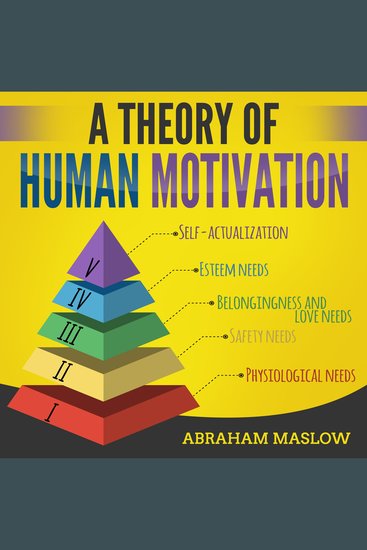
    Maslow's hierarchy of needs is a motivational theory in psychology comprising a five-tier model of human needs, often depicted as hierarchical levels within a pyramid.
    Ver livro
  • The Roman Empire and Byzantine Empire - The History and Legacy of Europe’s Most Important Empire and Its Successor - cover

    The Roman Empire and Byzantine...

    Charles River Editors

    • 0
    • 0
    • 0
    For the people of the ancient Mediterranean and beyond, the city of Rome had been a symbol of power for centuries, and entering the early 5th century CE, the Eternal City hadn’t been taken by an enemy force since the Gauls had done it about 800 years earlier, an unheard of period of tranquility in a world wracked with almost constant warfare. 
    Thus, when the Visigoths, whom the Romans considered uncultured and inferior, took the city of Rome and sacked it in 410, the world was stunned. It made theologians of the newly Christianized empire question God’s plan on Earth, and it encouraged many leading Romans to look east to Constantinople for their future. Indeed, the Western Roman Empire would completely collapse in the late 5th century, less than 70 years after the Visigoths sacked Rome, and just how it went from being a superpower to a poorly led, weak, and vulnerable shadow of its former self has preoccupied historians for centuries. 
    To this day, it remains difficult to trace just when the decline began, but it’s fair to say that the sack of Rome was the result of a number of factors that had been coalescing for many years. In the end, the fall of the Roman Empire was not a tale of cataclysmic events that shattered the sprawling power, but the culmination of centuries of internal dissent and decay, combined with growing external threats that led to gradual decline and eventually to the empire’s final destruction.  
    In terms of geopolitics, perhaps the most seminal event of the Middle Ages was the successful Ottoman siege of Constantinople in 1453. The city had been an imperial capital as far back as the 4th century, when Constantine the Great shifted the power center of the Roman Empire there, effectively establishing two almost equally powerful halves of antiquity’s greatest empire. Constantinople would continue to serve as the capital of the Byzantine Empire even after the Western half of the Roman Empire collapsed.
    Ver livro
  • Rough House - A Father a Son and the Pursuit of Pro Wrestling Glory - cover

    Rough House - A Father a Son and...

    Alison Lyn Miller

    • 0
    • 0
    • 0
    "Truly, this is a book that belongs on the shelves of not just wrestling fans, but anyone who wants to understand the agonized American soul." ―Josephine Riesman, author of Ringmaster: Vince McMahon and the Unmaking of America 
     
    Professional wrestling is both a cultural phenomenon and a multibillion-dollar industry that has launched some of the biggest names in entertainment. But what does it take for a wrestler to break through? In Rough House, journalist Alison Lyn Miller introduces Hunter James, an aspiring star born into a family of wrestlers in Georgia. Hunter lifts, runs, and pounds protein, sculpting himself into a human action figure with the goal of being signed by a major promotion and finishing what his father started. Miller's immersive, unforgettable account shows us what happens when Hunter enters the bruising world of indie wrestling―where gymnasiums become arenas, trampolines serve as training grounds, and young men fight for glory. 
     
    Rich with drama, humor, and heart, Rough House is a ringside seat to a coming-of-age story that reveals the escapism, self-actualization, performance, and violence inherent in one of America's most dismissed pastimes. Whether you're a die-hard fan or new to the spectacle, this true story will leave you cheering for more.
    Ver livro
  • The Angry Alien - cover

    The Angry Alien

    Kay Brophy

    • 0
    • 0
    • 0
    Anger is one of the six core human emotions which we all experience from time to time. The Angry Alien feels 'different' and means he finds it difficult to control his emotions. His anger only makes him harder to understand until a good friend helps him come to terms with why he is the way he is and how to overcome those 'big feelings.' A book for younger readers to read alone or with the help of adults. Useful reading aids included. Beautifully illustrated and in easy-to-understand rhyme.
    Ver livro
  • Meditations - Key Insights - cover

    Meditations - Key Insights

    Marcus Aurelius

    • 0
    • 0
    • 0
    “Meditations” is a timeless guide to self-mastery, resilience, and inner peace. Written as a personal journal by a Roman emperor, it reveals profound insights on how to face adversity, manage emotions, and live with virtue. Each reflection offers practical wisdom for overcoming daily struggles and finding strength in discipline, clarity in thought, and calm in chaos. More than philosophy, it is a roadmap to a purposeful life—teaching us that true power lies not in controlling the world, but in mastering ourselves.
    Ver livro
  • Buffalo Soldiers: The History and Legacy of the Black Soldiers Who Fought in the US Army during the Indian Wars - cover

    Buffalo Soldiers: The History...

    Charles River Editors

    • 0
    • 0
    • 0
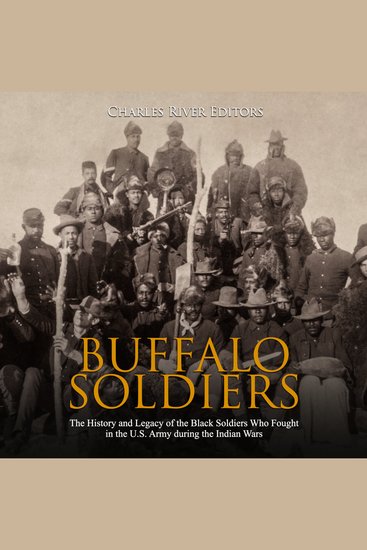
    During the Civil War, over 180,000 black men fought in volunteer units as part of the United States Colored Troop (USCT), but it was only after the end of it that they were allowed to enlist in the Regular Army. They did so in four segregated regiments, and they colloquially became known as Buffalo Soldiers. The evolution of these black units followed the course of the organization of the peacetime Regular Army. With the end of the Civil War came the demobilization of the millions of men who had volunteered to fight on behalf of the Union, including the USCT, which disbanded in late 1865. The first draft of a bill setting the organization of the Army sent to the House on March 7, 1866 called for the establishment of eight infantry regiments to be staffed by veterans of the USCT, but the legislation lacked similar provisions for black cavalry units. When the bill got to the Senate for approval, Senator Benjamin Wade succeeded in having a provision added that authorized black cavalry units. 
    Of course, these units are now known for the nickname attached to them, but exactly where the nickname Buffalo Soldiers came from is a subject of some dispute. Dr. Walter Hill wrote, “According to Benjamin H. Grierson, Colonel, 10th Cavalry, 1867 to 1890, the 10th acquired the name ‘Buffalo Soldiers’ during the 1871 campaign against the Comanches in the Indian Territory. Grierson said that the Comanches respected the soldiers' tireless marching and dogged trail skills. They had earned the name of the rugged and revered buffalo. The 10th made the ‘Buffalo’ its regimental coat of arms years later, but the term ‘Buffalo Soldiers,’ became synonymous with both the 9th and 10th units.” The term appeared in public for the first time in 1873, in reference to the 10th Cavalry, in a letter from Mrs. Frances M.A. Roe to a popular magazine.
    Ver livro