Join us on a literary world trip!
Add this book to bookshelf
Grey
Write a new comment Default profile 50px
Grey
Subscribe to read the full book or read the first pages for free!
All characters reduced
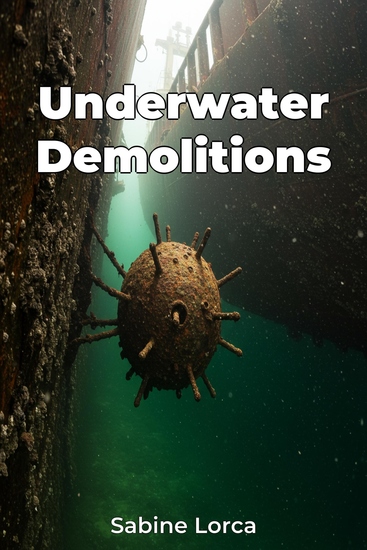
Underwater Demolitions - cover

Underwater Demolitions

Sabine Lorca

Translator A AI

Publisher: Publifye

  • 0
  • 0
  • 0

Summary

Underwater Demolitions explores the hidden world of naval demolition teams, revealing their significant impact on military history and special operations. From covert sabotage to mine removal, these specialized divers have shaped conflicts since World War II. Their ability to infiltrate enemy harbors and disable critical infrastructure underscores their vital role in military strategy. The book highlights the evolution of underwater warfare, from the initial need to overcome fortified coastal defenses to the development of advanced diving equipment and explosives.

 
This book traces the chronological development of underwater demolition, starting with the formation of pioneering units during World War II and progressing through the Cold War and into modern-day counter-terrorism efforts. Key operational theaters, such as the Mediterranean and the Pacific, are examined, detailing specific missions and their strategic consequences. It emphasizes how these small units have had an outsized influence on naval warfare and the development of underwater technologies.

 
Underwater Demolitions offers a comprehensive analysis of both the tactical execution and strategic implications of underwater demolition. By drawing on declassified military documents, operational reports, and personal memoirs, the book provides a nuanced portrayal of naval combat demolition and its enduring legacy in maritime security. Readers will gain insights into the technological advancements, ethical considerations, and the ongoing evolution of this specialized field.
Available since: 03/29/2025.
Print length: 70 pages.

Other books that might interest you

  • Anatomy of Conversation - cover

    Anatomy of Conversation

    Emma Gibbens

    • 0
    • 0
    • 0
    Communicating with others is getting more and more complex every day. Many of us are anxious about how to navigate conversations – how do I approach someone? How can I create a safe and inviting space? What happens if someone gets offended? 
    Emma Gibbens understands conversations. She delights in their depth and is thrilled by their potential. Lit with an inner fire that comes from countless hours of witnessing the power of conversation, Emma facilitates complex conversations that many of us prefer to avoid. 
    Emma provides the Anatomy of Conversation so we can better understand, more confidently prepare for, and courageously facilitate complex conversations. 
    This generous and practical book sparks us to be curious about navigating our differences and finding meaningful connection
    Show book
  • Spanish Short Stories For Beginners - How to Learn Vocabulary Words in 60 Days While Sleeping Easy & Quick Methods for Adults Kids and Dummies - Conversational Espanol Language for Children - cover

    Spanish Short Stories For...

    Damián Carabello

    • 0
    • 0
    • 0
    ¡Hola, amigo! Are you ready to unlock the secrets of Spanish and embark on an unforgettable linguistic adventure? Look no further! 'Spanish Short Stories For Beginners' is your magical key to mastering the beautiful language of salsa, and siesta! Imagine confidently ordering tapas in Barcelona, effortlessly chatting with locals in Mexico City, or impressing your friends with your flawless Spanish pronunciation. This audiobook will make it all possible! Whether you're a complete beginner or looking to brush up on your skills, these carefully crafted stories will transport you into the vibrant world of Spanish. From heartwarming tales of family and friendship to spine-tingling mysteries and futuristic adventures, each story is designed to entertain while effortlessly improving your language proficiency. Don't just learn Spanish – live it, breathe it, and fall in love with it! Grab your copy and let the fiesta of language learning begin!
    Show book
  • History Of The Conquest Of Peru - William Hickling Prescott - cover

    History Of The Conquest Of Peru...

    William Hickling Prescott

    • 0
    • 0
    • 0
    "History of the Conquest of Peru" by William Hickling Prescott is a classic work of historical narrative that tells the story of the Spanish conquest of the Inca Empire in the 16th century. The book was first published in 1847 and is widely regarded as one of the greatest works of American historical writing. 
    Prescott's account of the conquest is rich in detail and offers a vivid portrayal of the people, places, and events involved. He draws on a wide range of sources, including contemporary accounts and first-hand reports, to provide a comprehensive and authoritative history of the conquest. 
    The book begins with an overview of the Inca Empire and its society and culture, before moving on to describe the arrival of the Spanish and the conquest itself. Prescott provides a detailed account of the major battles and campaigns, as well as the personal rivalries and conflicts among the Spanish conquistadors. 
    Throughout the book, Prescott offers a nuanced analysis of the political, social, and cultural factors that contributed to the conquest, and he reflects on the broader significance of the events for the history of the Americas and for global history more generally. 
    Overall, "History of the Conquest of Peru" is a masterful work of historical narrative that offers a compelling and detailed account of one of the most significant events in the history of the Americas. It is a must-read for anyone interested in the history of the region or in the broader themes of conquest, colonization, and cultural encounter.
    Show book
  • The Polyvagal Theory Workbook for Trauma - Body-Based Activities to Regulate Rebalance and Rewire Your Nervous System Without Reliving the Trauma - cover

    The Polyvagal Theory Workbook...

    PhD Arielle Schwartz, LMSW Linda...

    • 0
    • 0
    • 0
    Whether you've suffered a single traumatic experience or faced repeated difficult life events, you can be left feeling hypervigilant, irritable, and disconnected. Most therapies for treating trauma require you to "revisit" your traumatic experience in potentially triggering ways. In this cutting-edge workbook, bestselling author and trauma expert Arielle Schwartz provides a practical, body-based method to help you treat your trauma symptoms—without reliving your trauma or being exposed to triggers. 


    The Polyvagal Theory Workbook for Trauma offers evidence-based activities to help you heal the effects of trauma, rewire your nervous system, and return to a state of balance and calm. You'll begin by getting to know your nervous system, including an exploration of polyvagal theory and the vagus nerve. You'll also learn soothing, body-based practices to help you rewire your nervous response, including rhythmic movements (EMDR and tapping), conscious breathing, mindful movement, and more. Self-reflection prompts will help you get the most out of every chapter, and a comprehensive collection of tools will help you stay on the path to trauma recovery. 


    You don't have to relive your trauma in order to heal. With this powerful workbook, you can take charge of your mental health, build resilience, and feel safer and more connected.
    Show book
  • Letter to James C Conkling - cover

    Letter to James C Conkling

    Abraham Lincoln

    • 0
    • 0
    • 0
    During the Civil War, Union supporters in President Abraham Lincoln's hometown of Springfield, Illinois, asked him to speak at a rally on September 3, 1863. Lincoln could not attend but wrote this letter to be read at the gathering by his long-time friend, James C. Conkling. The letter was accompanied by a brief note which read, "I cannot leave here now. Herewith is a letter instead. You are one of the best public readers. I have but one suggestion. Read it very slowly. And now God bless you, and all good Union-men." Shortly after the rally, John Murray Forbes wrote to Lincoln, referring to the letter and the Emancipation Proclamation issued on January 1, 1863. Forbes declared that the letter "will live in history side by side with your proclamation." He noted, "It meets the fears of the timid and the doubts of the reformer. It proves that the Proclamation and the policy resulting from it are the most conservative, both of liberty and of our form of government."
    Show book
  • Universities on Fire - Higher Education in the Climate Crisis - cover

    Universities on Fire - Higher...

    Bryan Alexander

    • 0
    • 0
    • 0
    In 2019, intense fires in the San Francisco Bay Area closed universities and drove afflicted people to shelter at other campuses. At the same time, extraordinary fires ravaged eastern Australia. Several universities responded by promising material and research support to damaged businesses while also hosting refugees and emergency response teams in student residence halls. This was an echo of the devastation wreaked by Hurricane Katrina on Tulane University in 2005.In Universities on Fire, futurist Bryan Alexander explores higher education during an age of unfolding climate crisis. Powered by real-world examples and the latest research, Alexander assesses practical responses and strategies by surveying contemporary programs and academic climate research from around the world. He establishes a model of how academic institutions may respond and offers practical pathways forward for higher education. How will the two main purposes of education—teaching and research—change as the world heats up? Alexander positions colleges and universities in the broader social world, from town-gown relationships to connections between how campuses and civilization as a whole respond to this epochal threat.Current studies of climate change trace the likely implications across a range of domains, from agriculture to policy, urban design, technology, culture, and human psychology. However, few books have predicted or studied the effects of the climate crisis on colleges and universities. By connecting climate research to a deep, futures-informed analysis of academia, Universities on Fire explores how climate change will fundamentally reshape higher education.
    Show book