Rejoignez-nous pour un voyage dans le monde des livres!
Ajouter ce livre à l'électronique
Grey
Ecrivez un nouveau commentaire Default profile 50px
Grey
Abonnez-vous pour lire le livre complet ou lisez les premières pages gratuitement!
All characters reduced
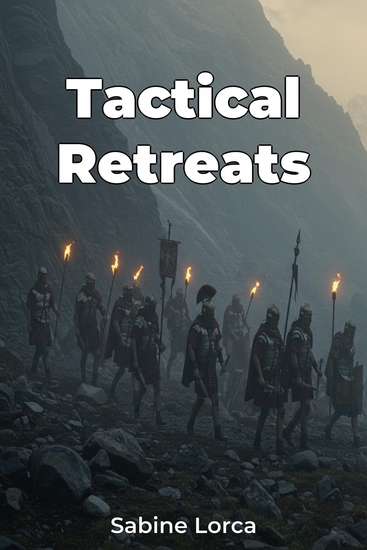
Tactical Retreats - cover

Tactical Retreats

Sabine Lorca

Traducteur A AI

Maison d'édition: Publifye

  • 0
  • 0
  • 0

Synopsis

Tactical Retreats explores the underappreciated military maneuver of the tactical retreat, arguing it's not just an admission of defeat but a strategic tool. The book reveals how planned withdrawals have saved armies and set the stage for future victories by conserving resources and exploiting enemy weaknesses. From influencing battlefield morale to impacting strategic decision-making, the book highlights the crucial role of command structures in maintaining cohesion during a withdrawal. 

 
The book traces the evolution of retreat strategies from ancient warfare to modern conflicts, adapting to changes in weaponry and tactics. It examines historical examples, such as German withdrawals on the Eastern Front and the Chosin Reservoir campaign, dissecting the strategic context, tactical execution, and consequences of each retreat. 

 
By uniquely synthesizing quantitative data with qualitative assessments, Tactical Retreats offers a balanced perspective on military history. The book unfolds by establishing a theoretical framework, then analyzing specific historical examples and concluding with the relevance of these lessons to contemporary military challenges. It emphasizes that a well-executed retreat can be as decisive as an attack, challenging conventional wisdom and providing insights for military professionals and those interested in strategic decision-making.
Disponible depuis: 29/03/2025.
Longueur d'impression: 61 pages.
D'autres livres qui pourraient vous intéresser

  • Path to Prosperity (version 2) - cover

    Path to Prosperity (version 2)

    James Allen

    • 0
    • 0
    • 0
    James Allen  (1864 - 1912) was a philosopher and a pioneer of New Thought movement.   His works have formed the basis of much of the curriculum used today by many motivational and self-help groups,His first book, which published in 1901, was From Poverty to Power, subtitled The Realization of Prosperity and Peace. Allen described this book as "A Book for all those who are in search of better conditions, wider freedom, and increased usefulness."The book consist of two separate volumes, The Path To Prosperity (sometimes rendered as The Path of Prosperity) and The Way of Peace.  Each volume has later published as a book in its own right.This recording is of the first volume, The Path To Prosperity. - Summary by Algy Pug
    Voir livre
  • The Life and Adventures of James P Beckwourth - cover

    The Life and Adventures of James...

    T. D. Bonner

    • 0
    • 0
    • 0
    Buried amid the sublime passes of the Sierra Nevada are old men, who, when children, strayed away from our crowded settlements, and, gradually moving farther and farther from civilization, have in time become domiciliated among the wild beasts and wilder savages - have lived scores of years whetting their intellects in the constant struggle for self-preservation; whose only pleasurable excitement was found in facing danger; whose only repose was to recuperate, preparatory to participating in new and thrilling adventures. Such men, whose simple tale would pale the imaginative creations of our most popular fictionists, sink into their obscure graves unnoticed and unknown. Indian warriors, whose bravery and self devotion find no parallels in the preserved traditions of all history, end their career on the "war-path," sing in triumph their death-song, and become silent, leaving no impression on the intellectual world. (Summary by Thomas D. Bonner)
    Voir livre
  • Engineered Success - How I Built a Multi-Million Dollar Empire from Nothing - cover

    Engineered Success - How I Built...

    Joseph Marc Lalonde

    • 0
    • 0
    • 0
    Success Isn’t Given. It’s Engineered.
     
    What if everything you’ve been told about success is wrong? What if the real key to wealth, freedom, and financial independence isn’t about talent, luck, or education—but about a system you can follow, refine, and execute relentlessly?
     
    In Engineered Success, entrepreneur and digital strategist Joseph Marc Lalonde reveals the exact principles that took him from homelessness to multi-millionaire. This isn’t theory—it’s a step-by-step guide to transforming your mindset, building wealth, and creating a business that works for you.
     
    You'll learn:
    
     
    How to shift from scarcity thinking to an unstoppable wealth mindset
    
     
    Why success isn’t about working harder—it’s about working smarter
    
     
    The digital business models that lead to passive income and freedom
    
     
    How to take bold, calculated risks that create exponential growth
    
     
    The execution framework that separates the top 1% from everyone else


    This audiobook doesn’t just teach success—it proves it’s possible. Through raw personal stories, real business strategies, and clear mindset shifts, Lalonde shows you how to stop waiting and start building.
     
    Engineered Success is for:
    
     
    Aspiring entrepreneurs ready to break free from the 9-to-5
    
     
    Business owners looking to scale through automation
    
     
    High-performers who want to sharpen their mindset and execution
    
     
    Anyone tired of excuses and ready to take bold action


    Joseph Marc Lalonde didn’t inherit success—he built it. And now, he’s showing you how to do the same.
     
    If you’re ready to take control of your financial future, this audiobook is your blueprint.
     
    Start listening and begin engineering your success.
    Voir livre
  • Spartacus and Crassus: The Leaders of the Third Servile War - cover

    Spartacus and Crassus: The...

    Charles River Editors

    • 0
    • 0
    • 0
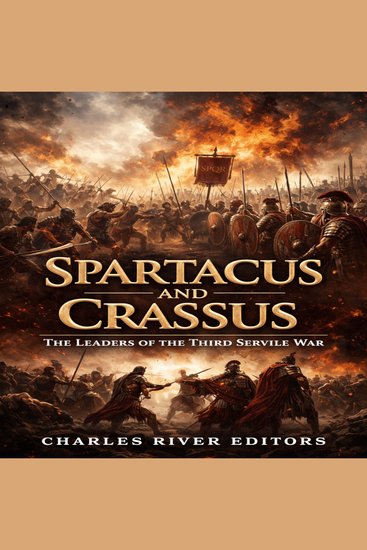
    Spartacus is the world’s most famous slave, and one of the most notorious figures of Ancient Rome. A slave enamored of freedom and willing to fight and die for it, he became especially popular in the years following the Enlightenment, after which he was widely viewed as a poignant champion of liberty in the 18th and 19th centuries. As a result, he became a symbol during struggles like the French Revolution, the American Revolution, the American Civil War and the struggle for emancipation.  
    The reason for Spartacus’s enduring appeal is obvious. After all, he was a gladiator, a profession so violently spectacular that remains one of the most interesting aspects of ancient Rome – as testified by the popularity of such productions as Gladiator and the endless queues of tourist outside the ruins of the Colosseum. Moreover, he was a man who, at least on the surface, fought for freedom – not just his but that of every slave in his region of Italy – and he did so almost two millennia before slavery was officially abolished in the United States.  
    At the same time, it’s often overlooked how the revolt affected Rome, and how the leader who put it down propelled his career and played an outsized role in Roman politics ahead of the civil war between Pompey and Caesar. Marcus Licinius Crassus is most remembered today for being the richest Roman in history, and arguably the richest man in world history, but that came about in part because he played a key role in the revolutionary events that took place in Rome throughout the 1st century B.C., including the dictatorship of Sulla, the Third Servile War, the First Triumvirate, and the Parthian Wars. Crassus was the son of Publius Licinius Crassus, who was consul in 97 B.C., and while very little is known of Crassus’ early life, his career as a military figure began in earnest when he escaped from Rome in 87 B.C. to Spain.
    Voir livre
  • Starting Each Day in a Powerful Way - 30 days of inspirational quotes and insights to start your day off right! - cover

    Starting Each Day in a Powerful...

    Skip Johnson

    • 0
    • 0
    • 0
    Take control of the beginning of each day, and you take control of the way you view your entire day! I designed this book to inspire each of us to be happier in less than one minute. 
    I took my absolute most popular quotes from my 'Skip Johnson Author' Facebook page and added insights that will have you inspired, encouraged and motivated to live your day in the way you have always wanted to live it.  
    Take 60 seconds each morning or evening and listen to that day's message for 30 days and watch the magic happen. You'll put your mind and attitude on track to make a difference in your life and in the lives of people around you.
    Voir livre
  • Fascism - What It Is and How to Fight It - cover

    Fascism - What It Is and How to...

    Leon Trotsky

    • 0
    • 0
    • 0
    Fascism: What It Is and How to Fight It, written by Leon Trotsky in 1933, is a critical analysis of the rise of fascist movements in Europe, particularly focusing on Nazi Germany under Adolf Hitler. Trotsky argues that fascism is not a sudden, irrational outburst of violence but rather the result of deep structural crises in capitalist society, which the ruling class seeks to resolve through authoritarian means. He explains that fascism arises when the traditional political establishment is unable to suppress revolutionary movements from below (such as workers' uprisings or socialist revolutions) and when the capitalist system is threatened by economic collapse. 
    Trotsky highlights that fascism is a tool of the bourgeoisie, aimed at preserving the existing social order through terror, militarism, and the suppression of democratic freedoms. However, it is not simply a reactionary force; it has its own set of internal contradictions, as fascists simultaneously defend capitalist interests while attacking the political establishment and the working class. 
    Trotsky warns of the dangers of fascism's rise and stresses the importance of building a united front of the working class and the Left to prevent its spread. He critiques both Stalinism and social democracy for their failures to adequately respond to the fascist threat, emphasizing the need for a revolutionary approach to combat the fascist menace.
    Voir livre