Join us on a literary world trip!
Add this book to bookshelf
Grey
Write a new comment Default profile 50px
Grey
Subscribe to read the full book or read the first pages for free!
All characters reduced
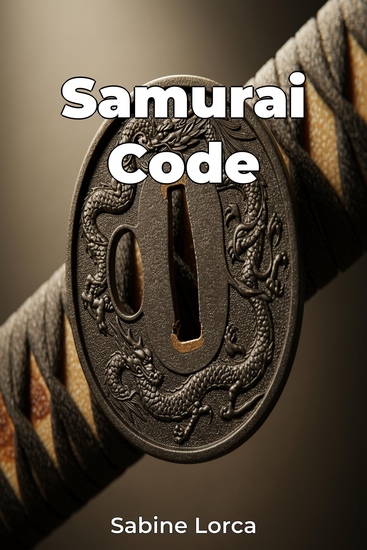
Samurai Code - cover

Samurai Code

Sabine Lorca

Translator A AI

Publisher: Publifye

  • 0
  • 0
  • 0

Summary

"Samurai Code" explores Bushido, the warrior code that governed the lives of Japan's samurai. More than just a set of rules, Bushido was a dynamic philosophy shaping their ethics, military strategies, and societal roles. The book reveals that Bushido was rooted in Confucianism, Zen Buddhism, and Shintoism, creating a unique blend of beliefs that influenced samurai conduct. The book argues that Bushido adapted to changing circumstances while upholding honor and loyalty. Beginning with Bushido's historical development, the book progresses through the virtues like righteousness and courage, illustrated by historical examples, and concludes with its practical applications in military strategy and daily life. This approach distinguishes "Samurai Code" by examining how these principles were applied in real-world situations, offering insights into military history and the enduring legacy of the samurai.
Available since: 03/20/2025.
Print length: 52 pages.
Other books that might interest you

  • Operation Speedy Express: The History and Legacy of One of the Vietnam War’s Most Controversial Campaigns - cover

    Operation Speedy Express: The...

    Editors Charles River

    • 0
    • 0
    • 0
    Before the Vietnam War, most Americans would have been hard pressed to locate Vietnam on a map. South Vietnamese President Diệm’s regime was extremely unpopular, and war broke out between Communist North Vietnam and South Vietnam around the end of the 1950s. Kennedy’s administration tried to prop up the South Vietnamese with training and assistance, but the South Vietnamese military was feeble. A month before his death, Kennedy signed a presidential directive withdrawing 1,000 American personnel, but shortly after Kennedy’s assassination, new President Lyndon B. Johnson reversed course, instead opting to expand American assistance to South Vietnam. 
    	Operation Speedy Express was a highly controversial military operation carried out by the U.S. Army supported by the Army of South Vietnam (ARVN) as well as regional and popular forces during the Vietnam War. It lasted from December 1968 until May 1969 and took place in the Mekong Delta's Kien Hoa and Vinh Binh provinces. The operation was a part of U.S. Army “pacification” efforts toward the Viet Cong, as American forces sought to interdict Viet Cong supply and communication lines from Cambodia and deny them the use of operational bases. Formally, the operation involved 8,000 U.S. soldiers and resulted in 242 American lives lost compared to 10,899 Viet Cong and People’s Army of Vietnam (PAVN) killed, according to Department of Defense records. Operation Speedy Express was considered successful by U.S. standards, as determined by the primary metric of body counts. However, while the number of Vietnamese dead, including civilians, is unknown, it is assumed to surpass 5,000, and the high number of casualties was attributed to the indiscriminate use of firepower, which included air and artillery strikes in densely populated areas.
    Show book
  • Placebo Effect - cover

    Placebo Effect

    Introbooks Team

    • 0
    • 0
    • 0
    Placebo effects have been considered mysterious and unusual for a long time. Science and research continue to find ways to establish explanations which can establish the placebo effect on better foundations. Many people have a negative outlook towards the placebo effect because of the deceptive manner in which it must be administered.  
    This is why it is important to understand the psychology of placebo effect and the role it plays in medical science. By having a better understanding of any phenomena, a person is in the position to reason its use. While the negative or positive impacts of a placebo can be discussed at length, it is also important to know the impact it has on the physical, physiological and psychological level.   
    The administration of a placebo brings about a number of changes which will be discussed and the factors that can affect these changes. As a result, a placebo may or may not be effective. 
    Show book
  • Learn to write a book: Step by step from the book idea to publication - Becoming an author made easy - cover

    Learn to write a book: Step by...

    Miriam Hofmann

    • 0
    • 0
    • 0
    This book takes a step-by-step approach to the problems that stand between you and greater success in your studies. Starting with your basic perspective, motivation, and procrastination, you will learn to build a routine that is tailored to you and will protect you from sudden bulimic learning. Explanations of your internal and external structure will help you filter out and address your difficulties in organization and time management. Tips on how to increase your attention in classes or work more efficiently on your own at home will allow you to have a balanced daily life by not missing out on your hobbies. Strategies for simplifying learning and reproducing content and working efficiently through texts provide you with concrete, applicable solutions.
    Show book
  • Socialism: Utopian and Scientific - cover

    Socialism: Utopian and Scientific

    Friedrich Engels

    • 0
    • 0
    • 0
    The main idea of "Socialism: Utopian and Scientific" (1880) was distinguishing scientific socialism and utopian socialism. Engels begins by chronicaling the thought of utopian socialists, starting with Saint-Simon. He then proceeds to Fourier and Robert Owen. In chapter two, he summarizes dialectics, and then chronicles the thought from the ancient Greeks to Hegel. Chapter three summarizes dialectics in relation to economic and social struggles, essentially echoing the words of Marx. (Introduction by Wikipedia)
    Show book
  • Key to the City - How Zoning Shapes Our World - cover

    Key to the City - How Zoning...

    Sara C. Bronin

    • 0
    • 0
    • 0
    In Key to the City, legal scholar and architect Sara C. Bronin examines how zoning became such a prevailing force and reveals its impact—and its potential for good. Outdated zoning codes have maintained racial segregation, prioritized cars over people, and enabled great ecological harm. But, as Bronin argues, once we recognize the power of zoning, we can harness it to create the communities we desire, and deserve. Drawing on her own experience leading the overhaul of Hartford's zoning code and exploring the efforts of activists and city planners across the country, Bronin shows how new codes are reshaping our cities—from Baltimore to Chicago, Las Vegas to Minneapolis, and beyond. In Boston, a law fought for by a passionate group of organizers, farmers, and beekeepers is transforming the city into a haven for urban farming. In Tucson, zoning codes are mitigating the impacts of climate change and drought-proofing neighborhoods in peril. In Delray Beach, Florida, a new code aims to capture and maintain the town's colorful spirit through its architecture. 


    With clarity and insight, Bronin demystifies the power of an inscrutable organizing force in our lives and invites us to see zoning as a revolutionary vehicle for change. In Key to the City, she puts forward a practical and energizing vision for how we can reimagine our communities.
    Show book
  • Is There a God? - cover

    Is There a God?

    Raphael Terra

    • 0
    • 0
    • 0
    This audiobook has been recorded using Text to speech (TTS). 
     
    Francis Bacon said: “If a man will begin with certainties, he shall end in doubts; but if he will be content to begin with doubts, he shall end in certainties.” 
     
    This book is about the ultimate question. There is nothing that has been pondered more by mankind and nothing more divisive. Is there a God? 
     
    We divide ourselves into groups because of the different answers we have created. Many misunderstand or create concepts of what God actually means and believe it to be the one defined by Christians, Jews or Muslims. And yet, many, when pushed with some profound philosophical questions about the origin of the universe have no answer, other than we came from nothing. 
     
    Did we come from the mind of a creator, or from absolutely nothing? These are our stark choices. To have faith and believe. To deny all and accept existence from nothing. Or to accept we still do not know. What are you?
    Show book