Join us on a literary world trip!
Add this book to bookshelf
Grey
Write a new comment Default profile 50px
Grey
Subscribe to read the full book or read the first pages for free!
All characters reduced
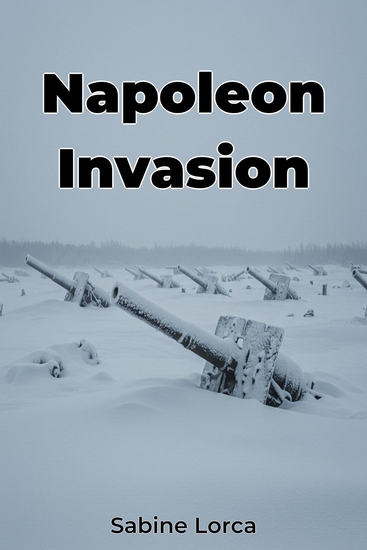
Napoleon Invasion - cover

Napoleon Invasion

Sabine Lorca

Translator A AI

Publisher: Publifye

  • 0
  • 0
  • 0

Summary

Napoleon Invasion meticulously examines Napoleon Bonaparte's disastrous 1812 campaign in Russia, highlighting the critical intersection of military strategy, environmental factors, and logistical capabilities. The book argues that Napoleon's underestimation of Russia's vastness and the brutal Russian winter, combined with the Russian army’s scorched-earth tactics, led to the disintegration of the Grande Armée. Readers gain insight into how logistical nightmares and environmental adversities transformed Napoleon's ambition into a catastrophic retreat, impacting European history and leading to the decline of Napoleon's empire. This detailed account explores the political climate of early 19th-century Europe and the breakdown of the Franco-Russian alliance, providing necessary background on military tactics and socio-political dimensions. The book progresses chronologically, starting with Napoleon's strategic objectives, analyzing key battles like Borodino, and focusing on the devastating retreat from Moscow. By drawing upon military dispatches, memoirs, and weather data, the book emphasizes the Russian winter's crucial role; for example, disease and starvation decimated the Grande Armée far more than direct combat losses. Unique in its approach, Napoleon Invasion distinguishes itself by comprehensively analyzing environmental and logistical factors alongside traditional military narratives. The book assesses the campaign's strategic consequences and touches on debates surrounding Napoleon's leadership, making it valuable for those seeking a nuanced understanding of the 1812 campaign and its broader implications.
Available since: 03/20/2025.
Print length: 51 pages.

Other books that might interest you

  • The Prince - cover

    The Prince

    Niccolò Machiavelli

    • 0
    • 0
    • 0
    The Prince 
    By Niccolò Machiavelli 
    A timeless masterpiece on power, strategy, and statecraft, The Prince is one of the most influential political treatises ever written. First penned in 1513, Niccolò Machiavelli offers a bold and unapologetic guide on how rulers can acquire and maintain power, often advocating for pragmatism over morality. 
    With razor-sharp insights into human nature, deception, and governance, Machiavelli argues that a successful leader must be cunning, adaptable, and, when necessary, ruthless. From the necessity of fear over love to the art of war and manipulation, The Prince remains a vital read for politicians, strategists, and anyone seeking to understand the complex dynamics of power. 
    Whether admired as a manual for leadership or criticized as a blueprint for tyranny, The Prince continues to shape political thought centuries after its publication. This edition, translated by W.K. Marriott, preserves the clarity and brilliance of Machiavelli’s original work, making it accessible to modern readers."It is better to be feared than loved, if you cannot be both."
    Show book
  • The Confessions of Saint Augustine - cover

    The Confessions of Saint Augustine

    Saint Augustine

    • 0
    • 0
    • 0
    "The Confessions of Saint Augustine" is an autobiographical work by St. Augustine of Hippo, consisting of 13 books written between AD 397 and 400. This seminal work outlines his sinful youth and his conversion to Christianity. It is widely seen as the first Western autobiography ever written, and it provides deep philosophical and theological insights into faith and morality. Augustine explores the nature of time, memory, and the inner self, and the narrative is as much a chronicle of his spiritual journey as it is a theological treatise.
    Show book
  • Wake the Others - A Biography of My Motherland - cover

    Wake the Others - A Biography of...

    Willy Palomo

    • 0
    • 0
    • 0
    Half-memoir, half-biography, Wake The Others wrestles with the legacy of the Salvadoran Civil War. Blending lyric and narrative, Palomo traces his mother’s childhood, war experiences, family separation, migration, and its aftermath. Political without sacrificing craft, confessional without navel-gazing, this debut collection of poetry guides readers through the quagmire of family secrets to a place where healing is possible. 
    "Willy Palomo’s outstanding debut takes a scalpel to the heart of biography as a genre, cuts through to the arteries of inherited nostalgia for a motherland, and opens the capillaries of a mama, abuela, and bisabuela’s traumas. This book is a gut wrenching family narrative of the history of violence in El Salvador and a family’s journey north in hope of stability and the possibility of joy. Palomo’s poems are an important and unique addition to the growing voice of Central American writers in the United States.”  
    —Natalie Scenters-Zapico, author of The Verging Cities and Lima :: Limón
    Show book
  • Vectors - Heroes Villains and Heartbreak on the Bridge of the US Navy - cover

    Vectors - Heroes Villains and...

    Thomas B. Modly

    • 0
    • 0
    • 0
    Thomas Modly had an eclectic career in the military, academia, business, and government when he answered the call to service in 2017 and returned to the Navy where his career began. His experience, as chronicled in these pages, tells the story of Secretary Modly’s quest to advance the Department of the Navy’s preparedness for the challenges of this century. As Acting Secretary of the Navy he held fast to the mantra of “acting, not pretending,” and thus advocated aggressively for the Navy and Marine Corps’ future — a future he believed would be defined by uncertainty and unpredictability. Every Friday he wrote a personal message to the entire Department regardless of rank. Those messages were called SECNAV Vectors. Each Vector was intended to clearly communicate his priorities and to establish a rapport with all levels of the organization. The subject of each Vector was inspired by real events that occurred in real time. As these events unfolded , the Secretary’s unyielding emphasis on being prepared for unpredictable events are proven to be prescient as the Navy found itself, unintentionally, in the center of COVID-19 crisis.
    Show book
  • Gettysburg and Vicksburg: The Civil War Turning Points of 1863 - cover

    Gettysburg and Vicksburg: The...

    Editors Charles River

    • 0
    • 0
    • 0
    Without question, the most famous battle of the American Civil War took place outside of the small town of Gettysburg, Pennsylvania, which happened to be a transportation hub, serving as the center of a wheel with several roads leading out to other Pennsylvanian towns. From July 1-3, Robert E. Lee’s Confederate Army of Northern Virginia tried everything in its power to decisively defeat George Meade’s Union Army of the Potomac, unleashing ferocious assaults that inflicted nearly 50,000 casualties in all.  
    	Day 1 of the battle would have been one of the 25 biggest battles of the Civil War itself, and it ended with a tactical Confederate victory. But over the next two days, Lee would try and fail to dislodge the Union army with attacks on both of its flanks during the second day and Pickett’s Charge on the third and final day. Meade’s stout defense held, barely, repulsing each attempted assault, handing the Union a desperately needed victory that ended up being one of the Civil War’s turning points.  
    	The Confederates had lost control of several important states throughout 1862, and after New Orleans was taken by the Union, the North controlled almost all of the Mississippi River, which Confederate general James Longstreet called “the lungs of the Confederacy”. By taking control of that vital river, the North would virtually cut the Confederacy in two, putting the South in a dire situation.  
    The only domino left to fall was the stronghold of Vicksburg, and both sides knew it. The Union Army of the Tennessee, led by Ulysses S. Grant, would spend months trying to encircle the army and eventually force John Pemberton’s Confederate army to surrender. Grant eventually succeeded on July 4, 1863, but since it came a day after the climactic finish of the Battle of Gettysburg, Vicksburg was (and still is) frequently overlooked as one of the turning points of the Civil War. 
    Show book
  • Trauma Proof - Healing Attachment and the Science of Prevention - cover

    Trauma Proof - Healing...

    Benjamin Perks

    • 0
    • 0
    • 0
    From the moment they're born, babies seek a loving parental attachment. When that connection is absent, it derails childhood development in ways that can last a lifetime. The annual health costs of illness related to child trauma for North America and Europe alone are 1.3 trillion dollars. Child trauma is much more widespread than previously thought and passes from one generation to the next. But that's not the end of the story—there is overwhelming evidence that this intergenerational transmission can be disrupted. So why isn't the eradication of childhood trauma a tier-one public priority, like defense or growth? 


    In Trauma Proof, Benjamin Perks argues that it must be, and that we can tackle it as a public health problem like COVID-19, by 1) making sure everyone is aware of the risk; 2) preventing transmission; and 3) opening pathways to healing. Perks shows we have the tools to make these three things happen, and the evidence to show they work. Psychology, neuroscience, and medicine have made huge leaps in the past twenty-five years. We now know what causes Adverse Childhood Experiences (ACEs), how to reduce them, and how to address them. For the first time in history, we know child mistreatment is not inevitable. Trauma Proof is a rallying call to address child trauma as the public health crisis it is—because we can do better for kids, and we should.
    Show book