Join us on a literary world trip!
Add this book to bookshelf
Grey
Write a new comment Default profile 50px
Grey
Subscribe to read the full book or read the first pages for free!
All characters reduced
Jungle Ambushes - cover

Jungle Ambushes

Sabine Lorca

Translator A AI

Publisher: Publifye

  • 0
  • 0
  • 0

Summary

Jungle Ambushes explores how dense jungle landscapes have shaped warfare, turning it into a contest of adaptation and survival. The book examines the critical role of environmental dominance, where forces exploit natural features to overcome disadvantages, and analyzes the profound psychological impact of constant threats and isolation on combatants. Understanding these elements is vital for grasping 20th and 21st-century conflicts within such terrains. This study of military history emphasizes how the jungle fundamentally alters strategic calculations, favoring those who adapt to its constraints. For example, guerrilla tactics and ambush strategies often prove more effective than conventional military approaches. The book progresses logically, first defining the strategic significance of jungle terrain, then moving through historical case studies, examining psychological impacts, and concluding with an analysis of future challenges. It highlights survival techniques, psychological resilience, and logistical innovation. Drawing on military archives, veteran accounts, and academic research, Jungle Ambushes provides a comprehensive analysis of a frequently overlooked aspect of modern warfare. Its fact-based approach, clear style, and interdisciplinary connections to fields like environmental science and psychology offer valuable insights for military historians, students of military strategy, and anyone interested in the intersection of environment and conflict.
Available since: 03/29/2025.
Print length: 63 pages.
Other books that might interest you

  • Stop Living For Them - cover

    Stop Living For Them

    Kirill Mishukov

    • 0
    • 0
    • 0
    This powerful audiobook explores what it truly means to live a life that belongs to you—not one shaped by the expectations and judgments of others. It dives deep into the psychology behind our need for approval and reveals how this hidden force can quietly control our decisions, confidence, and happiness. Through timeless insights from philosophy and modern psychology, the book guides you toward breaking free from overthinking, fear, and self-doubt. You’ll learn practical strategies to build self-worth, set boundaries, and develop the courage to be fully authentic. With relatable examples and transformative ideas, it empowers you to reclaim your voice and trust your inner direction. This is not just a guide—it’s a mindset shift that can redefine how you see yourself and your life. By the end, you’ll be ready to stop living for others and finally start living for real.
    Show book
  • How You Learn Is How You Live - Using Nine Ways of Learning to Transform Your Life - cover

    How You Learn Is How You Live -...

    David A. Kolb, Kay Peterson

    • 0
    • 0
    • 0
    This book takes a systematic approach to learning that has been long revered in the education field (approximately 75,000 educators take the Kolb Learning Style Inventory each year) and makes it accessible to any reader who wants to be a lifelong learner. 
     
     
    Being a lifelong learner is one of the secrets to happiness, success, and personal fulfillment. This book awakens and enhances the power of learning that lies within us. David Kolb originated the concept of Experiential Learning-a systematic approach to understanding how we learn-and in this book he and Kay Peterson take what has up until now been a powerful professional development tool and make it accessible to a popular audience. 
     
    Peterson and Kolb offer deep, research-based insights into how we learn, what Kolb calls the Experiential Learning Cycle. Then they identify nine specific learning styles and guide you in identifying your dominant style. This will help you understand your strengths and weaknesses as a learner, but they emphasize that flexibility is the key to lifelong learning. So they suggest ways you can expand your repertoire of learning styles. This book is an eye-opening read for anyone who wants to continue to grow and meet life challenges in a transformative way.
    Show book
  • Abraham Lincoln's Education Faith and Myth - cover

    Abraham Lincoln's Education...

    Mike Parson

    • 0
    • 0
    • 0
    Abraham Lincoln, a self-taught lawyer, legislator, and vocal opponent of slavery, was elected 16th president of the United States in November 1860, shortly before the outbreak of the Civil War. Lincoln proved to be a shrewd military strategist and a savvy leader: His Emancipation Proclamation paved the way for the abolition of slavery. At the same time, his Gettysburg Address stands as one of the most famous pieces of oratory in American history. In April 1865, with the Union on the brink of victory, Abraham Lincoln was assassinated by Confederate sympathizer John Wilkes Booth. Lincoln’s assassination made him a martyr to the cause of liberty. He is widely regarded as one of the greatest presidents in U.S. history.
    Show book
  • Echoes From the Deep - The Lusitania Disaster Between Wartime Actions And Wrong Decisions - cover

    Echoes From the Deep - The...

    Davis Truman

    • 0
    • 0
    • 0
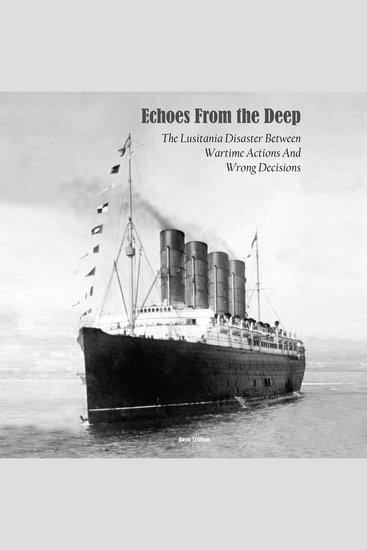
    On May 1, 1915, the majestic RMS Lusitania departed from New York, bound for Liverpool, navigating through the escalating tensions of a war-torn Europe. Just six days later, the Cunard liner met a tragic fate, sinking into the depths of the Atlantic after being struck by a German torpedo. The catastrophe claimed the lives of over a thousand passengers, sending shockwaves across the world and profoundly influencing the American stance on World War I. 
    At the heart of this investigation lies a provocative thesis: the tragic loss of life on the Lusitania was not merely a consequence of wartime hostilities but was exacerbated by decisions and actions that could have been averted. Through detailed analysis, the book questions the accountability of the captain and crew, challenging readers to reconsider the extent to which their actions — or inactions — contributed to the disaster. 
    But this story is not confined to the ill-fated ship alone. "Echoes From the Deep" also examines the broader ramifications of the Lusitania's sinking on American public opinion. The tragedy stirred a powerful emotional response, turning the tide of sentiment and drawing the United States closer to joining the global conflict.  
    Blending historical rigor with compelling storytelling, "Echoes From the Deep" explores tragedy, responsibility, and the complex interplay between individual actions and larger historical forces. This book is essential for history enthusiasts, maritime scholars, and anyone intrigued by the profound impact of the Lusitania disaster on the American war effort.
    Show book
  • America’s Most Notorious Natural Disasters - cover

    America’s Most Notorious Natural...

    Charles River Editors

    • 0
    • 0
    • 0
    It had taken about 40 years for Chicago to grow from a small settlement of about 300 people into a thriving metropolis with a population of 300,000, but in just two days in 1871, much of that progress was burned to the ground. In arguably the most famous fire in American history, a blaze in the southwestern section of Chicago began to burn out of control on the night of October 8, 1871.  
    In 2005, the world watched in horror as Hurricane Katrina decimated New Orleans, and the calamity seemed all the worse because many felt that technology had advanced far enough to prevent such tragedies, whether through advanced warning or engineering. However, the failure of human engineering like that seen in New Orleans was nothing new, and it had previously had even deadlier consequences in Johnstown, Pennsylvania. Although floods rarely get as much coverage as other kinds of natural disasters like volcanic explosions, the Johnstown Flood of 1889 has remained an exception due to the sheer destruction and magnitude of the disaster.  
    As bad as Hurricane Katrina was, the hurricane that struck Galveston, Texas on September 8, 1900 killed several times more people, with an estimated death toll between 6,000-12,000 people. Prior to advanced communications, few people knew about impending hurricanes except those closest to the site, and in the days before television, or even radio, catastrophic descriptions were merely recorded on paper, limiting an understanding of the immediate impact.   
    	On April 18, 1906, most of the residents of the city of San Francisco were sound asleep when the ground started to shake around 5:15 a.m., but what started as fairly soft tremors turned into a violent shaking in all directions. The earthquake lasted about a minute, but it had enough destructive force to divert the course of entire rivers and level much of the 9th largest city in America at the time. 
    Show book
  • Jerome vs Luther: Controversial Canon Debates of the Church - The Deuterocanonical Books That Sparked 1000 Years of Theological Conflict - cover

    Jerome vs Luther: Controversial...

    Various Church Sources, Tim...

    • 0
    • 0
    • 0
    What if the books you read as “Scripture” depended on a fourth-century monk—or a sixteenth-century reformer? 
    In this engaging audio edition, Jerome vs. Luther brings the canon controversy alive through dramatic narration and crisp modern language. 
    What you’ll hear inside: 
    •	Full Deuterocanonical Texts – Tobit, Judith, Wisdom, Sirach, Baruch, 1–2 Maccabees, plus Greek additions to Esther & Daniel. 
    •	Jerome’s Prologues – His candid assessments of “books read in church but not in canon.” 
    •	Luther’s Prefaces & Comments – Provocative critiques that reclassified whole sections of the Bible. 
    •	Council of Trent Canons – The thunderous Catholic response that drew the line once and for all. 
    Perfect for students of theology, lovers of church history, or anyone fascinated by the making of the Bible, this audiobook lets you hear the very words that split Western Christianity—and invites you to decide where you stand.
    Show book