Join us on a literary world trip!
Add this book to bookshelf
Grey
Write a new comment Default profile 50px
Grey
Subscribe to read the full book or read the first pages for free!
All characters reduced
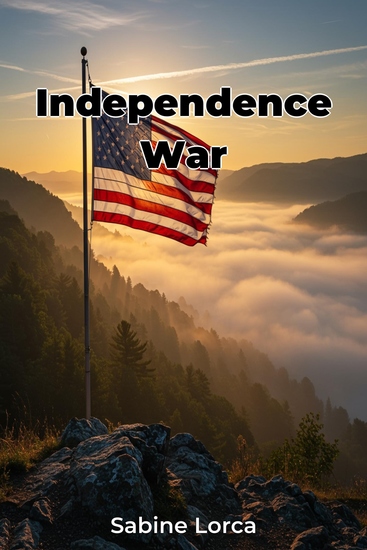
Independence War - cover

Independence War

Sabine Lorca

Translator A AI

Publisher: Publifye

  • 0
  • 0
  • 0

Summary

Independence War offers a comprehensive look at the American Revolution, highlighting the strategic and diplomatic intricacies that led to the birth of the United States. It examines not only the military conflicts but also the political climate and strategic decisions that shaped the outcome. The book emphasizes that the American victory stemmed from strategic brilliance, unwavering resolve, and successful diplomacy, rather than solely from military might. For example, the text explores how unconventional tactics helped the Continental Army compensate for the British forces' superior training and equipment.

 
The book begins by setting the stage with an overview of the pre-revolution political and social conditions in the colonies. It then methodically dissects major battles such as Lexington and Concord, Saratoga, and Yorktown, providing detailed analyses of tactical decisions and leadership qualities. Further, the book explores the crucial role of diplomacy, detailing how figures like Benjamin Franklin secured vital foreign alliances. By drawing upon primary and secondary sources, Independence War presents a balanced and engaging narrative suitable for anyone interested in American and military history.
Available since: 03/21/2025.
Print length: 61 pages.

Other books that might interest you

  • Dobri a zli hrdinovia EN SK - Good and Bad Heroes - cover

    Dobri a zli hrdinovia EN SK -...

    Robert Hodosi

    • 0
    • 0
    • 0
     Audiobook - Good and Bad Heroes, EN, SK - is a bilingual book read in Slovak and English. It contains 2000 sentences which are in Slovak and translated one by one into English. It serves for developing vocabulary in both languages in the field of personal psychology. Readers will encounter the basic 120 profiles of psychological heroes. In an age when gossip is seen as telling our friends the news, it is essential to raise the narrative of what we or our friends are like to a psychological level. And that's what this audiobook, Good and Bad Heroes, EN, SK, in Slovak and English, allows us to do. The only question we are left with here is whether you have chosen the right path in life and are a good hero who has a developed personality, or a bad hero who has an undeveloped personality, or one that is merely adapted to the people in your environment. And that's what we're going to find out in this audiobook. Well, which of these heroes prevails with you or your friends? 
      Audiokniha - Dobrí a zlí hrdinovia, EN, SK - je dvojjazyčná knižka čítaná v slovenčine a angličtine. Obsahuje 2000 viet, ktoré sú v slovenčine a preložené jedna po druhej do angličtiny. Slúži pre rozvinutie slovnej zásoby v oboch jazykoch v oblasti personálnej psychológie. Čitatelia sa v nej stretnú so základnými 120 profilmi psychologických hrdinov. V dobe, keď sa klebety považujú za rozprávanie o novinkách našich priateľov, je nevyhnutné povýšiť rozprávanie o tom, akí sme my alebo naši priatelia, na psychologickú úroveň. A práve to nám v slovenčine a angličtine umožní táto audioknižka Dobrí a zlí hrdinovia, EN, SK. Otázkou nám tu len zostáva, či ste si vybrali tú správnu cestu životom a ste dobrý hrdina, ktorý má rozvinutú osobnosť, alebo zlý hrdina, ktorý má nerozvinutú osobnosť alebo iba prispôsobenú ľuďom zo svojho okolia. A o tom sa dozvieme práve v tejto audioknihe. Nuž, ktorý z týchto hrdinov u Vás či Vašich priateľov prevláda?
    Show book
  • Alien Gods - cover

    Alien Gods

    Raphael Terra

    • 0
    • 0
    • 0
    Before time was recorded by mankind there were the ancient gods of Mesopotamia. Before civilization emerged, before Empires grew, they came and created a hybrid slave race we now call humanity. 
     
    This is the story of the Anunnaki, the ancient gods. All religions, myths and mysteries emerged in these ancient times. Flying angels and chariots. Sky ships and miracles. Great constructions in an age supposedly named after stone. The facts do not fit the standard history. Instead, they fit a massive tale of a superior species that came to Earth, created a slave race to mine and serve, and then left behind mystery. 
     
    This is the story of those alien gods.
    Show book
  • Learning Primary Programming with Scratch (Home Learning Book Years 5-6) - cover

    Learning Primary Programming...

    Phil Bagge

    • 0
    • 0
    • 0
    This book, written by Phil Bagge and published in conjunction with Hampshire Inspection and Advisory Service (HIAS), has been devised for children of KS2 (Year 5 and 6) age to learn programming outside of school.
    Show book
  • Impasse - Climate Change and the Limits of Progress - cover

    Impasse - Climate Change and the...

    Roy Scranton

    • 0
    • 0
    • 0
    A Next Big Idea Club "Must Read" for August 2025! 
     
    Extreme heat, fires, floods, and storms are transforming our planet. Yet we get increasing emissions, divisive politics, and ersatz solutions that offer more of the same: more capitalism, more complexity, more "progress." 
     
    The impasse we face is not only political and institutional, but cognitive, existential, and narrative. We're incapable of grasping the scale, speed, and impact of global warming. And we optimistically cling to a narrative that promises a better tomorrow if we just keep doing what we're doing. 
     
    It's past time to free ourselves from our dangerous and dogmatic faith. Such unwarranted optimism will accelerate our disintegration. If we want to have hope for the future, it must be grounded in a recognition of human limits—a view Scranton calls ethical pessimism. 
     
    Scranton describes the challenges we face in making sense of our predicament, from problems in communication to questions of justice, from the inherent biases in human perception to the difficulties of empirical knowledge. What emerges is a challenging but hopeful proposition: if we have the courage to accept our limits, we may find a way to embrace our future.
    Show book
  • How to Live on 24 Hours a Day - cover

    How to Live on 24 Hours a Day

    Arnold Bennett

    • 0
    • 0
    • 0
    Written at the height of the early twentieth century, How to Live on 24 Hours a Day remains one of the clearest and most quietly demanding books ever written about time, attention, and personal responsibility. 
    Arnold Bennett begins with a simple, unavoidable truth: every person—regardless of status, wealth, or circumstance—is granted the same twenty-four hours each day. What distinguishes a fulfilled life from a diminished one, he argues, is not how we work, but how we use the hours that remain once work is done. 
    With calm authority and practical insight, Bennett challenges the habit of surrendering evenings to fatigue, distraction, or idle routine. He urges listeners to reclaim their non-working hours for thought, learning, reflection, and deliberate self-development—without abandoning ordinary life or demanding drastic change. His guidance is measured, humane, and realistic, rooted in the belief that steady mental discipline, practiced daily, transforms existence more reliably than bursts of ambition. 
    Narrated with clarity and restraint by LaVel Lane, this audiobook offers a timeless meditation on living deliberately within the constraints of modern life. Free of slogans or hype, How to Live on 24 Hours a Day speaks directly to anyone who has ever felt busy yet unfulfilled—and quietly insists that a richer life is already within reach.
    Show book
  • Pancho Villa - The Bandit That Fought in the Mexican Revolution - cover

    Pancho Villa - The Bandit That...

    Kelly Mass

    • 0
    • 0
    • 0
    Francisco Villa, better known as Pancho Villa, was a key figure in the Mexican Revolution, known for his transformation from a bandit to one of the revolution’s most influential commanders. Villa’s rise to prominence in the early 20th century marked him as a central player in the violent upheavals that reshaped Mexico’s political landscape. In 1911, Villa became a significant actor in the revolutionary violence that led to the overthrow of President Porfirio Díaz, ushering in Francisco I. Madero’s government. Villa, initially a leader of outlaw groups, aligned himself with Madero’s revolutionary cause, contributing to the instability that culminated in the fall of Díaz’s long-standing dictatorship. 
    The power dynamics in the revolution shifted again when General Victoriano Huerta attempted a right-wing coup in February 1913. As Madero’s government crumbled under Huerta’s forces, Madero led anti-Huerta soldiers in the Constitutionalist Army from 1913 to 1914. The civilian governor of Coahuila, Venustiano Carranza, became the leader of this anti-Huerta coalition. After Huerta’s eventual defeat and exile in July 1914, Villa and Carranza began to diverge politically. Villa, alongside other revolutionary leaders, assembled a gathering of generals in a bid to form a new government, but the resulting coalition was weak and inefficient. Though Villa and Emiliano Zapata, another revolutionary leader, were formally allied during this period, their partnership was largely theoretical. Both men supported land reform, but Villa’s reforms remained unrealized during his tenure of influence.
    Show book