Join us on a literary world trip!
Add this book to bookshelf
Grey
Write a new comment Default profile 50px
Grey
Subscribe to read the full book or read the first pages for free!
All characters reduced
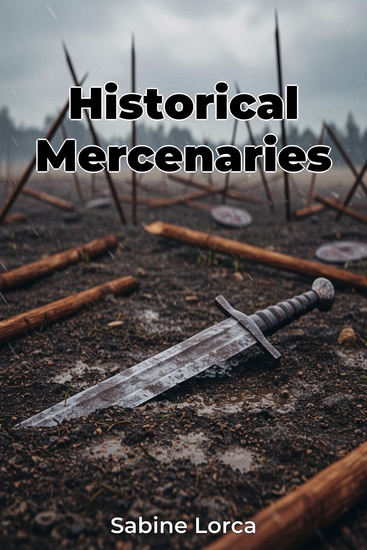
Historical Mercenaries - cover

Historical Mercenaries

Sabine Lorca

Translator A AI

Publisher: Publifye

  • 0
  • 0
  • 0

Summary

Historical Mercenaries explores the profound influence of hired soldiers on military history and war outcomes, challenging traditional views that often marginalize their significance. This book argues that mercenaries were pivotal in shaping not only battle tactics but also political landscapes and economic systems.

 
For example, the dominance of Swiss Pikemen in 15th-century Europe demonstrates how mercenary forces could dictate military strategy and alter the balance of power. The book delves into the economic history of mercenary warfare, examining the financial structures that supported these armies and their impact on local economies. It also investigates how mercenary service provided opportunities for social mobility.

 
Through case studies ranging from the condottieri in the Italian Renaissance to modern private military companies, the narrative progresses chronologically and thematically, illustrating how the strategic deployment of soldiers for profit has consistently influenced conflicts across eras. Drawing from diverse sources, including military chronicles and financial records, the book integrates insights from military, economic, and social history. This interdisciplinary approach provides a nuanced understanding of the complex role mercenaries have played in shaping warfare and military thought, addressing ethical considerations and their impact on civilian populations.
Available since: 03/29/2025.
Print length: 61 pages.

Other books that might interest you

  • Father Unknown (Unabridged) - cover

    Father Unknown (Unabridged)

    Marianne Toxboe

    • 0
    • 0
    • 0
    World War II, Denmark, Copenhagen, 1944: The Danish government has been deposed and the police interned. The resistance movement has developed into a powerful force which, in the highly tense climate, is committing terrorist acts against vital German interests. As the fortunes of war turn, public reprisals against all collaborators and Danish women with German boyfriends are increasing.
    
    With Mille incarcerated at Gestapo headquarters and Inger exiled in Sweden, Maia finds herself completely alone with all bridges burned behind her. Lieutenant Hermann Ahlenfelt, father of her unborn child, is now missing on the Russian front, and Maia risks being branded a 'German tart'.
    
    Falling in love with the wrong man at the wrong time has had ruinous consequences on Maia's life. Pregnant and alone she is forced into hiding and faces a harrowing, unpredictable future.
    Show book
  • Patriarchy Blues - Reflections on Manhood - cover

    Patriarchy Blues - Reflections...

    Frederick Joseph

    • 0
    • 0
    • 0
    NEW YORK TIMES BESTSELLER 
    ""[A] scorching treatise on toxic masculinity. Joseph’s critiques of “the patriarchy... both overt and ingrained” are razor-sharp, but it’s the clear-eyed reckoning of his own place within it that tethers the soul of his book."" —Publishers Weekly 
    ""Joseph has learned a great deal from bell hooks here, and I think she would be proud because Patriarchy Blues is such a moving, inspiring, rigorous vision for living.” —Robert Jones, Jr., New York Times bestselling author of The Prophets 
    In this personal and poignant collection, the author of the New York Times bestseller The Black Friend examines the culture of masculinity through the lens of a Black man.  
    What does it mean to be a man today? How does the pervasive yet elusive idea of “toxic masculinity” actually reflect men’s experiences—particularly those of color—and how they navigate the world? 
    In this thought-provoking collection of essays, poems, and short reflections, Frederick Joseph contemplates these questions and more as he explores issues of masculinity and patriarchy from both a personal and cultural standpoint. From fatherhood, and “manning up” to abuse and therapy, he fearlessly and thoughtfully tackles the complex realities of men’s lives today and their significance for society, lending his insights as a Black man. 
    Written in Joseph’s unique voice, with an intelligence and raw honesty that demonstrates both his vulnerability and compassion, Patriarchy Blues forces us to consider the joys, pains, and destructive nature of manhood and the stereotypes it engenders. 
    Show book
  • Peig Sayers Vol 1 - Labharfad le Cách I Will Speak to You All - cover

    Peig Sayers Vol 1 - Labharfad le...

    Pádraig Ó Héalaí, Bo Almqvist

    • 0
    • 0
    • 0
    'Ach cérbh í Peig Sayers?'
    Níorbh í in aon chor an tseanbhean ologónach í ar chuir na glúnta de dhaltaí scoile aithne uirthi. Is léir ó chuntais uathu siúd arbh eol dóibh í gur bhean ghrámhar thuisceanach í a raibh acmhainn grinn inti; bean a fuair blas ar ghal tobac agus ar bhraoinín fuisce, agus a bhí oilte ar chraiceann a chur ar scéal.
    
    
    Saolaíodh Peig i nDún Chaoin i gCo. Chiarraí i 1873. Thug sí bua na scéalaíochta léi óna hathair agus tugadh a sárchuimhne agus an lé a bhí aici le comhluadar faoi deara go luath. Phós sí iascaire ón mBlascaod agus chaith sí saol cruógach i dteaghlach líonmhar ag déanamh cúraim don seisear leanbh léi a mhair.
    
    
    Tugann Labharfad le Cách le chéile den chéad uair na taifeadtaí a thóg an BBC agus RTÉ uaithi i 1946, 1947 agus 1953, mar aon le haistriúcháin Bhéarla orthu. Léiríonn siad fairsinge repertoire Pheig idir scéalta cráifeacha, paidreacha, scéalta rómánsacha, scéalta faoin osádúr agus cuntais ar an saol a caitheadh tráth ar an oileán ach go bhfuil a chuimhne ag dul i léig anois.
     
    'Who was that Peig Sayers?'
    She was anything but the maudlin and old-fashioned Peig remembered by generations of school children. From the descriptions of those who met her, the real Peig emerges as a warm, wise and humorous woman, with an addiction to tobacco, a fondness for a sup of whiskey and a mastery of the art of 'spin'.
    
    
    Born in Dún Chaoin in County Kerry in 1873, Peig learned the art of storytelling at her father's knee, and quickly became known for her sociable nature and excellent memory. Marrying a fisherman from the Great Blasket, she enjoyed a full life with a large extended family and the care of her six living children.
    
    I Will Speak to You All collects, for the first time, in both Irish and English, the recordings made by the BBC and RTÉ of Peig Sayers in 1946, 1947 and 1953. They illustrate Peig's repertoire, ranging from religious stories and prayers to humorous, romantic, even supernatural tales, as well as descriptions of an island life that is passing from living memory.
    Show book
  • Of Consolation - To Marcia To Helvia To Polybius - cover

    Of Consolation - To Marcia To...

    Seneca the Younger

    • 0
    • 0
    • 0
    These three ‘Consolations’, written by Seneca to his mother and two friends, have been described as ‘the crowning achievement in the canon of ‘consolation letters’. But sentimental they are not, for they emerge from the writer’s deep-seated commitment to Stoicism, where individuals are exhorted to inhabit qualities of virtue, positivity, resilience, and indifference. This recording opens with Seneca’s consolatory letter to Marcia, who, after three years, was still mourning the death of her son. He recognises her exceptional personal qualities and what benefits she has brought to her family, having rescued her father’s legacy as a historian following his death. He cites other noble Roman mothers who lost their sons, and enjoins her to adopt a more Stoic attitude of mind: we are all destined to die, he declares.  
    The second letter is to his mother sent after he had been exiled to Corsica by Emperor Caligula. He counsels Helvia not to mourn his absence – not least because he himself does not feel grief at the prospect of his own exile. He acknowledges the trials of his mother during her life, remarking ‘ill-fortune has given you no respite’. But her grief at the absence of her son may be put to one side in the knowledge that as he has ‘never trusted in Fortune,’ she can be comforted that her son is not discommoded. And history points to far harsher separations.  
    The final letter is to Polybius, Emperor Claudius’s Literary Secretary, who was mourning his brother.  Written while in exile, Seneca’s unwavering commitment to Stoic philosophy is again in evidence. One of Seneca’s principal suggestions is for Polybius to distract himself from grief by an increasing involvement in work.  
    These ‘Consolations’ have been widely admired from Classical times to the present, but are periodically questioned for their emphasis on a somewhat detached approach to grief and bereavement. Not all can manage imperturbability in such circumstances. Nevertheless, there is a steadiness and emotional calm in these missives, which Seneca himself displayed when ordered to commit suicide by Emperor Nero.
    Show book
  • The View From A Darkened Room - Searching For A Lusty Life - cover

    The View From A Darkened Room -...

    Blair Erotica

    • 0
    • 0
    • 0
    Things can't go on like this. After losing her boyfriend, her job, and her confidence all at once, Kate needs to escape from her lonely apartment. In a rustic retreat she finds a welcoming group of hot people, and they involve her in hot, unprotected sex with men and women that pushes her boundaries. 
    ~~~~~ Excerpt ~~~~~ 
    Kate found her suitcase lying on the bed. She opened it, thinking that maybe unpacking would help her get relaxed. The small closet and dresser provided plenty of space for the little she had brought. The bathroom was tiny, and she sighed when she saw there was no tub. So much for the idea of spending relaxing hours in the tub with a good book. A lot of good it did that she had remembered to bring bubble bath and a number of good books with her; the dream had to adapt to the place. 
    She noted a sign on the wall titled Guest Services. A quick look told her that someone named Betty drove to town on Wednesday mornings. For a small fee, she would pick up groceries or things needed from the store, and take in and pick up laundry. That was helpful. She wouldn't need to go into town unless she wanted to. 
    Besides her clothing, she had brought a few other necessities. She found her box sitting on the counter of the tiny kitchen. She opened it and took out a coffee press, kettle, ground coffee, three bottles of wine, corkscrew and some cheese and crackers. Enough, she thought, to avoid the necessity of going out to eat the first night. With luck, she'd find a deli in town and be able to stock up on some other food and hunker down in her little mansion on Helen's Hill. 
    She opened a bottle of red wine and poured a big glass. "The first course of my nutritious meal," she laughed and took a close look at the place that would be home for month. The front porch occupied a corner of the house, with the bedroom taking the rest of the space in the front. The bedroom had two windows.
    Show book
  • Great Escapes during the World Wars: The History of the Most Legendary Prisoner Breakouts in World War I and World War II - cover

    Great Escapes during the World...

    Editors Charles River

    • 0
    • 0
    • 0
    War has always led to prisoners. In ancient times, many were turned into slaves by the victorious armies, while in medieval Europe, they were often returned to their families in return for a ransom, leading to fortune or poverty depending upon which side one was on. By the Napoleonic era, as armies grew in size and professionalism, many were kept in camps for the duration of the fighting, their captors not wanting to restore their enemies' manpower while the fate of nations hung in the balance. 
    Prisoners were taken across the world, and prisoners of war were typically comprised of two classes: officers and other ranks. Officers were often treated well, as there was still a sort of aristocratic courtesy among officers, particularly among the Germans, British, French, and somewhat less so for the Russians, Italians, and Turks. Concepts such as honor still held considerable currency, and bravery was greatly admired. Enemy officers as a class often had more in common with each other than with the millions of draftees in their armies, so enlisted men as POWs generally were not as well treated. 
    	Regardless of rank though, throughout the war, many of these men did not sit idle. Many spent their time preparing elaborate escape plans in the hopes of returning to their home nations and back to the fight.  
    The Second World War was full of escape stories, some bold, some tragic, and most filled with courage and ingenuity. The greatest number of successful escapes was made by Allied troops in Europe, including soldiers left behind after the fall of France and airmen shot down in bombing raids, but escapes happened across the world, from Canadian trains to German castles, and from the mountains of Italy to the wilds of Australia. Axis as well as Allied troops made their bids for freedom, keeping both sides on their toes. Everybody was looking to make the next great escape.
    Show book