Join us on a literary world trip!
Add this book to bookshelf
Grey
Write a new comment Default profile 50px
Grey
Subscribe to read the full book or read the first pages for free!
All characters reduced
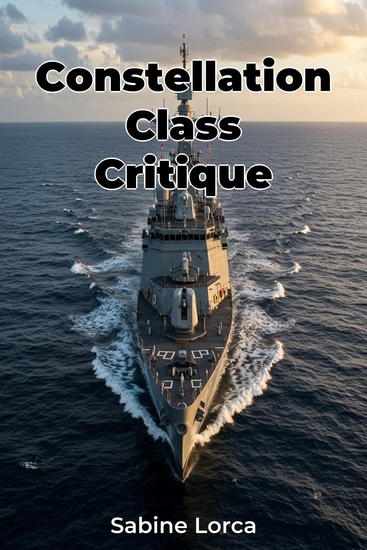
Constellation Class Critique - cover

Constellation Class Critique

Sabine Lorca

Translator A AI

Publisher: Publifye

  • 0
  • 0
  • 0

Summary

Constellation Class Critique offers a detailed examination of the US Navy's Constellation-class frigate program. It delves into the warship's design, capabilities, and strategic implications, aiming to provide a balanced assessment of its potential impact on naval power projection. The book explores the program's origins, intended role, and key technological innovations, such as advanced radar systems and combat management, within the context of evolving naval doctrines.

 
For example, the rise of near-peer adversaries necessitates a cost-effective, multi-mission warship, but can this ship deliver? The book critically examines potential risks and challenges associated with the Constellation-class frigate, including concerns about construction quality, system integration, and long-term maintainability.

 
This analysis draws upon diverse sources, including official US Navy documents and defense industry publications. The book progresses systematically, first introducing the program, then dissecting the ship's design and technologies, before analyzing strategic implications and potential risks, making it a valuable resource for naval strategists, defense analysts, and those interested in naval technology and military history.
Available since: 03/12/2025.
Print length: 75 pages.

Other books that might interest you

  • The Plot Module - The Ultimate Chapter-by-Chapter Guide on How to Write a Novel Outline - cover

    The Plot Module - The Ultimate...

    Jason Hamilton

    • 0
    • 0
    • 0
    Looking for an easy, step-by-step solution to plot your novel from start to finish? 
    Jason Hamilton—overnight YouTube success and practicing fantasy author—introduces The Plot Module, a groundbreaking guide that simplifies novel plotting like never before. This comprehensive 40-chapter roadmap tells you exactly what to include in each chapter, bridging the gaps most story structure books leave behind. 
    Discover:A Detailed 40-Chapter Blueprint: Know precisely what happens in every chapter.Adaptable Methods for Any Novel Length: Customize the module for shorter or longer works.Seamless Integration of Subplots and Viewpoints: Effortlessly manage multiple narratives.Proven Techniques from an Active Author: Apply strategies Jason uses in his own writing.Harnessing Technology for Writing: Enhance creativity and efficiency with modern tools. 
    With clear instructions and practical advice, The Plot Module empowers you to turn your ideas into a compelling, well-structured novel without the guesswork. Say goodbye to plot struggles and hello to a clear path forward. 
    Join writers who have unlocked their creative potential with The Plot Module. Now it's your turn to bring your story to life.
    Show book
  • Nana Said Don't Drink That - cover

    Nana Said Don't Drink That

    Aroara

    • 0
    • 0
    • 0
    Another lesson learned from Nana in Nana Said "That drink is for Grown folks". Discussions about alcohol and drinking. The Nana Said series focuses on lessons intended for kids, but thought provoking for parents.
    Show book
  • The Meaning of Surah Al-Araf (The Heights Border Between Hell & Paradise) From Noble Quran Bilingual Edition English & Spanish - cover

    The Meaning of Surah Al-Araf...

    Muhammad Vandestra

    • 0
    • 0
    • 0
    Surah al-Araf (The Heights Border Between Hell & Paradise) is the seventh surah of the Qur'an, with 206 verses. It is a Meccan sura. Its final verse, verse 206, requires a sajdah, or prostration.Al-Araf is one of the most detailing Surah about the origins of creation and revealing prophecies about the judgment day, it starts by telling us how Satan made our ancestors Adam and Eve to leave heaven and all of the three came down to earth and from that point Satan became the number one enemy for humanity, and how he refused to obey God and asked him to keep him alive to show him the vulnerability of this new creature the Human being, the Surah then starts by telling us how Satan misled thousands of populations over time and gives us examples of some prophets who suffered in order to gain their lost companions to the right path, cited in this surah: 
     
    Story of Nuh/Noah, which begins with the prophet warning his people and then the community rejecting the message and facing a punishment, the Grand Deluge.Story of Hud: Hud lived with his people Aad, Aad were not ignorant of the existence of Allah, nor did they refuse to worship Him. What they did refuse was to worship Allah alone. They worshipped other gods, also, including idols. This is one sin Allah does not forgive. The Prophet Hud said to his people: "He created you, He provides for you and He is the One Who will cause you to die. He gave you wonderful physiques and blessed you in many ways. So believe in Him and do not be blind to His favors, or the same fate that destroyed Noah's people will overtake you." 
     
    Story of Saleh: Saleh (meaning the good one in Arabic) was sent to an Arab tribe called Thamud, who were reported to be descendants of Noah. They were vain people who took great pride in their fertile farmland and grand architecture. Prophet Saleh tried to call his people to the worship of One God, to Whom they should give thanks for all their bounties. He called upon the rich to stop oppressing the poor, and for an end to all mischief and evil. 
     
    Story of Shuaib: His people were greedy people who did not believe that Allah existed and who led wicked lives. Most of them were merchandisers and they gave short measure, praised their goods beyond their worth, and hid their defects. They lied to their customers, thereby cheating them. Allah (God) sent his prophet Shu'aib armed with many miracles. Shu'aib preached to them, begging them to be mindful of Allah's favors and warning them of the consequences of their evil ways, but they only mocked him. Shu'aib remained calm as he reminded them of his kinship to them and that what he was doing was not for his personal gain. 
     
    Story of Musa/Moses and Haroon/Aaron: The pharaoh who ruled Egypt was a tyrant who oppressed the children of Israel (Bani Israel). He used every means to demean and disgrace them. They were kept in bondage and forced to work for him. Under this system the people obeyed and worshipped the pharaoh, and the ruling class carried out his orders, thereby authorizing his tyranny and crazy whims. Allah (God) sent his prophet Moses to save the Children of Israel from the pharaoh, he gave him great power to face the pharaoh and win over him. He succeeded and saved his people. And as soon as he went to listen to God's orders, they rejected his message even when Haroon/Aaron was present among them, this made Moses very mad about his brother but later he asked for mercy from the Almighty for him, his brother and those people, Allah accepted.  
     
    Then the Surah says that every community or people that will come on earth will think that they are better than those before and thus better the examples cited above, but in fact those who will not believe in God, or got misled by Satan from the right path will have the same punishment, Hell, a
    Show book

  • William Butler Yeats: 16 Poems and Analyses - with an Original Piano Underscore Adapted for each Poem - cover

    William Butler Yeats: 16 Poems...

    William Butler Yeats, A M. Bly

    • 0
    • 0
    • 0
    This audiobook is narrated by an AI Voice.   
    "William Butler Yeats: 16 Poems and Analyses" invites listeners into the luminous, mysterious world of one of Ireland’s greatest poets, presented with a fresh sense of intimacy and emotional depth. This audiobook brings together sixteen of Yeats’s most compelling works, each paired with a thoughtful, accessible analysis that illuminates the poem’s themes, symbols, and craft without sacrificing its magic. Whether Yeats is exploring the longing of youth, the ache of unfulfilled desire, or the turning of history’s wheel, his voice resonates with a timeless beauty that continues to move readers more than a century later. 
    Each poem is accompanied by an original piano underscore, composed and adapted by A. M. Bly to reflect the unique emotional atmosphere of Yeats’s verse. These musical settings do not overpower the poetry; instead, they enhance its rhythms and imagery, offering listeners a deeper, more immersive experience. From gentle, wistful harmonies to bold, dramatic motifs, the music enriches the language and invites the listener to feel each poem as Yeats might have intended: alive, mysterious, and resonant with inner music. 
    Narrated by the expressive and natural-sounding AI voice Willow, this collection balances clarity with warmth, guiding listeners through Yeats’s shifting landscapes of myth, memory, love, and dream. Willow’s narration brings a steadiness and emotional sensitivity to each piece, helping the nuances of the poetry—and the insights that follow—to unfold with ease. 
    Ideal for longtime admirers of Yeats and newcomers alike, this audiobook offers not only a rich appreciation of the poems themselves but also a set of interpretations that deepen understanding and spark reflection. William Butler Yeats: 16 Poems and Analyses is an evocative blend of literature, insight, and music—an invitation to revisit, re-hear, and rediscover a master poet’s enduring work.
    Show book
  • Mental Models At Work - The 16 Most Valuable Thinking Tools For Effective Work Performance - cover

    Mental Models At Work - The 16...

    Thinknetic

    • 0
    • 0
    • 0
    Modern work life is a maze, but you can find a shortcut through it. 
    We are spending longer hours at work, although we desire more work-life balance. According to the World Population Review, the 10 countries with the longest workweeks averaged 42.2 hours. 
    Given how much time you spend at work, wouldn’t it be better if you could be more efficient at your job? The Harvard Business Review says that workers spend as much as 41 percent of the average workday on tasks that don’t add value.  
    Mental Models at Work shows you how to deploy powerful tools to foster workplace success.  
    Here’s just a fraction of what you’ll discover inside:How your current mental models may be helping...or hindering your career successWhat you need to learn, unlearn, and how to relearn the skills you need at your job with these 5 strategiesHow to prioritize your workflow the Warren Buffet wayWhy thinking about your thinking will put you ahead of your colleagues...even if they are better qualified than youGo beyond post its and to-do lists with these 4 mental models to boost productivityGetting “phygital”...why this mindset is critical for the future of work 
    ... and much, much more! 
    Modern work is like fog, and the vast majority of modern workers are wandering through it. Don’t let this be you.  
    Cut through the fog, gain clarity, and find success using mental models. 
    Supercharge your productivity. Get the discipline and the mindset you need to succeed. Buy this audiobook now!
    Show book
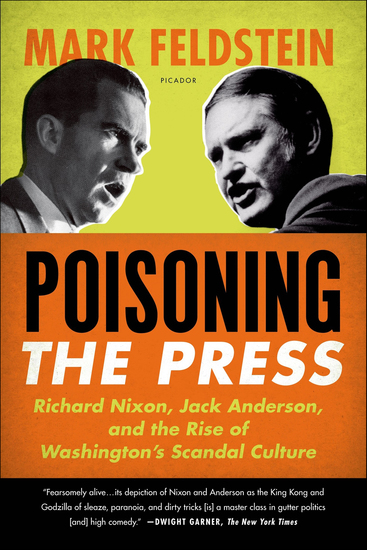
  • Poisoning the Press - Richard Nixon Jack Anderson and the Rise of Washington's Scandal Culture - cover

    Poisoning the Press - Richard...

    Mark Feldstein

    • 0
    • 0
    • 0
    It is March 1972, and the Nixon White House wants Jack Anderson dead. The syndicated columnist Jack Anderson, the most famous and feared investigative reporter in the nation, has exposed yet another of the President's dirty secrets. Nixon's operatives are ordered to "stop Anderson at all costs"—permanently. Across the street from the White House, they huddle in a hotel basement to conspire. Should they try "Aspirin Roulette" and break into Anderson's home to plant a poisoned pill in one of his medicine bottles? Could they smear LSD on the journalist's steering wheel, so that he would absorb it through his skin, lose control of his car, and crash? Or stage a routine-looking mugging, making Anderson appear to be one more fatal victim of Washington's notorious street crime?Poisoning the Press: Richard Nixon, Jack Anderson, and the Rise of Washington's Scandal Culture recounts not only the disturbing story of an unprecedented White House conspiracy to assassinate a journalist, but also the larger tale of the bitter quarter-century battle between the postwar era's most embattled politician and its most reviled newsman. The struggle between Nixon and Anderson included bribery, blackmail, forgery, spying, and burglary as well as the White House murder plot. Their vendetta symbolized and accelerated the growing conflict between the government and the press, a clash that would long outlive both men.Mark Feldstein traces the arc of this confrontation between a vindictive president and a flamboyant, crusading muckraker who rifled through garbage and swiped classified papers in pursuit of his prey—stoking the paranoia in Nixon that would ultimately lead to his ruin. The White House plot to poison Anderson, Feldstein argues, is a metaphor for the poisoned political atmosphere that would follow, and the toxic sensationalism that contaminates contemporary media discourse. Melding history and biography, Poisoning the Press unearths significant new information from more than two hundred interviews and thousands of declassified documents and tapes. This is a chronicle of political intrigue and the true price of power for politicians and journalists alike. The result—Washington's modern scandal culture—was Richard Nixon's ultimate revenge.
    Show book