Join us on a literary world trip!
Add this book to bookshelf
Grey
Write a new comment Default profile 50px
Grey
Subscribe to read the full book or read the first pages for free!
All characters reduced
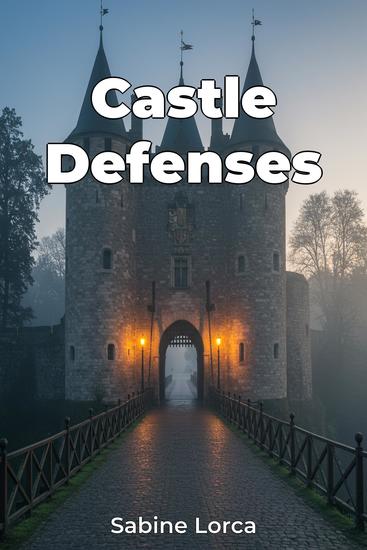
Castle Defenses - cover

Castle Defenses

Sabine Lorca

Translator A AI

Publisher: Publifye

  • 0
  • 0
  • 0

Summary

Castle Defenses explores the fascinating world of medieval castles, revealing how these architectural marvels were ingeniously designed to withstand sieges and protect inhabitants. The book examines the evolution of castle defenses, from simple moats and walls to complex systems of towers, keeps, and gatehouses, emphasizing the strategic deployment of these structures. 

 
Discover how the concentric walls improved defense, and how gatehouses became deadly choke points using drawbridges and portcullises. The book argues that a castle's effectiveness depended not just on physical strength but on strategic design and technological innovation, challenging the notion of castles as static barriers. It presents evidence from archaeological surveys, medieval chronicles, and architectural studies. 

 
The approach is chronological, progressing from the basic principles of castle design to the impact of gunpowder weaponry, offering insights into the arms race between besiegers and defenders. This study provides a comprehensive overview of medieval castle design, emphasizing the interplay between architectural innovation and military tactics. 

 
Delving into the interior defenses like keeps and secret passages, the book assesses how these prolonged resistance and facilitated counterattacks. Castle Defenses is a valuable resource for military history buffs and architecture enthusiasts alike, offering a deeper understanding of these iconic structures.
Available since: 03/06/2025.
Print length: 62 pages.

Other books that might interest you

  • Cartel Nation - How Mexico's Drug Empires Conquered Power Politics and Culture - cover

    Cartel Nation - How Mexico's...

    Davis Truman

    • 0
    • 0
    • 0
    Power. Money. Blood. Influence. 
    What began as smuggling routes through the desert has evolved into one of the most powerful underground empires on Earth — a parallel nation built on fear, loyalty, and staggering wealth. 
    In Cartel Nation, readers are taken deep inside the hidden machinery of Mexico’s drug cartels — a world where criminal networks rival governments, warlords command armies, and pop culture glorifies the very violence that terrorizes entire regions. Through gripping storytelling and meticulous investigation, this book unveils how cartels moved from the shadows into the center of politics, business, and everyday life. 
    Discover: 
    •	How Mexico’s cartels grew from small-time traffickers into transnational corporations of crime. 
    •	The secret alliances between drug lords, politicians, police, and billionaires. 
    •	How narco culture — from music and film to religion and fashion — turned the cartels into global icons. 
    •	The brutal wars fought for territory, power, and legitimacy — and why they can’t simply be “won.” 
    From the dusty streets of Sinaloa to the halls of power in Mexico City, Cartel Nation traces a chilling and fascinating rise — a story of corruption, resilience, and the dark side of globalization. 
    Suppose you’re fascinated by true crime, geopolitics, or the human cost of power. In that case, this book will leave you stunned—and unable to look away. 
    Perfect for fans of Don Winslow, Ioan Grillo, and Netflix’s Narcos, Cartel Nation reveals the truth behind the myth — and why the cartel era is far from over.
    Show book
  • A Rare Recording of Poet Robert Frost Reading "The Gift Outright" at President Kennedy's Inauguration - cover

    A Rare Recording of Poet Robert...

    Robert Frost

    • 0
    • 0
    • 0
    In 1961, poet Robert Frost was invited to read at the inauguration of President John F. Kennedy. It would be the first by a poet for an inaugural ceremony. President-elect Kennedy asked Frost to recite the poem "The Gift Outright" unless the poet planned to write a poem especially for the occasion. Frost did, in fact, write a new poem for the day entitled "Dedication." However, when the time came to read, the wind and sun's glare made this impossible, though Frost made a valiant attempt. Instead, he reverted to "The Gift Outright," which he read by heart: 
     
    "The land was ours before we were the land’s. She was our land more than a hundred years, Before we were her people. She was ours In Massachusetts, in Virginia, But we were England’s, still colonials, Possessing what we still were unpossessed by, Possessed by what we now no more possessed. Something we were withholding made us weak, Until we found out that it was ourselves, We were withholding from our land of living, And forthwith found salvation in surrender. Such as we were we gave ourselves outright, (The deed of gift was many deeds of war), To the land vaguely realizing westward, But still unstoried, artless, unenhanced, Such as she was, such as she will become."
    Show book
  • Lost Keys of Freemasonry - cover

    Lost Keys of Freemasonry

    Manly P. Hall

    • 0
    • 0
    • 0
    Manly P. Hall, masonic and esoteric scholar, traces the path followed by initiates to the ancient craft. Hall also recounts the ethical training required of a Freemason, and he profiles the character traits a Mason must "build" within himself.  
    More than a mere social organization a few centuries old, Freemasonry can be regarded as a perpetuation of the philosophical mysteries and initiations of the ancients. This book reveals the unique and distinctive elements that have inspired generations of Masons. Thoughtful members of the craft, as well as outsiders, will appreciate its exploration of Masonic idealism and the eternal quest, from humble candidate to entered apprentice and master Mason.
    Show book
  • The Crazy Brilliant Philosophical Lectures and Political Speeches of Conservative Activist and Guitar Legend Ted Nugent - Is the Nuge Crazy Brilliant or Both? You Decide! - cover

    The Crazy Brilliant...

    Liam Ben Blackmore

    • 0
    • 0
    • 0
    Is Ted Nugent an absolute genius or batsh!t crazy?  
    Imagine a spectrum where on one side is pure genius, and the other side is utter lunacy. Where would you place Ted Nugent on this genius-lunatic spectrum?  
    In this book, the guitar legend and conservative activist explores:  
    * Violent crime, gun violence, recidivism, and prisons. 
    * The right to bear arms. 
    * The spoiled brats of Hollywood. 
    * Systemic racism in America. 
    * Censorship by Big Tech. 
    * The First Amendment. 
    * The January 6 capitol attack. 
    * The gender control of government, media, and academia.  
    * Turning over Roe V Wade abortion ruling. 
    * Democrats, Marxists, and communists. 
    * Gun control.  
    * Mass shootings at schools.  
    * The toxic hypocrisy of liberals.  
    * Donald Trump.  
    * Joe Biden.  
    * MyPillow CEO Mike Lindell.  
    * Dr. Anthony Fauci. 
    * Kyle Rittenhouse. 
    Is Ted Nugent crazy, brilliant, or both? Read this book, and figure it out!
    Show book
  • The Era of Faith - 632-1667CE - cover

    The Era of Faith - 632-1667CE

    Pope Urban II, Pico della...

    • 0
    • 0
    • 0
    Five speeches from a millennium shaped by faith and empire.632CE. In Muhammed’s farewell address, he lauds his people for their achievements and virtues, and gives them his final instructions for living within the faith.In 1095, Pope Urban II’s Against The Infidels speech launches the Crusades, which lasted for another two hundred years. In it the Pope exhorts his clergy to make true the promise of Christianity and rise against their weaker natures and the enemy in the east.Pico della Mirandola’s Oration On The Dignity Of Man has been described as “the manifesto of the Renaissance”, and is an introduction to his 900 Theses, which was the first printed book ever banned by the Church. Written in 1486, it weaves together philosophy and theology from across history and the world. While Christian, it is a review of the philosophies and religions of the ages.The first section details man’s supremacy over all other beings but God, due to his inherent mutability. The second section dives into the value of philosophy and theology, preparing a discussion of Christian magic and mystery. The final section explores a positive conception of Christian magic, placing it in ancient traditions of magic.In 1588, Elizabeth I’s speech rouses her forces against the Spanish Armada. The Armada came to conquer England and re-establish Catholicism as the state religion. The ensuing conflict is one of England’s great military victories. It includes the famous line “I know I have but the body of a weak and feeble woman; but I have the heart of a king, and of a king of England, too”.John Milton, Satan’s First Speech, Paradise Lost, 1667. We end the volume with a speech against faith and monarchy, which gives us the phrase “Better to reign in Hell, then serve in Heav'n.” Paradise Lost explores the limits of both divinity and monarchy, and marks the end of an age where the two combined to rule the world.
    Show book
  • Where You'll Find Me - Risk Decisions and the Last Climb of Kate Matrosova - cover

    Where You'll Find Me - Risk...

    Ty Gagne

    • 0
    • 0
    • 0
    On February 15, 2015, Kate Matrosova, an avid mountaineer, set off before sunrise for a traverse of the Northern Presidential Range in New Hampshire's White Mountains. Late the following day, rescuers carried her frozen body out of the mountains amid some of the worst weather ever recorded on these deceptively rugged slopes. 


    At thirty-two, Matrosova was ultra-fit and healthy and had already summited much larger mountains on several continents. Her gear included a rescue beacon and a satellite phone. Yet, despite their best efforts, more than forty expert search and rescue personnel, a New Hampshire Army National Guard Blackhawk helicopter, and a Civil Air Patrol Cessna airplane could not reach her in time to save her. 


    What went wrong? 


    Where You'll Find Me offers possible answers to that question, demonstrating why Matrosova's story—what we know and what we will never know—represents such an intriguing and informative case study in risk analysis and decision-making.
    Show book