Join us on a literary world trip!
Add this book to bookshelf
Grey
Write a new comment Default profile 50px
Grey
Subscribe to read the full book or read the first pages for free!
All characters reduced
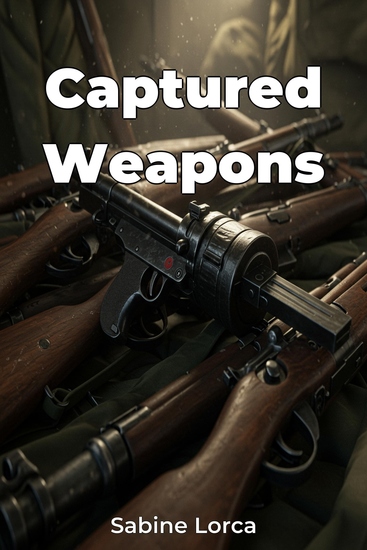
Captured Weapons - cover

Captured Weapons

Sabine Lorca

Translator A AI

Publisher: Publifye

  • 0
  • 0
  • 0

Summary

Captured Weapons explores the underappreciated role of weapon adaptation in military history, revealing how seizing and repurposing enemy technology has consistently shaped the outcomes of conflicts. This book examines the strategic and logistical aspects of weapon adaptation, highlighting how armies identify, assess, and implement captured technology into their own forces. Understanding enemy weapons can provide a crucial technological edge, as seen throughout history where disparities in technology often dictated battle outcomes. 

 
The book's approach is comprehensive, progressing from the initial capture and assessment of enemy technology to the long-term impact on military innovation and doctrine. It dives into the practical challenges of reverse engineering and retraining personnel, using historical examples like the Napoleonic Wars and World Wars to illustrate the significant role captured weapons have played. By analyzing these instances, Captured Weapons emphasizes that gaining crucial intelligence from these captures drives innovation and reshapes the battlefield.

 
Structured to provide a broad overview, the book begins with core concepts before delving into key historical periods to examine specific instances of weapon adaptation. Ultimately, the book’s value lies in its unique perspective, focusing on the systemic implications of captured weapons rather than simply cataloging individual systems, and offering practical implications for modern military forces.
Available since: 03/29/2025.
Print length: 66 pages.

Other books that might interest you

  • The Stranger Who Was Myself - cover

    The Stranger Who Was Myself

    Barbara Jenkins

    • 0
    • 0
    • 0
    Barbara Jenkins writes about the experiences of a personal and family-centred life in Trinidad with great psychological acuteness, expanding on the personal with a deep awareness of the economic, social and cultural contexts of that experience. She writes about a childhood and youth located in the colonial era and an adult life that began at the very point of Trinidad's independent nationhood, a life begun in poverty in a colonial city going through rapid change. It is about a life that expanded in possibility through an access to an education not usually available to girls from such an economic background. This schooling gave the young Barbara Jenkins the intense experience of being an outsider to Trinidad's hierarchies of race and class. She writes about a life that has gender conflict at its heart, a household where her mother was subject to beatings and misogynist control, but also about strong matriarchal women.
    As for so many Caribbean people, opportunity appeared to exist only via migration, in her case to Wales in the 1960s. But there was a catch in the arrangement that the years in Wales had put to the back of her mind: the legally enforceable promise to the Trinidadian government that in return for their scholarship, she had to return. She did, and has lived the rest of her life to date in Trinidad, an experience that gives her writing an insider/outsider sharpness of perception.
    'From her childhood in colonial Port of Spain, to becoming a migrant student and young mother in Wales and then returning to Trinidad post-Independence, Jenkins tells her own life story with the emotional sensitivity of a natural storyteller, the insight of a philosopher, the scope of a historian and the good humour of a Trini. This beautifully written and moving memoir will feel achingly familiar to anyone who knows what it is like to navigate race, class and girlhood while growing up in the West Indies, anyone who has ever felt like an outsider.' Ayanna Lloyd Banwo, author of When We Were Birds.
    Show book
  • The Historical Records of Fugitive Slaves (1619-1865) - cover

    The Historical Records of...

    Marion Gleason McDougall

    • 0
    • 0
    • 0
    This edition presents a historical record of legal cases tried against escaped slaves across the United States of America. The author, Marion McDougall, has drawn together and compared many cases found in obscure sources and made an effort to use the cases as illustrations of principles of how the legislature worked in certain places and certain eras. Her aim was, in some measure, to trace the development of public sentiment upon the subject, in order to prepare an outline of Colonial legislation and of the work of Congress during the covered period.
    Show book
  • Roald Amundsen: A short biography - 5 Minutes: Short on time – long on info! - cover

    Roald Amundsen: A short...

    5 Minutes, 5 Minute Biographies,...

    • 0
    • 0
    • 0
    Roald Amundsen, polar explorer and tragic hero: Life and work in a short biography! Everything you need to know, brief and concise. Infotainment, education and entertainment at its best!
    Show book
  • Harlots Whores & Hackabouts - A History of Sex for Sale - cover

    Harlots Whores & Hackabouts - A...

    Kat Lister

    • 0
    • 0
    • 0
    The history of selling sex is a hidden one—and too often its practitioners are pushed to the margins of history. This book redresses the balance, revealing the history of the sex trade through the eyes of sex workers, from medieval streets to Wild West saloons, and from brothels to state bedrooms. 


    Harlots, Whores & Hackabouts' chapters are structured thematically in a broadly chronological order, each one introducing a lively cast of complex and entertaining characters operating in an array of different periods, locations, and settings. In ancient Mesopotamia, the harlot Shamhat was powerful and respected, able to civilize the wild man Enkidu through her charms. In medieval London, Elizabeth Moryng serviced religious clergy under the guise of an embroidery business, though she was eventually jailed for being a prolific panderer and bawd. In the hedonistic floating world of Edo, Japan, Kabuki actresses and geishas entertained and pleasured their patrons. Lister's engaging and illuminating tales invite listeners to look, listen, and reconsider everything they thought they knew about the world's oldest profession. Together, these captivating tales of sex workers from around the world and throughout history provide a powerful context to contemporary debates about sexuality and the empowerment of women. 


    Contains mature themes.
    Show book
  • Living From the Heart Jesus Gave You - cover

    Living From the Heart Jesus Gave...

    James G. Friesen, E. James...

    • 0
    • 0
    • 0
    The Life Model is a unifying approach to ministries of counseling, recovery, pastoral care, prayer ministry, deliverance, inner healing, child rearing, body life and health. Substance abuse recovery programs internationally are guided by the Life Model's five principles. Because the Life Model develops strong maturity, it is widely used as a church model, particularly where people must face suffering. Missions have adopted the Life Model for restoring hurt missionary children. Almost every major ministry dealing with trauma and abuse in the USA uses the Life Model as part of their teaching. This new version now includes study questions at the end of each chapter as well as many other bonuses. Written by James Friesen, E James Wilder, Anne Bierling, Rick Koepcke, and Maribeth Poole.
    Show book
  • Calling My Deadname Home - Trans Bear Diaries - cover

    Calling My Deadname Home - Trans...

    Avi Ben Zeev

    • 0
    • 0
    • 0
    In this extraordinarily compelling trans memoir, Avi, a bearish trans man and Psychology Professor, navigates sex and dating in a phallic-centric universe of men who love men. But something is missing. To become the man he aspires to be, he needs to reconnect with Talia, his hyper-feminine straight female past, and invite her back in.  Growing up in a working-class right-wing Israeli family and barely finishing high school, he became involved in pro-Palestinian activism and escaped compulsory military service by faking madness. Despite poor schooling Avi went on to attain a PhD from Yale and change his life entirely. This memoir is the story of that journey and explores what it means to come home to oneself with brutal honesty, humour, and self-compassion.  Told in three episodes, early transition, later transition and Talia's story, this memoir tackles contemporary gender and social issues. At its heart is a universal theme: to become who we already are, we must integrate the past into the present
    Show book