Join us on a literary world trip!
Add this book to bookshelf
Grey
Write a new comment Default profile 50px
Grey
Subscribe to read the full book or read the first pages for free!
All characters reduced
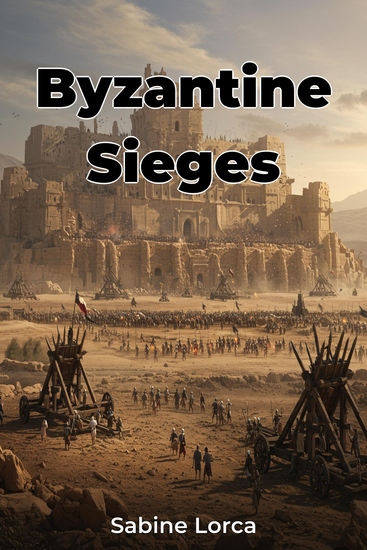
Byzantine Sieges - cover

Byzantine Sieges

Sabine Lorca

Translator A AI

Publisher: Publifye

  • 0
  • 0
  • 0

Summary

Byzantine Sieges explores the pivotal role of sieges in shaping the Byzantine Empire's relationship with the Middle East. It examines how these prolonged military encounters not only determined territorial control but also spurred cultural exchange and economic shifts. The book dives into specific sieges, such as those of Constantinople, to reveal the military strategies and technologies employed by both the Byzantines and their adversaries like the Arab Caliphates and Persian Empire. 

 
One intriguing aspect is the examination of how sieges affected civilian populations and strained resources, highlighting the broader societal impact of these military campaigns. The book uniquely combines detailed military analysis with insights into the social, economic, and cultural consequences of siege warfare, setting it apart from purely military accounts. By drawing on primary sources like Byzantine chronicles and archaeological findings, Byzantine Sieges provides a nuanced interpretation of these historical events.

 
The book begins by establishing the strategic context of the Byzantine Middle East and the evolution of siege warfare, then progresses to analyzing specific sieges and concludes with an assessment of their long-term ramifications on conflict, cultural interactions, and regional geopolitics.
Available since: 03/20/2025.
Print length: 61 pages.


Other books that might interest you

  • Mughal Empire - The Taj Mahal Legacy - cover

    Mughal Empire - The Taj Mahal...

    Rolf Hedger

    • 0
    • 0
    • 0
    The Mughal Empire emerged as one of the most powerful and influential dynasties in Indian history, leaving a lasting impact on culture, architecture, and governance. Its foundation was laid by Babur, a descendant of both Timur and Genghis Khan, who established Mughal rule in the early 16th century. Babur's military prowess and strategic vision enabled him to defeat the Delhi Sultanate in the First Battle of Panipat in 1526. This victory marked the beginning of Mughal dominance in the Indian subcontinent. However, Babur’s reign was short-lived, and it was his grandson, Akbar, who truly solidified the empire’s foundation. 
    Akbar ascended the throne at a young age and quickly proved himself to be an exceptional leader. His reign, which lasted from 1556 to 1605, was marked by territorial expansion, administrative reforms, and a commitment to cultural and religious harmony. Unlike previous rulers, Akbar recognized the diversity of India and sought to integrate different communities into his empire. He abolished the jizya tax on non-Muslims, promoted interfaith dialogue, and appointed talented individuals from various backgrounds to key positions in his administration. His policy of religious tolerance and inclusive governance earned him the loyalty of many, contributing to the stability and prosperity of the empire. 
    One of Akbar’s most remarkable achievements was the establishment of an efficient administrative system. He divided his empire into provinces, each governed by appointed officials who reported directly to the central authority. This system ensured effective governance and facilitated tax collection, trade, and law enforcement. Additionally, Akbar introduced a standardized revenue system that helped regulate the economy and promote agricultural growth. His emphasis on merit-based appointments created a well-organized bureaucracy that endured long after his reign.
    Show book
  • British Empire The: A Captivating Guide to the Largest Empire in History and its Impact on the Age of Discovery Transatlantic Slave Trade the Americas India World War 1 and more - cover

    British Empire The: A...

    Captivating History

    • 0
    • 0
    • 0
    For better or worse, the British Empire was the largest empire in human history. Find out how the British cultivated their empire and raised it to magnificent heights. 
    In the Age of Exploration, the British began building an enormous and highly profitable foreign empire. While the British Empire initially lagged behind other European powers such as Spain and Portugal, it still managed to colonize the New World and discover highly-lucrative trade routes. 
    British colonies could be found on virtually any continent. For decades, colonialism was painted as the duty of the more advanced European civilizations. However, a darker truth lurked under the surface. Find out how Britain invaded, colonized, and ruled almost a quarter of the world’s land mass. 
    This audiobook will guide you through the rise and the fall of the mighty British Empire, including:The Age of Exploration and how Britain expanded its empireBritish involvement in the slave tradeThe mystery behind the lost colony of RoanokeThe English civil wars and their impact on the empireA brief look at the Thirteen Colonies and how they achieved independenceA guide to Britain’s role in the Napoleonic WarsThe impact of both world wars on the British empireThe Suez Crisis and its aftermathRising nationalist movements in the 20th centuryA comprehensive explanation of the fall of the British EmpireAnd much, much more! 
    If you want to learn more about the British Empire, then scroll up and click the “add to cart” button!
    Show book
  • The Maxims of War - Napoleon’s Insights on Strategy Leadership and Victory - cover

    The Maxims of War - Napoleon’s...

    Napoleon Bonaparte, Tim Zengerink

    • 0
    • 0
    • 0
    What if you could master strategy, inspire others, and achieve victory in every aspect of your life? 
    The Maxims of War: Napoleon’s Insights on Strategy, Leadership, and Victory brings you the timeless military wisdom of Napoleon Bonaparte, thoughtfully adapted for today’s listeners. 
    As one of history’s most brilliant strategists, Napoleon distilled his insights into concise maxims that reveal the principles behind successful leadership, strategic planning, and decisive action. These lessons transcend the battlefield, offering profound guidance for leadership, business, and overcoming life’s challenges. 
    This isn’t just a manual on war—it’s a practical guide to mastering strategy, inspiring confidence, and achieving success through preparation, discipline, and clarity of purpose. Whether you’re a leader, strategist, entrepreneur, or someone seeking tools to thrive in a competitive world, Napoleon’s insights will empower you to think critically, act decisively, and lead with strength. 
    What You’ll Discover: 
    - The Art of Strategy: Learn Napoleon’s timeless principles for planning, preparation, and achieving success. 
    - Leadership and Decision-Making: Inspire loyalty, command respect, and lead with confidence and purpose. 
    - Victory Through Adaptability: Stay flexible, think ahead, and overcome obstacles with strategic clarity. 
    - Clear, Accessible Language: Experience Napoleon’s wisdom in a modernized format that makes his maxims practical and easy to apply. 
    Napoleon’s principles of strategy and leadership remain as relevant today as they were on the battlefield. His sharp insights can help you develop a strategic mindset, navigate challenges, and achieve success through preparation and decisive action. 
    Imagine having the tools to think strategically, inspire others, and lead with unshakable confidence. 
    Download your copy today and transform your approach to challenges with the timeless wisdom of one of history’s greatest minds.
    Show book
  • Great Powers Club The: The History of the Kingdoms that Dominated the Near East in the Late Bronze Age - cover

    Great Powers Club The: The...

    Charles River Editors

    • 0
    • 0
    • 0
    By the time of Egypt’s Nineteenth Dynasty, the Egyptians had created a vast empire that stretched from what would be the modern region of northern Sudan in the south to southern Syria in the north (Kuhrt 2010, 1:185). With control of such a vast empire, the Egyptians were able to export valuable minerals such as gold and silver, which were much rarer in the other Near Eastern kingdoms, and imported horses, timber, and chariots that they used to build their impressive military. A chronological examination of ancient Egypt during the New Kingdom reveals the process in which Egypt transitioned from a regional kingdom to an international empire. The examination will demonstrate that the New Kingdom was a fairly complex system that brought about several changes in pharaonic culture before ultimately collapsing.  
    Compared to some of their contemporaries – including the Egyptians, Assyrians, and Babylonians – the Hittites were somewhat distant both culturally and geographically. The Hittites were an Indo-European speaking in an ocean of Afro-Asiatic and Semitic groups, their homeland was to the north of Mesopotamia, and it contained no major river like the Nile, Tigris, or Euphrates Rivers. The Hittite empire was also far less enduring than its neighbors, as it only existed from about 1800-1200 BCE (van de Mieroop 2007, 156), which was considerably shorter than most of the other major kingdoms of the Near East.  
    Like a number of ancient individuals and empires in that region, the negative perception of ancient Assyrian culture was passed down through Biblical accounts, and regardless of the accuracy of the Bible’s depiction of certain events, the Assyrians clearly played the role of adversary for the Israelites. Indeed, Assyria (Biblical Shinar) and the Assyrian people played an important role in many books of the Old Testament and are first mentioned in the book of Genesis.
    Show book
  • Summary: Atlas of the Heart - Mapping Meaningful Connection and the Language of Human Experience by Brené Brown: Key Takeaways Summary & Analysis - cover

    Summary: Atlas of the Heart -...

    Brooks Bryant

    • 0
    • 0
    • 0
    DISCLAIMER: This is NOT the Official Book, but a summary & it does NOT accompany the official book. 
    This comprehensive summary presents a condensed exploration of Brown's captivating insights, offering readers an accessible route to navigate through the atlas of the human heart. From understanding the most complex emotions to the power of vulnerability and empathy, this distilled version serves as an effective guide, opening pathways to the realization and acceptance of our shared humanity. 
    Embark on this transformational journey with Brene Brown's "Atlas of the Heart" and discover the hidden territories of your emotional world. This summary book is not just a reading experience—it's a journey of self-discovery, a cartographic guide to the human spirit, and a beacon lighting the way toward a more empathetic, compassionate world.
    Show book
  • Cleansing the Mind of the Accumulation of Time - Ojai 1980 - Dialogue 2 - cover

    Cleansing the Mind of the...

    Jiddu Krishnamurti

    • 0
    • 0
    • 0
    Cleansing the mind of the accumulation of time - 2 April 1980  
    • Time is the enemy of man. 
    • Is there a beginning which is not enmeshed in time? 
    • We said nothingness is everything and so it is total energy. It is undiluted pure, uncorrupted energy. Is there something beyond that? 
    • Has man ever been free from the ‘I’? 
    • That emptiness can only exist when there is death of the particular.
    Show book