Join us on a literary world trip!
Add this book to bookshelf
Grey
Write a new comment Default profile 50px
Grey
Subscribe to read the full book or read the first pages for free!
All characters reduced
Balkan Conflicts - cover

Balkan Conflicts

Sabine Lorca

Translator A AI

Publisher: Publifye

  • 0
  • 0
  • 0

Summary

"Balkan Conflicts" explores the long history of conflict in the Balkans, a region marked by ethnic tensions and great power rivalry that has repeatedly destabilized Europe. The book examines the underlying causes of this instability, focusing on overlapping nationalisms where competing claims to territory and identity fueled animosity. Another key aspect is the role of external powers, who often intervened to advance their interests, further exacerbating conflicts. The book argues that the Balkan conflicts were interconnected, driven by internal ethnic divisions and external power dynamics, offering a crucial perspective for understanding the region's ongoing challenges. Readers will gain a comprehensive understanding of the historical context, from the decline of the Ottoman Empire to the Yugoslav Wars, without needing prior specialist knowledge. The analysis relies on a wide range of sources and presents a balanced account of complex events.

 
The book progresses chronologically, starting with the key historical actors and geopolitical landscape, then moves through major periods of conflict, including the Balkan Wars and both World Wars, concluding with the wars of Yugoslav Succession. Each section analyzes the specific causes, courses, and consequences of the conflicts, highlighting the roles of internal and external actors. The book uniquely emphasizes the interconnectedness of these conflicts, providing a nuanced understanding of the region's history and its impact on modern European borders.
Available since: 03/20/2025.
Print length: 59 pages.

Other books that might interest you

  • On Youth and Old Age - Aristotle’s Reflections on Aging and Human Development - cover

    On Youth and Old Age -...

    Aristotle, Tim Zengerink

    • 0
    • 0
    • 0
    What if you could unlock ageless wisdom to navigate life’s transitions with grace and understanding? 
    In this enlightening work, Aristotle reflects on the nature of youth and old age, offering insights into human development, energy, and vitality. Adapted for the modern reader, this timeless guide explores how we change physically, mentally, and socially across the lifespan—helping you embrace each stage of life with clarity and purpose. 
    What You’ll Discover in This Modern Translation: 
    - Aristotle’s perspectives on growth, maturity, and decline 
    - Practical ways to appreciate and optimize each life stage 
    - How youth and old age shape our goals, desires, and actions 
    - Timeless guidance for fostering well-being at any age 
    Imagine having a roadmap that helps you honor the gifts of youth, appreciate the wisdom of old age, and approach every chapter of life with renewed insight. Aristotle’s reflections illuminate a path toward greater fulfillment and self-awareness. 
    Begin your journey toward a deeper understanding of life’s stages. Get your copy now and tap into the enduring wisdom of one of history’s greatest thinkers.
    Show book
  • How to Find Happiness - An Ancient Guide to the Good Life - cover

    How to Find Happiness - An...

    Marcus Tullius Cicero, Katharina...

    • 0
    • 0
    • 0
    Does happiness come from the pursuit of pleasure or moral virtue? A vivid new translation of Cicero’s exploration of a timeless question“Of course, we all want to be happy.” So wrote the Roman statesman, orator, and philosopher Marcus Tullius Cicero. He and his fellow Greek and Roman philosophers agreed that the secret to happiness—or what they called the “good life”—is pursuing the “greatest good.” The only problem is that they couldn’t agree on what the greatest good is. Cicero addressed this dilemma by composing a set of dialogues, On the Greatest Good and Evil (De finibus bonorum et malorum), in which he pitted advocates of different philosophical approaches to happiness against one another. Notably, these include the Epicureans (who believe that the greatest good is pleasure) and the Stoics (according to whom it is moral virtue). Rather than choosing sides, Cicero considers the pros and cons of the different philosophies, ultimately leaving it to his readers to make up their own minds. In How to Find Happiness, Katharina Volk offers a vivid new translation of selections from Cicero’s work, complete with an introduction and the original Latin text on facing pages. The result is a lively and engaging debate that invites each of us to discover our own path to happiness.
    Show book
  • Traumatized - The New Politics of Public Suffering - cover

    Traumatized - The New Politics...

    Catherine Liu

    • 0
    • 0
    • 0
    How trauma became a weapon, by highly-acclaimed author of Virtue HoardersTraumatized traces the emergence and triumph of the concept of trauma in public life. From shell-shock and PTSD to the power of Oprah Winfrey and the authentic personal brand, Liu weaves together the history of this now ubiquitous idea and explains what it all means for our society. Trauma culture speaks to our current moment—the demise of liberalism, the expansion of social media, and the rise of surveillance capitalism. Trauma culture promised liberation from repression and oppression but has never delivered. Instead, it has been made into a weapon to individualize suffering, promoting a politics of false consensus. It undermines solidarity and eviscerated the foundations of liberal politics by demanding submission to a regime of vulnerability and accommodation. When suffering is all we have in common, what are we to do when we are all too traumatised to resist?
    Show book
  • When Screens Go Quiet - 7 evidence-based steps for helping your child readjust reconnect and flourish - cover

    When Screens Go Quiet - 7...

    Amit Khaira

    • 0
    • 0
    • 0
    When Screens Go Quiet explores what happens in families when the noise of technology fades. In the wake of Australia’s under-16 social media ban, Amit Khaira examines the emotional and relational shifts unfolding inside homes, reframing behaviour not as rebellion but as nervous systems recalibrating. 
    Blending research, lived experience and practical insight, the book moves from distraction to depth, from performance to belonging and from isolation to shared care. Rather than fuelling fear about technology, it offers a hopeful, evidence-informed pathway for parents, educators and community leaders seeking to rebuild rhythm, resilience and connection in a digitally saturated world.
    Show book
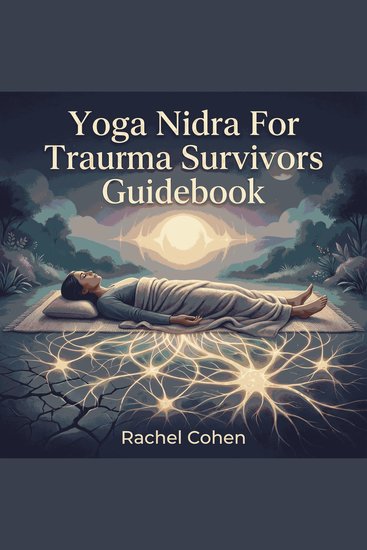
  • Yoga Nidra For Trauma Survivors Guidebook - cover

    Yoga Nidra For Trauma Survivors...

    Rachel Cohen

    • 0
    • 0
    • 0
    Safely rewire your nervous system and access deep healing through trauma-informed Yoga Nidra.
     
    When conventional sleep fails to repair the exhaustion of surviving overwhelming experiences, a different approach is needed. Discover a compassionate pathway to recovery that blends modern neuroscience with ancient rest practices. This accessible guide helps you navigate anxiety, flashbacks, and hypervigilance without forcing catharsis or risking retraumatization.
     
    Reclaim your inner world by updating survival patterns with life-affirming messages sent directly to the subconscious mind. By emphasizing that you are not broken, the narrative shifts focus from fixing defects to restoring agency and inherent wholeness. Learn to cultivate Sankalpa, a heartfelt intention that aligns your recovery goals with gentle, structured relaxation.
     
    Inside, you will learn how to:
    
    Master body-based cues for safety and nervous system regulation.
    Navigate triggers and emotional waves with kindness and curiosity.
    Create a trauma-sensitive environment for deep conscious rest.
    Integrate somatic insights into daily life for ongoing stability.
    
     
    Transform the way you rest and repair through slow, steady repetition. This is an essential companion for anyone seeking a safe framework to reconnect with themselves and establish a lasting sense of peace.
    Show book
  • Homo Sapiens 20 - Introduction to a Natural History of Hyperinformation - cover

    Homo Sapiens 20 - Introduction...

    Gérard Ayache

    • 0
    • 0
    • 0
    How can we use information rather than be subjected to it? Does life have a digital logic? Is the internal structure of the universe made up of information? Is the Internet generating a collective brain?
    Ever since Homo sapiens, armed with his electronic machines, learned to unlock the secret of information and its alchemy by digitizing it, he has unleashed hyperinformation. This force is a subtle blend of matter and thought, animate and inanimate, virtual and real. For the first time in human history, technology seems to be generating a collective intelligence. Does this mean that reason is becoming truly alien to itself, potentially hostile and dangerous? Or are we witnessing the happy dawn of a new era?
    Homo sapiens 2.0 offers a journey into the mysteries of the human brain, the mysteries of genes and memes (their mental equivalent), and the secrets of language, religion and new technologies. From René Girard to Richard Dawkins, from Teilhard de Chardin to Joël de Rosnay, the author recounts the saga of thought in the age of the virtual. In-between each chapter, “Interludes” take us on a journey through literary works or enlightening scientific experiments.
    Show book