Join us on a literary world trip!
Add this book to bookshelf
Grey
Write a new comment Default profile 50px
Grey
Subscribe to read the full book or read the first pages for free!
All characters reduced
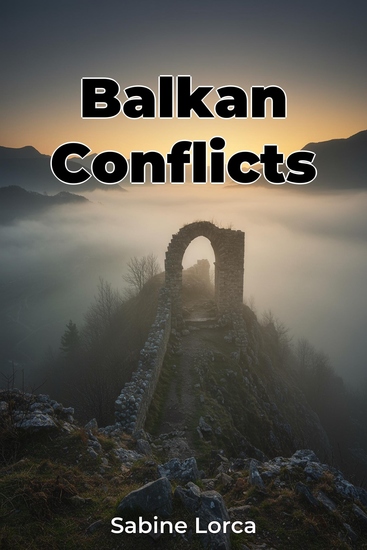
Balkan Conflicts - cover

Balkan Conflicts

Sabine Lorca

Translator A AI

Publisher: Publifye

  • 0
  • 0
  • 0

Summary

"Balkan Conflicts" explores the long history of conflict in the Balkans, a region marked by ethnic tensions and great power rivalry that has repeatedly destabilized Europe. The book examines the underlying causes of this instability, focusing on overlapping nationalisms where competing claims to territory and identity fueled animosity. Another key aspect is the role of external powers, who often intervened to advance their interests, further exacerbating conflicts. The book argues that the Balkan conflicts were interconnected, driven by internal ethnic divisions and external power dynamics, offering a crucial perspective for understanding the region's ongoing challenges. Readers will gain a comprehensive understanding of the historical context, from the decline of the Ottoman Empire to the Yugoslav Wars, without needing prior specialist knowledge. The analysis relies on a wide range of sources and presents a balanced account of complex events.

 
The book progresses chronologically, starting with the key historical actors and geopolitical landscape, then moves through major periods of conflict, including the Balkan Wars and both World Wars, concluding with the wars of Yugoslav Succession. Each section analyzes the specific causes, courses, and consequences of the conflicts, highlighting the roles of internal and external actors. The book uniquely emphasizes the interconnectedness of these conflicts, providing a nuanced understanding of the region's history and its impact on modern European borders.
Available since: 03/20/2025.
Print length: 59 pages.

Other books that might interest you

  • Beyond Boundaries - 7 Essential Habits for International Students - cover

    Beyond Boundaries - 7 Essential...

    Lester Wells

    • 0
    • 0
    • 0
    Embark on a Global Quest for Excellence 
     
    In "Beyond Boundaries: 7 Essential Habits for International Students," the world becomes your stage, offering countless opportunities for growth. This guide equips you with essential skills to navigate cultural nuances, academic challenges, and self-discovery on foreign soil. From embracing diversity to mastering time management, each chapter prepares you to thrive in unfamiliar environments. Learn to communicate effectively, network confidently, and integrate technology into your journey. Beyond survival, this book offers a blueprint for crafting a legacy, influencing change, and engaging with global causes. Whether you're preparing to depart or already immersed in your international adventure, "Beyond Boundaries" illuminates your path to success.
    Show book
  • America’s Westward Expansion Trails: The History and Legacy of the 19th Century’s Most Famous Routes to the West - cover

    America’s Westward Expansion...

    Editors Charles River

    • 0
    • 0
    • 0
    The Lewis and Clark Expedition, notwithstanding its merits as a feat of exploration, was also the first tentative claim on the vast interior and the western seaboard of North America by the United States. It set in motion the great movement west that began almost immediately with the first commercial overland expedition funded by John Jacob Astor’s Pacific Fur Company and would continue with the establishment of the Oregon Trail and California Trail.  
    The westward movement of Americans in the 19th century was one of the largest and most consequential migrations in history, and as it so happened, the paths were being formalized and coming into use right around the time gold was discovered in the lands that became California in January 1848. Located thousands of miles away from the country’s power centers on the East Coast at the time, the announcement came a month before the Mexican-American War had ended, and among the very few Americans that were near the region at the time, many of them were Army soldiers who were participating in the war and garrisoned there. San Francisco was still best known for being a Spanish military and missionary outpost during the colonial era, and only a few hundred called it home. Mexico’s independence, and its possession of those lands, had come only a generation earlier. 
    The most well-known is the Oregon Trail, which was not a single trail but a network of paths that began at one of four “jumping off” points. The eastern section of the Oregon Trail, which followed the Missouri River through Kansas, Nebraska, and Wyoming, was shared by people traveling along the California, Bozeman, and Mormon Trails. These trails branched off at various points, and the California Trail diverged from the Oregon Trail at Fort Hall in southern Idaho. From there, the Oregon Trail moved northward, along the Snake River, then through the Blue Mountains to Fort Walla Walla.
    Show book
  • How to Kill a Witch - The Patriarchy's Guide to Silencing Women - cover

    How to Kill a Witch - The...

    Zoe Venditozzi, Claire Mitchell

    • 0
    • 0
    • 0
    Scotland, 1563: Crops failed. People starved. And the Devil's influence was stronger than ever―at least, that's what everyone believed. If you were a woman living in Scotland during this turbulent time, there was a very good chance that you, or someone you knew, would be tried as a witch. 
     
    During the chaos of the Reformation, violence against women was codified for the first time in the Witchcraft Act―a tool of theocratic control with one chilling goal: to root out witches and rid the land of evil. What followed was a dark and misogynistic chapter in history that fanned the flames of witch hunts across the globe, including in the United States and beyond. 
     
    In How to Kill a Witch, Zoe Venditozzi and Claire Mitchell, hosts of the popular Witches of Scotland podcast, unravel the grim yet absurdly bureaucratic process of identifying, accusing, trying, and executing women as witches. 
     
    This captivating (and often infuriating) account, which weaves a rich tapestry of trial transcripts, witness accounts, and the documents that set the legal grounds for the witch hunts, exposes how this violent period of history mirrors today's struggles for justice and equality.
    Show book
  • Luftwaffe and the Royal Air Force The: The History and Legacy of Nazi Germany and Great Britain’s Air Forces in World War II - cover

    Luftwaffe and the Royal Air...

    Editors Charles River

    • 0
    • 0
    • 0
    “My Luftwaffe is invincible…And so now we turn to England. How long will this one last — two, three weeks?” – Hermann Göring, June 1940 
    Given its unique strengths and distinctive weaknesses by the personal quirks of the men who developed it, the Luftwaffe initially overwhelmed the more conservative, outdated military aviation of other countries. Its leaders embraced such concepts as the dive-bomber, which proved both utterly devastating and extremely useful for supporting the sweeping, powerful movements of Blitzkrieg, while other martial establishments rejected dive-bombers as impractical or even impossible. Though the superb fighting qualities of highly trained and motivated German soldiers, and the Third Reich's technological superiority in tank and weapon design, also had crucial roles to play, the Luftwaffe represented the key element making the successes of all other branches possible. 
    Ultimately, the loss of the Luftwaffe's domination was due in most part to the efforts of Britain's Royal Air Force, which prevented Nazi Germany from conquering Britain on their own. The Battle of Britain, fought throughout the summer and early autumn of 1940, was unquestionably epic in scope. The largest air campaign in history at the time, the vaunted Nazi Luftwaffe sought to smash the RAF as a prelude to German invasion, leaving the British public and its pilots engaged in what they believed was a desperate fight for national survival. The fate of the free world, at least as Europe knew it, hung in the balance over the skies of Britain. 
    Of course, the RAF was instrumental in other ways during the war. The RAF supported Allied forces all over the world, from Norway to Burma to Tunisia, and the RAF conducted devastating bombing campaigns against German industry and cities. In the end, the Allies emerged victorious, even as Britain fell behind other leading nations in air technology.
    Show book
  • What's the Matter with Kansas? - How Conservatives Won the Heart of America - cover

    What's the Matter with Kansas? -...

    Thomas Franke

    • 0
    • 0
    • 0
    The New York Times bestseller, praised as "hilariously funny . . . the only way to understand why so many Americans have decided to vote against their own economic and political interests" (Molly Ivins).**Unabridged for the first time with a new introduction**This program is read by the author. Hailed as "dazzlingly insightful and wonderfully sardonic" (Chicago Tribune), "very funny and very painful" (San Francisco Chronicle), and "in a different league from most political books" (The New York Observer), What's the Matter with Kansas? unravels the great political mystery of our day: Why do so many Americans vote against their economic and social interests? With his acclaimed wit and acuity, Thomas Frank answers the riddle by examining his home state, Kansas—a place once famous for its radicalism that now ranks among the nation's most eager participants in the culture wars. Charting what he calls the "thirty-year backlash"—the popular revolt against a supposedly liberal establishment—Frank reveals how conservatism, once a marker of class privilege, became the creed of millions of ordinary Americans.A brilliant analysis—and funny to boot—What's the Matter with Kansas? is a vivid portrait of an upside-down world where blue-collar patriots recite the Pledge while they strangle their life chances; where small farmers cast their votes for a Wall Street order that will eventually push them off their land; and where a group of frat boys, lawyers, and CEOs has managed to convince the country that it speaks on behalf of the People.A Macmillan Audio production from Metropolitan Books
    Show book
  • Ancient Japan - Shinto Ninjas Samurai and History - cover

    Ancient Japan - Shinto Ninjas...

    Kelly Mass

    • 0
    • 0
    • 0
    This is a combo of 3 topics: 
    Topic 1: The ancient Ninjas in Japan have fueled stories, movies, books and other media to go on and on about the sneaky assassins that terrorized their country. Today, you and I will go in-depth into this topic and find out more about the truth. 
    Some of the stories sound accurate, others have more to it, or are completely false. In a nutshell, this brief book will cover the following topics and more: 
    The most important facts about the Japanese ninjas. 
    Shaolin monks and Japanese pirates. 
    Feudalism compared with European knights. 
    The 7 most famous ninjas. 
    The biggest ninja fight ever in history that took place in 1581. 
    False concepts about ninjas. 
    Daimyo lords in Japan. 
    Ninja training, schools, weapons, and disguises. 
    Educate yourself and figure out where the stories came from, and then connect the dots. This guide will help you along the way. 
    Topic 2: What did the samurai in Japan do? How did they begin? And what was so typical or different about them? 
    These and many other questions will be answered in this quick guide that will cover all the basics of the famous samurai warriors in ancient Japan. You will learn about shoguns, bushido, the Meiji time period, ronin warriors, the Genpei war in 1180, the Kamakura period, the infamous suicide methods for honor (hara-kiri), and much, much more. 
    Topic 3: The Shinto religion is a mystery to many. There is no real founder, there are many gods and deities that are worshipped, and something about spiritualism and spirits in nature that most people can’t quite put their finger on. 
    Today, many of those confusions will be cleared up, as you will explore the Shinto faith and all its most important rituals, gods and goddesses, symbolism, etc.
    Show book