Join us on a literary world trip!
Add this book to bookshelf
Grey
Write a new comment Default profile 50px
Grey
Subscribe to read the full book or read the first pages for free!
All characters reduced
Curiosities of Olden Times - cover

Curiosities of Olden Times

Sabine Baring-Gould

Publisher: DigiCat

  • 0
  • 0
  • 0

Summary

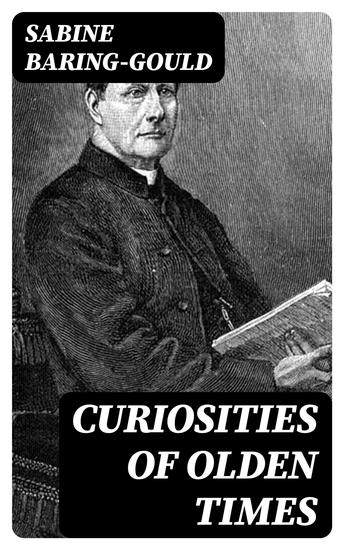
In "Curiosities of Olden Times," Sabine Baring-Gould offers readers an enchanting journey through the folklore and traditions that shaped the cultural landscape of bygone eras. Employing a narrative style that blends meticulous scholarship with accessible prose, Baring-Gould vividly recounts intriguing tales, superstitions, and customs from the past, situating them within their historical context. The book serves as both a reflection of the author's rich understanding of social anthropology and as a tapestry woven with the colorful threads of ancient narratives, delivering insights into the human experience that resonate to this day. Sabine Baring-Gould was a multifaceted figure: an accomplished antiquarian, folklorist, and novelist, whose diverse interests informed his literary pursuits. His upbringing in a rural setting, combined with his academic background in theology, ignited a lifelong fascination with the stories and rituals that defined local cultures. This passion is palpable in "Curiosities of Olden Times," where his wealth of knowledge allows for profound connections between past and present, illuminating the continuity of human life through shared traditions. For readers captivated by history, folklore, and the curiosities of the past, Baring-Gould's work is an essential addition to their literary repertoire. It not only preserves the voices of yesteryear but also invites contemporary audiences to reflect on the cultural narratives that continue to shape our lives. "Curiosities of Olden Times" is a definitive guide for anyone seeking to appreciate the richness of our shared heritage.
Available since: 11/22/2022.
Print length: 186 pages.


Other books that might interest you

  • Joan of Arc - The Maid of Orleans - cover

    Joan of Arc - The Maid of Orleans

    Harris Ropes

    • 0
    • 0
    • 0
    Joan of Arc was born around January 6, 1412, in the small village of Domrémy, located in northeastern France. She came from a modest family of farmers, with her father, Jacques d’Arc, being a well-respected member of the community. Her mother, Isabelle Romée, was known for her devout religious beliefs, which would greatly influence Joan's early life. Joan was one of five children, and although she lived in relative poverty, her family provided her with a stable and loving environment. 
    Growing up in Domrémy, Joan was surrounded by the rural landscape of Lorraine, a region that was politically unstable at the time. The Hundred Years’ War, which pitted France against England, had caused widespread hardship for many French families. Domrémy, being on the border of French and Burgundian territories, was caught in the middle of this conflict. Joan witnessed firsthand the suffering of the French people, including raids and the destruction of villages, which left a lasting impact on her. 
    Joan was a deeply religious child, often spending time in the local church. It is said that she learned about the lives of saints and felt a special connection to them. Her strong faith became a central part of her identity. By the age of 13, Joan began to experience mystical visions. These visions, which she later described as coming from saints such as Saint Michael, Saint Catherine, and Saint Margaret, were significant in shaping her future. The voices instructed her to help the French crown, specifically to assist Charles VII, the Dauphin, in reclaiming his throne and driving out the English forces from France. Joan took these visions seriously, believing they were divine instructions, and they set her on a path that would change the course of history.
    Show book
  • Transform Chaos into Cash Flow - "Elevate your earnings! Discover powerful audio lessons that convert chaos into lucrative cash flow" - cover

    Transform Chaos into Cash Flow -...

    Cyrus Penrose

    • 0
    • 0
    • 0
    Transform Chaos into Cash Flow 
    ⭐⭐ A Simplified Guide with Insightful Explanations ⭐⭐ 
    Are you eager to advance in your career while mastering the art of turning uncertainty into opportunity?  
    Do you need a thorough resource that covers everything essential for mastering life's challenges? 
    Your quest ends here! 
    This guide is your ultimate companion for enhancing your understanding, applying your skills, and engaging in practical exercises. With this support, you are on the path to triumph. 
    Updated for the latest strategies on embracing uncertainty and thriving amidst life's adversities. 
    Key features of this comprehensive guide include: 
    - In-depth insights into growing stronger from life's challenges. 
    - Clear explanations that break down complex concepts. 
    - Effective strategies for overcoming obstacles and flourishing in uncertain times. 
    Our guide stands out for its thorough approach, vital for your journey to success. Concepts are explored in detail, ensuring a complete understanding rather than superficial treatment. 
    Please be aware that this guide operates independently and is not affiliated with any official organization relating to uncertainty and growth. 
    Crafted with a straightforward structure and accessible language, this guide guarantees smooth transitions between topics. Bid farewell to convoluted jargon and embrace clear, precise, and technically accurate content. 
    So, why hesitate? Click the BUY NOW button, secure your guide, and embark on your journey to mastering life's uncertainties! 
    Transform your chaos into cash flow today!
    Show book
  • Medieval Conspiracy Theories: The History of the Most Popular Conspiracy Theories about the Middle Ages - cover

    Medieval Conspiracy Theories:...

    Editors Charles River

    • 0
    • 0
    • 0
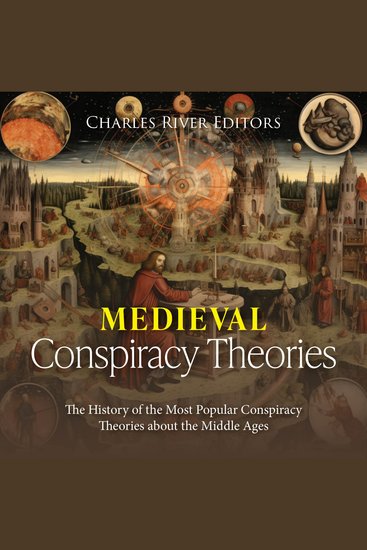
    Few eras are easier to let the imagination run wild than the Middle Ages, which have often been coined the Dark Ages based on a perceived lack of progress and information. Indeed, we can say that it is not completely unfounded because we know less about that historical period compared to those that come after it. In addition, it is a period marked by a great number of deaths caused by plague epidemics, crusades, and inquisitorial persecutions. Often, researchers are not even sure how and why certain events happened, and these mysteries still occupy the attention of historians. 
    	This era was very harsh, difficult, and often gloomy. In that greyness, burdened by various fears, people were looking for something that would light up their lives and bring them a feeling of beauty and joy. People experienced all things and events around them more intensely than people do today. They often exaggerated the events that happened, giving them a mystical and divine character. For this reason, medieval sources are taken with a grain of salt and are first carefully examined before believing.  
    	At the same time, some historical mysteries about the era may never be solved, if only because the relevant excavated material has been lost or the archaeological site has been destroyed. In other cases, it is because new evidence is unlikely to emerge, or the surviving evidence is too vague to lead to a consensus. Of course, the lack of answers only makes these enigmas more intriguing.  
    	Similarly, few stories have the power to mesmerize as much as unsolved mysteries, so codes and missing puzzle pieces fill people with excitement and intrigue. What did a source want to say with that coded message? What mysteries did they hide? 
    Show book
  • The End of Feudalism - How Societal Changes Transitioned to Modern Economic Systems - cover

    The End of Feudalism - How...

    Arlo Holders

    • 0
    • 0
    • 0
    Feudalism was a social, political, and economic system that dominated medieval Europe, particularly from the 9th to the 15th century. Its structure was based on the exchange of land for loyalty, military service, and labor. At its core, feudalism established a hierarchical order in which the king, or monarch, granted land, known as fiefs, to vassals (nobles) in exchange for their service. In turn, these vassals would grant portions of their land to serfs or peasants, who worked the land in return for protection and sustenance. This land-based economy was highly localized, with power concentrated in the hands of a few, and much of daily life revolved around agricultural production. 
    The decline of feudalism did not happen overnight but was a gradual process influenced by several interconnected factors. Key to its decline was the increasing centralization of power by monarchs. As monarchs gained more control, often through military conquest or strategic marriages, they began to diminish the power of feudal lords. This shift marked the beginning of the nation-state as a powerful political entity, replacing the decentralized feudal system. Additionally, the rise of a money-based economy undermined the land-based economy that feudalism relied upon. The growth of trade, the development of markets, and the emergence of a merchant class further destabilized feudal structures. 
    Another critical event in the decline of feudalism was the Black Death in the 14th century. The plague decimated large portions of Europe’s population, resulting in severe labor shortages. This, in turn, weakened the traditional feudal relationships between lords and serfs. With fewer workers available, peasants were able to demand better conditions, higher wages, or even freedom from their obligations. This shift in labor dynamics helped to weaken the power of feudal lords, who could no longer rely on a subjugated, large labor force to maintain their estates.
    Show book
  • Into Enemy Arms - The Remarkable True Story of a German Girl's Struggle Against Nazism and Her Daring Escape with the Allied Airman She Loved - cover

    Into Enemy Arms - The Remarkable...

    Michael Hingston

    • 0
    • 0
    • 0
    The suspenseful true story of a love that defied Nazi oppression, and a harrowing journey to freedom. 


    In 1945, Ditha Bruncel was living with her parents in the small town of Lossen, in Upper Silesia. Close Jewish friends had vanished, swastikas hung from every building, and neighbors were disappearing in the middle of the night. At the same time more than fifteen hundred British and Commonwealth airmen were being marched out of Stalag Luft VII, a POW camp in the same region. Twenty-three of these prisoners managed to escape from the marching column—and by chance hobbled into Lossen. One among them, Warrant Officer Gordon Slowey, was the man Ditha was destined to meet and fall in love with. 


    Into Enemy Arms tells the extraordinary story of Ditha and the escaped POWs she helped save. Together, they embarked on a dangerous and daring flight out of Germany. As they faced exhaustion, hunger, extreme cold, and the constant risk of discovery, Ditha and Gordon's love for one another intensified, and so did their determination to survive and escape.
    Show book
  • Keir Starmer: The Biography - cover

    Keir Starmer: The Biography

    Tom Baldwin

    • 0
    • 0
    • 0
    THE BESTSELLING BIOGRAPHY OF THE BRITISH PRIME MINISTER 
    A Times Book of the Year; A Telegraph Book of the Year; A Daily Mail Book of the Year; A Waterstones Book of the Year 
    ‘Required reading for anyone who has an interest in who governs Britain' ALASTAIR CAMPBELL 
    'This will be the most important political book of the year’ MATTHEW D’ANCONA, EVENING STANDARD 
    This authoritative – but not authorised – biography by Tom Baldwin provides answers by drawing deeply on many hours of interviews with Prime Minister himself, as well as unprecedented access to members of his family, his oldest friends and closest colleagues. 
    Together, they tell an unexpectedly intimate story filled with feelings of grief and love that has driven him on more than any rigid ideology or loyalty to a particular faction. 
    The book tracks Starmer’s emergence from a troubled small town background and rebellious youth, through a storied legal career as a human rights barrister and the country’s chief prosecutor, to becoming an MP relatively late in life. 
    Baldwin provides a vivid and compelling account of how this untypical politician then rose to be leader of his party in succession to Jeremy Corbyn, then transformed it with a ruthless rapidity that has enraged opponents from the left just as much as it has bewildered those on the right. 
    Above all, this is a book that should be read by anyone who wants to understand how someone who has too often been underestimated or dismissed as dull, now intends to change Britain. 
    'The first serious and consistently readable biography of Starmer…It is a wonder that he has said so much to Baldwin' PATRICK MAGUIRE, THE TIMES 
    'This is an absolutely riveting and very timely biography' AMOL RAJAN 
    ‘Highly readable… Baldwin has peeled back more layers than anyone else' ROBERT SHRIMSLEY, FINANCIAL TIMES 
    This Sunday Times bestselling book is a journey through the history of democracy in the 21st century. It's an autobiography that explores the ideologies and processes that have shaped European politics. 
    For fans of Rory Stewart (Politics On the Edge), and Bob Woodward (The Final Days). 
    HarperCollins 2024
    Show book