Join us on a literary world trip!
Add this book to bookshelf
Grey
Write a new comment Default profile 50px
Grey
Subscribe to read the full book or read the first pages for free!
All characters reduced
Folk Narratives - Rituals and Performances - cover

Folk Narratives - Rituals and Performances

S. Simon John

Publisher: D.K. Printworld

  • 0
  • 0
  • 0

Summary

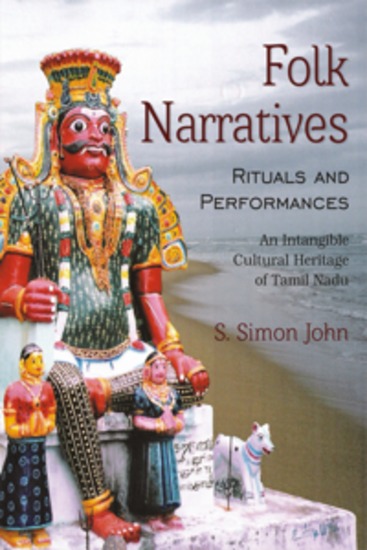
Folk Narratives: Rituals and Performances reflects the world-view of the traditional societies and it is considered as an Intangible Cultural Heritage (ICH) of a particular community or society. This study investigates the culture, in a particular sociocultural context, of the multifaceted Tamil society through numerous rituals, offerings, vows, customs, practices, belief systems, performing folk arts, fairs and festivals, dance and music, material culture, etc. which are deeply rooted in their cultural moorings, and practised and closely associated with the folk religion, life-cycle ceremonies and social psychology.   This illustrative monograph systematically documents, investigates and discusses different aspects of ICH of Tamil Nadu — children’s folklore, proverbs, material folk culture, oral narratives, folk gods and goddesses, and ritual practices. A number of colourful photographs enable one to grasp the rich cultural heritage of Tamil Nadu at ease.The monograph will be of interest to scholars and researchers across humanities and social sciences especially those in folklore, anthropology, sociology, cultural studies, religion, ritual studies, art and performance studies. It will also appeal to the general reader.
Available since: 03/13/2025.
Print length: 150 pages.

Other books that might interest you

  • A Rare Recording of President William Howard Taft - cover

    A Rare Recording of President...

    President William Howard Taft

    • 0
    • 0
    • 0
    William Howard Taft (September 15, 1857 - March 8, 1930), born in Cincinnati, Ohio, served as Secretary of War under President Theodore Roosevelt, then was elected on the Republican ticket as the 27th president of the United States from 1909 to 1913, and, later, named the tenth chief justice of the United States from 1921 to 1930. He is the only person to have held both offices. The following recordings are from the campaign trail in 1908, and, later, in 1912.
    Show book
  • France in World War II: The History of Nazi Germany’s Conquest of France and Its Liberation By the Allies - cover

    France in World War II: The...

    Editors Charles River

    • 0
    • 0
    • 0
    One of the most famous people in the world came to tour the city of Paris for the first time on June 28, 1940. Over the next three hours, he rode through the city’s streets, stopping to tour L’Opéra Paris. He rode down the Champs-Élysées toward the Trocadero and the Eiffel Tower, where he had his picture taken. After passing through the Arc de Triomphe, he toured the Pantheon and old medieval churches, though he did not manage to see the Louvre or the Palace of Justice. Heading back to the airport, he told his staff, “It was the dream of my life to be permitted to see Paris. I cannot say how happy I am to have that dream fulfilled today.” Four years after his tour, Adolf Hitler would order the city’s garrison commander, General Dietrich von Choltitz, to destroy Paris, warning his subordinate that the city "must not fall into the enemy's hand except lying in complete debris." 
    Of course, Paris was not destroyed before the Allies liberated it, but it would take more than 4 years for them to wrest control of France from Nazi Germany after they took the country by storm in about a month in 1940. That said, it’s widely overlooked today given how history played out that as the power of Nazi Germany grew alarmingly during the 1930s, the French sought means to defend their territory against the rising menace of the Thousand-Year Reich. As architects of the most punitive measures in the Treaty of Versailles following World War I, France was a natural target for Teutonic retribution, so the Maginot Line, a series of interconnected strongpoints and fortifications running along much of France's eastern border, helped allay French fears of invasion. 
    After the fall of France, the Vichy Regime maintained a quasi-independent French nation for some time after the Third Reich invasion until the Germans decided to include it in their occupation zone.
    Show book
  • Narasimha Dev - The Supreme Original Person - cover

    Narasimha Dev - The Supreme...

    Sripad Jaganantha Das

    • 0
    • 0
    • 0
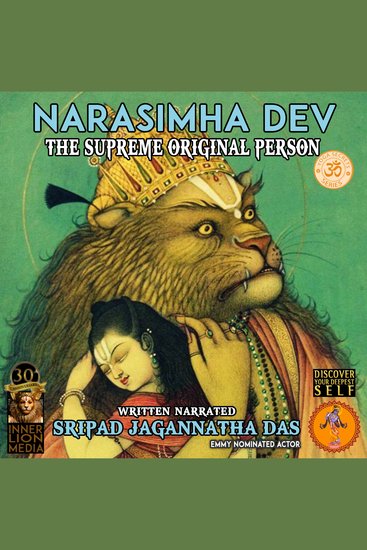
    Narasimha Dev is the manifest man-lion incarnation of Vishnu, who incarnates to destroy evil and end religious persecution and calamity upon the earth, thereby reestablishing the divine balance of the great dharma of the eternal Vedic tradition. 
     
    The Supreme appeared in this form to protect Prahlada from his demoniac father Hiranyakashipu. He always protects His devotees from all dangers. Devotees need not be afraid of His ferocious mouth and tongue, eyes as bright as the sun, sharp, pinching teeth or His tumultuous roaring. His nails which are like chisels are meant for ripping apart enemies. But for the devotees, His beautiful hands, which are like lotus flowers, give shelter and protection. 
     
    Narasimha is known as the divine protector because he removes all obstacles that can hamper a devotee’s spiritual progress. People unfamiliar with Vedic characters foolishly conclude such characters are imaginary and mere creations of the human mind. “It’s all blind faith and superstitious,” they argue and reject such ideas as false. But the universe is unlimited, and we have no idea of what kind of varied beings exist outside our planet earth.
    Show book
  • Wei Shu and Wu - The Three Kingdoms Warlords Intrigue and the Fight for Supremacy - cover

    Wei Shu and Wu - The Three...

    Rolf Hedger

    • 0
    • 0
    • 0
    The fall of the Han Dynasty marked the end of one of China’s longest and most influential imperial reigns, setting the stage for the chaotic period of the Three Kingdoms. While the dynasty had enjoyed centuries of stability and prosperity, internal corruption, weak leadership, and external rebellions steadily eroded its power. By the late second century AD, the once-mighty Han court was little more than a battleground for rival factions, warlords, and opportunists seeking to seize control. 
    One of the first major signs of decline was the increasing corruption within the imperial court. Eunuchs, who had gained substantial influence over the young emperors, manipulated state affairs for personal gain. As these power struggles intensified, competent officials and generals were sidelined or purged, leaving the empire vulnerable to both internal unrest and external threats. The weakening of central authority allowed regional governors and warlords to act with growing independence, further fragmenting the empire. 
    Amidst this political turmoil, a major peasant uprising erupted in 184 AD—the Yellow Turban Rebellion. Led by Zhang Jue, a Taoist healer who promised salvation through divine intervention, the rebellion quickly spread across northern and central China, drawing hundreds of thousands of followers. Although the Han government eventually crushed the revolt, the effort severely drained the empire’s resources and exposed its inability to maintain control. The rebellion’s suppression also elevated the status of military commanders, many of whom would later become the powerful warlords who divided the empire.
    Show book
  • The Reflective Mind - A Mirror of Consciousness - cover

    The Reflective Mind - A Mirror...

    Ylia Callan

    • 0
    • 0
    • 0
    This audiobook is narrated by an AI Voice.   
    The Reflective Mind: A Mirror of Consciousness invites listeners on a transformative journey into the nature of awareness itself. From the liquid mirrors of water to the light and sound that shape perception, this audiobook explores how consciousness emerges, reflects, and remembers. Delving into the brain as a dynamic liquid network, the subtle vibrations of emotion, and the potential for machines to mirror awareness, it uncovers the hidden connections between mind, body, and the universe. Thought-provoking and accessible, this work blends science, philosophy, and the wonder of reflection to reveal consciousness not as a static phenomenon, but as a living, flowing mirror of reality. 
    Perfect for curious minds seeking to understand the self, the body, and the universe in a profoundly interconnected way.
    Show book
  • Lydia Litvyak: The Life and Legacy of the Soviet Woman Who Became World War II’s Most Successful Female Fighter Pilot - cover

    Lydia Litvyak: The Life and...

    Editors Charles River

    • 0
    • 0
    • 0
    Altogether, the Battle of Stalingrad was the deadliest battle in the history of warfare, and the Soviets’ decisive victory there is considered one of the biggest turning points in the entire war, and certainly in the European theater. Over the next two years, the German gains in Russia were steadily reversed, and the Red Army eventually began pushing west towards Berlin. Fittingly, the importance of Stalingrad was commemorated in several ways, from Churchill presenting Stalin with a “Sword of Stalingrad” to the Russians’ decision not to rebuild parts of the battle scarred city as a reminder of what happened there.  
    Partly out of dire circumstances and partly from a cultural worldview, it was the Soviet Union who first pressed female pilots into direct combat when Hitler invaded Russia. Ahead of Stalingrad, Stalin publicly declared that “women should be given the right to fly and fight for their country.” As a result, more than 800,000 women served in the Soviet military during the war years in hospitals, communication units, as road troops, anti-aircraft gunners, and snipers. 
    Of the Soviet female fighter pilots who fought the Nazis in the skies, led raids against ground targets, and stopped supply transports, the iconic Lydia Vladimirovna Litvyak stands out as the most distinguished. The most productive and highly decorated of the Soviet Union’s female pilots, Litvyak was an expert aviator by the age of 14 and trained 45 pilots in the years leading up to the war, while still a teenager. She went on to serve in several of the elite air guard regiments, and she would be credited with numerous victories as the Soviets desperately tried to hold off the German onslaught around Stalingrad. The quirky and defiant Litvyak was described as a “silent modest beauty with a blonde shock of hair and blue eyes.” She “walked with a special gait, causing delight among others,” men in particular, and she tended to look neat at all times.
    Show book