Join us on a literary world trip!
Add this book to bookshelf
Grey
Write a new comment Default profile 50px
Grey
Subscribe to read the full book or read the first pages for free!
All characters reduced
A Book of Cornwall - Legends Myths and Traditions of Cornwall - cover

A Book of Cornwall - Legends Myths and Traditions of Cornwall

S. Baring-Gould

Publisher: Good Press

  • 0
  • 0
  • 0

Summary

In "A Book of Cornwall," S. Baring-Gould presents a rich tapestry of the cultural, historical, and mythical landscapes of Cornwall. The book traverses the region'Äôs stunning geography, from its rugged coastlines to its charming villages, while weaving together local legends and folklore with meticulous research. Baring-Gould employs an evocative literary style that melds descriptive prose with an almost oral storytelling quality, making the narrative both engaging and informative. This work is situated within the 19th-century tradition of regional literature, seeking not only to document but also to celebrate the unique identity of Cornwall amidst the broader tapestry of English heritage. S. Baring-Gould was an accomplished writer, clergy, and antiquarian, whose deep-seated fascination with folklore and local traditions undoubtedly fueled his passion for this project. Having traveled extensively across the British Isles, and possessing an academic background in theology and archaeology, Baring-Gould was well-equipped to delve into the mythic dimensions of Cornwall. His broad scholarly interests likely motivated him to explore and document the cultural memory of a region he felt was ripe for rediscovery. This book is highly recommended for readers interested in regional literature, folklore, and the interplay between landscape and culture. Scholars, historians, and casual readers alike will find themselves enchanted by Baring-Gould's insightful narratives and vivid descriptions, which evoke the spirit of Cornwall with every page.
Available since: 10/12/2023.
Print length: 240 pages.
Other books that might interest you

  • Mouse Utopia Experiment The: The Controversial History of the Experiment that Predicted the Collapse of Human Society - cover

    Mouse Utopia Experiment The: The...

    Editors Charles River

    • 0
    • 0
    • 0
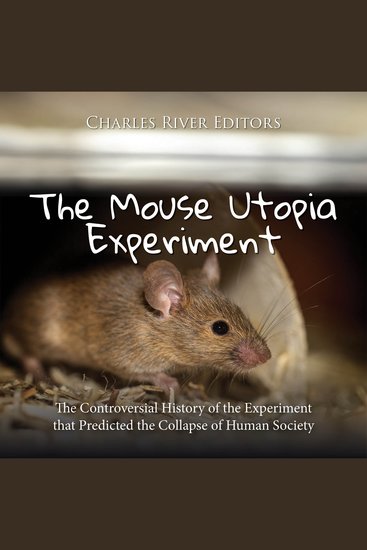
    In 1968, biologist John Calhoun began an experiment at the National Institute of Mental Health in Maryland. Calhoun was interested in discovering the factors that drove and limited rodent population growth; he had joined the Rodent Ecology Project in Baltimore in 1946, and he and other members of the project had become interested in understanding how to reduce rodent pests in America’s cities without the use of poison. 
    	Calhoun had already undertaken similar experiments. In fact, this would be his 25th attempt at creating a self-sustaining rodent colony. This experiment was known as the Mortality-Inhibiting Environment for Mice, but informally, it was known as mouse heaven or, more commonly, mouse utopia.  
    	The experiment was carefully crafted, and Calhoun’s previous experience was used to design a “perfect” environment for mice. Free from predators, disease, and stress, with unlimited access to water and plentiful food supplies, the mice involved could, in theory, live much longer lives than mice in the wild. Calhoun built the “mouse universe,” added mice, and provided food and water. Then, for almost five years, he simply watched what happened in mouse utopia. 
    	While it may be fair to wonder how a fairly obscure zoological experiment that took place over 50 years ago has any relevance to modern society, since the experiment ended, people have been using the findings of what became known as the Calhoun Mouse Utopia Experiment to make predictions about human behavior and human societies. In the decades since Calhoun finished his work, this experiment has been used to “prove,” among other things, that modern urban society is doomed, that contemporary society will inevitably lead to lethal levels of overpopulation, and even that political creeds such as communism and socialism are unsustainable.
    Show book
  • The Illusion of Control - Why Financial Crises Happen and What We Can (and Can't) Do About It - cover

    The Illusion of Control - Why...

    Jon Danielsson

    • 0
    • 0
    • 0
    A challenge to the conventional wisdom surrounding financial risk, providing insight into why easy solutions to control the financial system are doomed to fail 


    Finance plays a key role in the prosperity of the modern world—but it also brings grave dangers. We seek to manage those threats with a vast array of sophisticated mathematical tools and techniques of financial risk management. Too often, though, we fail to address the greatest risk—the peril posed by our own behavior. 


    Jón Daníelsson argues that critical risk is generated from within, through the interactions of individuals and perpetuated by their beliefs, objectives, abilities, and prejudices. He asserts that the widespread belief that risk originates outside the financial system frustrates our ability to measure and manage it, and the likely consequences of new regulations will help alleviate small-scale risks but, perversely, encourage excessive risk taking. Daníelsson uses lessons from past and recent crises to show that diversity is the best way to safeguard our financial system.
    Show book
  • Loyalty - The Faithful Allegiance - cover

    Loyalty - The Faithful Allegiance

    Esther Jameson

    • 0
    • 0
    • 0
    Loyalty is a concept that resonates deeply with human nature, transcending time, culture, and geography. It is often regarded as one of the highest virtues, forming the foundation of relationships, societies, and organizations. At its core, loyalty is an unwavering allegiance to a person, cause, or institution, and it involves a commitment that goes beyond mere obligation. It is about dedication, trust, and an emotional bond that fosters a sense of responsibility and attachment. 
    Defining loyalty can be complex because it manifests in various forms and is subject to different interpretations depending on the context. In personal relationships, loyalty can mean remaining faithful to a partner, supporting friends through tough times, or staying committed to family. In a broader societal context, it can refer to allegiance to a nation, loyalty to a set of values, or even devotion to an idea or belief system. Despite these differences, the essence of loyalty remains consistent: it is the willingness to stand by someone or something, even in difficult or challenging times. 
    One important aspect of loyalty is trust. Without trust, loyalty cannot truly exist. Trust is the foundation upon which loyalty is built, and it is what keeps the bond strong over time. Loyalty requires faith that the person or cause to which one is loyal will not betray that trust. This mutual trust creates a sense of security and dependability, making loyalty a powerful force that binds individuals together.
    Show book
  • The China Dream - How the Aspirations of Government Business and People are Driving the Greatest Transformation in History - cover

    The China Dream - How the...

    Jonathan Krane

    • 0
    • 0
    • 0
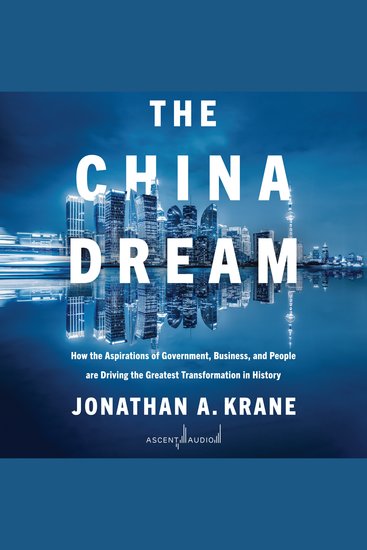
    China GDP has grown from $300 per capita to more than $10,000 in the past thirty years and lifted more people into the middle class than in any other country at any other point in human history. It is important for investors, US companies and anyone interested in the global economy to understand China. 


    As the founder and CEO of KraneShares, an asset management company focused on China and headquartered in New York, author Jonathan A. Krane provides an inside look at China's transformation into a global superpower and explains why the relationship between the US and China is the most critical economic relationship in the world today. 


    Krane witnesses firsthand how China's technological and scientific innovations are ripe with potential for those who understand the opportunity. KraneShares has $9 billion under management across thirty funds listed in the US, UK/Europe, and Hong Kong. 


    The China Dream is your guide to understanding China's unmatched economic growth and fully realizing its status as an essential element in any well-designed investment portfolio, global business, and participation in the global economy.
    Show book
  • Emotional Justice - A Roadmap for Racial Healing - cover

    Emotional Justice - A Roadmap...

    Esther A. Armah, Brittney...

    • 0
    • 0
    • 0
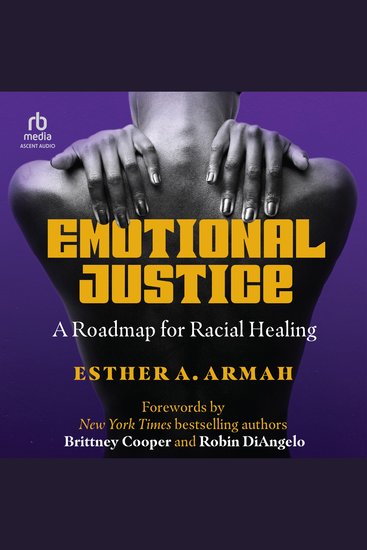
    It is time for an emotional reckoning on our path to racial healing, sustainable equity, and the future of DEI. Here's the tool to help us navigate it. 


    In this groundbreaking book, Esther Armah argues that the crucial missing piece to racial healing and sustainable equity is emotional justice—a new racial healing language to help us do our emotional work. This work is part of the emotional reckoning we must navigate if racial healing is to be more than a dream. We all—white, Black, Brown—have our emotional work that we need to do. But that work is not the same for all of us. 


    This emotional work means unlearning the language of whiteness, a narrative that centers white people, particularly white men, no matter the deadly cost and consequence to all women and to global Black and Brown people. That's why a new racial healing language is crucial. 


    Emotional Justice grapples with how a legacy of untreated trauma from oppressive systems has created and sustained dual deadly fictions: white superiority and Black inferiority that shape—and wound—all of us. These systems must be dismantled to build a future that serves justice to everyone, not just some of us.
    Show book
  • Irish Unity - Time to Prepare - cover

    Irish Unity - Time to Prepare

    Ben Collins

    • 0
    • 0
    • 0
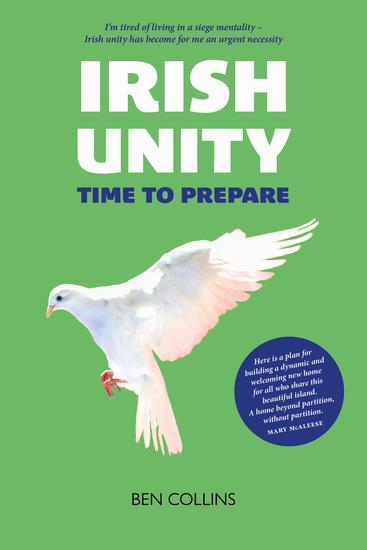
    Growing up during The Troubles, I was determined that I was not going to be forced into Irish unity by terrorist violence or the threat of it. At the time, there was no space to think about a different future. But since then, we have had peace, however imperfect it may be, and we now have the opportunity to freely decide our fate.
    Why will everyone living on the island of Ireland benefit from Irish unity?
    How will the referendum be won?
    Do we need to start preparing now?
    What will happen when Ireland is reunified?
    Disillusioned with the state of pro-union politics in Britain and Northern Ireland, scarred by what he and many others see as a detrimental vote for Brexit and determined to heal the wounds inflicted by partition, Ben Collins sets out a multitude of political, social and economic benefits of removing the border on the island of Ireland, once and for all.
    Written from the viewpoint of an East Belfast-born former UUP campaigner, Irish Unity: Time to Prepare addresses the concerns of unionists in Northern Ireland and sceptics in the Republic and urges everyone on the island of Ireland to escape the crumbling United Kingdom so that we can build a peaceful and prosperous future together, for ourselves and our children.
    Show book